Search News
Industry Portal
Popular Tags
OSHA Sets Spider Lift Validation Transition Rules
Author
Time
Click Count
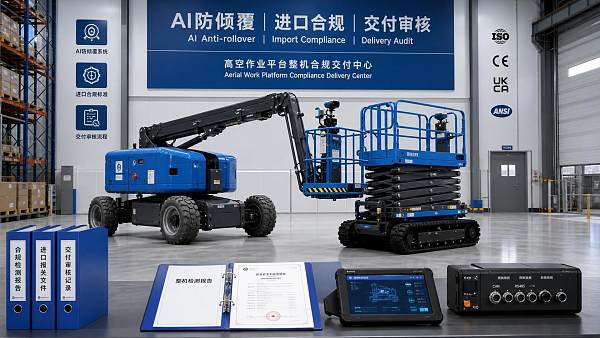
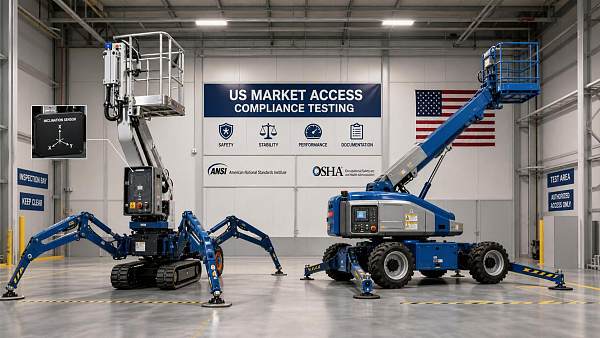
On July 5, 2026, OSHA released transition guidance under 29 CFR 1926 Subpart L for Spider Lifts, turning a safety-control requirement into a concrete compliance and import documentation issue. The change matters not only to manufacturers and exporters, but also to importers, buyers, testing-related service providers, and delivery teams handling products for the U.S. market, because the new requirement ties equipment configuration, third-party validation, and technical paperwork together within a defined transition schedule.
What the transition guidance confirms
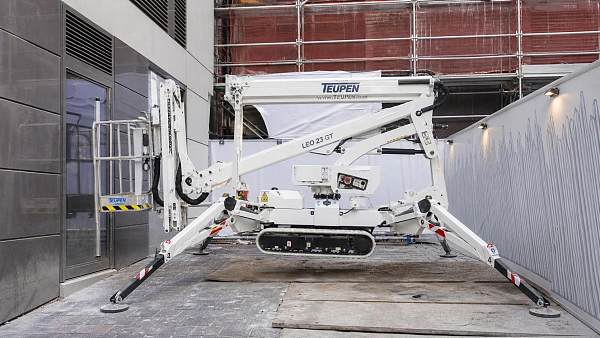
According to the provided information, OSHA issued the document titled 29 CFR 1926 Subpart L – Spider Lifts Compliance Transition Guidance on July 5, 2026. The guidance states that all imported and U.S.-sold Spider Lifts must be equipped with a real-time overturning moment dynamic compensation system that has been verified by a third party.
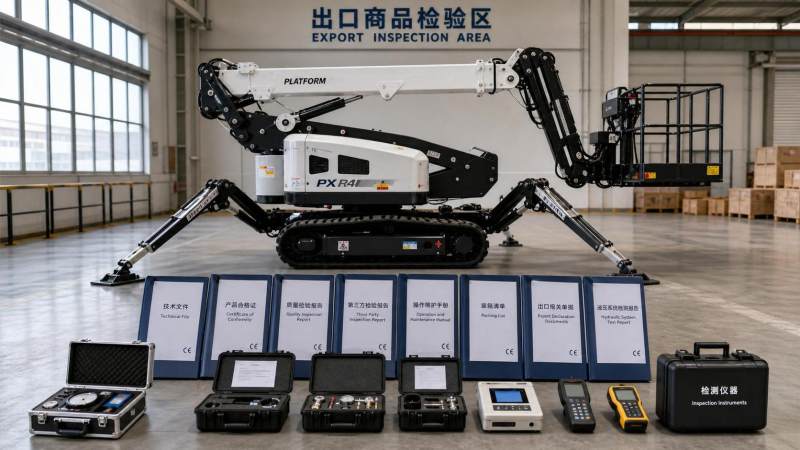
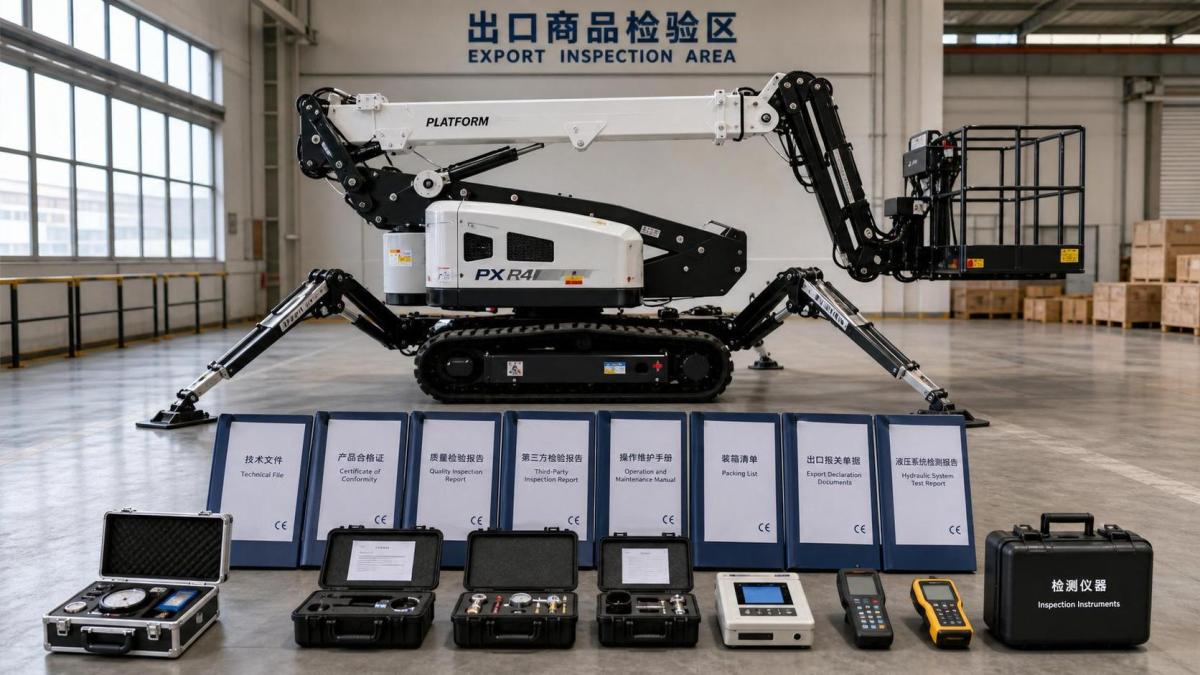
The provided information also states that complete algorithm logic documentation must be supplied for the system. The rule includes an 18-month transition period. At the same time, for newly imported batches from October 2026 onward, a system validation declaration must already be submitted.
The event summary further indicates that this requirement is directly connected to coordinated hardware-software development and export document preparation for Chinese exporters.
Where the pressure will show up first in business operations
Export-side product development and configuration control
From an industry perspective, exporters and manufacturers are likely to feel the impact first because the rule is not limited to a physical component; it also reaches the control system and the supporting algorithm documentation. The likely pressure point is the coordination between hardware design, software logic, and the documents needed to support market entry and shipment preparation.
What deserves closer attention is whether product configurations intended for the U.S. market are aligned with the new validation requirement before shipment. For companies selling Spider Lifts into the United States, compliance may therefore become part of engineering release, version control, and export file preparation rather than a final-stage paperwork task alone.
Import documentation and batch release timing
Importers and trade operators may be affected because the guidance introduces a timing distinction: there is an 18-month transition period, yet newly imported batches from October 2026 already need a system validation declaration. Analysis shows that this creates a practical checkpoint in the import process, where shipment timing and document readiness may become linked.
For these parties, the main concern is not only whether the product is technically compliant, but whether the required declaration and supporting materials are ready when a batch is prepared for import and sale. Any gap between technical completion and document completion could become a delivery or customs-facing risk, although the provided information does not specify the exact enforcement mechanism.
Procurement and buyer-side specification review
Buyers, distributors, and procurement teams may also need to adjust because the guidance connects compliance with third-party verification and algorithm logic documentation. Observably, this may push technical review upstream into sourcing, tender review, and supplier qualification discussions.
These market participants should pay closer attention to whether supplier submissions clearly address validation status, supporting declarations, and the availability of technical documentation tied to the required system. Where U.S.-market delivery is involved, procurement checks may need to look beyond price and lead time to include document completeness and product configuration consistency.
Testing and compliance support functions
Certification-related service providers and testing support institutions may see increased demand for validation-linked work because the rule expressly refers to third-party verification. It is more appropriate to understand this as a signal that technical substantiation will matter alongside product supply.
For companies relying on outside support, the immediate issue is how validation work, documentary outputs, and shipment schedules are sequenced. The provided information does not define the exact review format beyond the requirement for third-party verification and algorithm logic documentation, so companies should treat the documentation package itself as a key compliance deliverable.
What companies should watch before the transition window narrows
Check whether compliance files are being built in parallel with design work
Analysis shows that the rule should not be treated as a document issue only at the export stage. Companies involved in Spider Lifts for the U.S. market should closely track whether the real-time overturning moment dynamic compensation system, its third-party verification status, and its algorithm logic documentation are being prepared in parallel, because the event summary directly links the change to hardware-software coordination.
Track the October 2026 batch-based documentation trigger
What deserves closer attention is the earlier documentation trigger for newly imported batches from October 2026 onward. Even with an 18-month transition period, this part of the guidance suggests that some compliance expectations move forward sooner in the trade flow. Businesses should therefore watch shipment planning, batch scheduling, and declaration readiness together rather than relying only on the final transition deadline.
Review supplier qualifications and document handover terms
For exporters, importers, and buyers, a practical point is whether supplier agreements and handover processes clearly cover the validation declaration and the required technical documentation. Observably, this is relevant not only for customs or import handling, but also for procurement review, delivery acceptance, and downstream traceability if questions arise after sale.
Continue monitoring official wording and market execution signals
The provided information confirms the core requirement and transition timing, but it does not set out every execution detail. For that reason, companies should continue monitoring later official wording, compliance interpretations, tender language, and feedback from actual market implementation before assuming that current internal practices are sufficient.
How this update is best understood at this stage
Analysis shows that this is more than a general policy direction and less than a fully closed execution picture. It is already a concrete compliance signal because it identifies the required system, calls for third-party verification, requires algorithm logic documentation, and sets a transition structure with an earlier filing point for new import batches.
At the same time, it remains appropriate to treat the development as a rule implementation process that still needs close observation in practice. Observably, the market will be watching how documentation expectations, technical review language, and procurement-side acceptance standards are applied once shipments begin moving under the new timing requirements.
Why the market should read this as an execution signal
From an industry perspective, the significance of this update lies in the fact that compliance is being tied directly to product control systems and export-ready documentation, not just to a general safety expectation. That makes the development relevant across engineering, verification, trade documentation, procurement review, and delivery planning.
It is more appropriate to understand this event as an implemented compliance signal with follow-up points still worth watching. The rule change is not merely conceptual, because it already introduces a transition framework and an earlier declaration requirement for new import batches, but the full market response will depend on how those requirements are interpreted and applied in day-to-day business processes.
Basis of this article and points requiring follow-up verification
This article is based on the user-provided news title, event date, and event summary. For developments of this kind, relevant source categories typically include official regulatory notices, releases from supervisory authorities, customs or trade administration information, industry association updates, standards organization documents, and reporting by authoritative media.
No specific official source link was provided in the input, so the exact official link still requires follow-up verification. Further observation is also needed regarding any additional policy detail, compliance interpretation, tender document changes, industry feedback, and how companies implement the requirement in actual export and delivery workflows.
Recommended News
 Sep 13, 2026How to select high-rise maintenance equipment for limited roof accessHigh-rise maintenance equipment guide: compare access routes, reach, roof logistics, ground loads, and costs to select the safest solution.
 Aug 06, 2026OSHA Tightens Tip-Over Rules for Spider LiftsOSHA tightens tip-over rules for Spider Lifts and Electric Tracked Scissor Lifts. Learn the 2026 compliance deadline, testing requirements, and what exporters must do now.
 Jul 30, 2026OSHA Tightens Spider Lift Compliance for U.S. ImportsOSHA tightens spider lift compliance for U.S. imports from Oct. 1, 2026. Learn how ASTM E2551-26a Annex D testing and third-party verification may impact exporters and importers.
 Jul 17, 2026OSHA Tightens Spider Lift Compliance for U.S. ImportsOSHA Tightens Spider Lift Compliance for U.S. Imports: learn how the 2026 rule, ISO 16368 Annex B certification, and new deadlines may impact costs, shipments, and market access.
 Jul 14, 2026OSHA Makes Closed-Loop Load Simulation Mandatory for Spider LiftsOSHA Spider Lifts rule update: closed-loop load simulation becomes mandatory for U.S.-bound units from Oct 1, 2026. Learn how it impacts compliance, certification, and delivery planning.
 Jul 13, 2026OSHA Makes Closed-Loop Load Simulation Mandatory for Spider LiftsOSHA makes closed-loop load simulation mandatory for Spider Lifts from Oct 1, 2026. Learn how ISO 16368:2025 testing and third-party verification may impact compliance, exports, and delivery timing.
 Jul 12, 2026Hydraulic Mast Systems Maintenance Checklist to Prevent Costly DowntimeHydraulic mast systems maintenance checklist for preventing costly downtime. Learn warning signs, service intervals, and practical inspection steps to improve uptime and safety.
 Jul 12, 2026OSHA Makes Closed-Loop Load Testing Mandatory for Spider LiftsOSHA now makes closed-loop load testing mandatory for Spider Lifts sold or rented in the U.S. Learn what ISO 16368:2026 means for compliance, certification, and delivery timelines.
 Jul 11, 2026OSHA Tightens Spider Lift Tip-Over Testing RulesOSHA Tightens Spider Lift Tip-Over Testing Rules: learn how the new closed-loop hydraulic simulation standard impacts certification, U.S. customs clearance, and field acceptance.
 Jul 10, 2026OSHA Tightens Spider Lift Tip-Over Test RulesOSHA Tightens Spider Lift Tip-Over Test Rules: learn how the new dynamic testing mandate affects certification, U.S. market access, rentals, imports, and compliance planning.
 Jul 09, 2026OSHA Tightens Spider Lift Validation for U.S. EntryOSHA tightens Spider Lift validation for U.S. entry: learn how ISO 16368:2025 dynamic load verification, 0.8-second posture correction, and real-time logs could impact compliance, certification, and delivery plans.
 Jul 08, 2026OSHA Tightens Spider Lift Tip-Compensation VerificationOSHA tightens spider lift tip-compensation verification with immediate effect. Learn what the new rule means for U.S. sales, rentals, test reports, and site compliance.
 Jul 07, 2026Hydraulic Bridge Inspection Platforms: How to Choose the Right Reach and StabilityHydraulic bridge inspection platforms: learn how to balance reach, stability, safety, and setup efficiency to choose the right solution for accurate inspections and lower project risk.
![]() Jul 07, 2026OSHA Sets DMCS Verification Rule for Spider LiftsOSHA sets a new DMCS verification rule for spider lifts, requiring third-party field checks before Jan 1, 2027. Learn who is affected, key compliance risks, and how to stay jobsite-ready.
Jul 07, 2026OSHA Sets DMCS Verification Rule for Spider LiftsOSHA sets a new DMCS verification rule for spider lifts, requiring third-party field checks before Jan 1, 2027. Learn who is affected, key compliance risks, and how to stay jobsite-ready. Jul 06, 2026OSHA Sets Spider Lift Validation Transition RulesOSHA Sets Spider Lift Validation Transition Rules: learn how new Spider Lift compliance, third-party validation, and import documentation deadlines may affect U.S. market access and deliveries.
 Jul 05, 2026OSHA Sets AI Anti-Tip Filing Rule for Aerial PlatformsOSHA Sets AI Anti-Tip Filing Rule for Aerial Platforms: learn how the 2026 compliance deadline affects imports, buyers, and manufacturers, plus key filing and verification requirements.
 Jul 04, 2026OSHA Sets AI Anti-Tip Filing Rule for Aerial PlatformsOSHA Sets AI Anti-Tip Filing Rule for Aerial Platforms: learn how the 2026 update affects imported spider lifts, boom lifts, firmware ID filing, compliance planning, and U.S. market access.
 Jun 29, 2026OSHA Draft Rule Targets AI Tip-Over Alerts for AWPsOSHA draft rule targets AI tip-over alerts for AWPs, including spider lifts and electric scissor lifts. Learn how IMU-LiDAR, OTA updates, and compliance demands may reshape 2027 buying and rental decisions.
 Jun 27, 2026OSHA Draft Rule Targets AI Stability Systems on AWPsOSHA draft rule targets AI stability systems on AWPs, signaling major compliance, procurement, and market-access changes for U.S. equipment sales and rentals. See what manufacturers, exporters, and fleet buyers should watch now.
 Jun 24, 2026Construction Access Lifts: How to Choose the Right Type for Site Height and Ground ConditionsConstruction access lifts guide: learn how to choose the right lift for site height, ground conditions, load, and reach to improve safety, productivity, and project cost control.
 Jun 22, 2026Hydraulic Mast Systems vs Alternatives: Which Fits Tight Access Jobs Better?Hydraulic mast systems vs alternatives: discover which option handles tight access jobs better, with insights on stability, maneuverability, safety, and total project efficiency.
 Jun 19, 2026Scaffolding Replacement for Construction: When Are Spider Lifts Better?Scaffolding replacement for construction: learn when spider lifts outperform scaffolds on tight, uneven, or high-traffic sites—and choose safer, faster access.
 Jun 16, 2026How to Evaluate a Spider Lifts Manufacturer for Safe High-Reach JobsSpider lifts manufacturer evaluation made simple: learn how to compare safety, compliance, stability, service, and total cost for safer high-reach jobs.
 Jun 10, 2026Portable High Rise Maintenance Equipment: Lift Type Selection by Facade and AccessPortable high rise maintenance equipment selection starts with facade shape and site access. Compare lift types, outreach, and ground limits to choose safer, faster, cost-smart solutions.