Search News
Industry Portal
Popular Tags
Forklift Counterweight Design Safety Mistakes to Avoid
Author
Time
Click Count
Why does forklift counterweight design safety matter so much in daily operation?
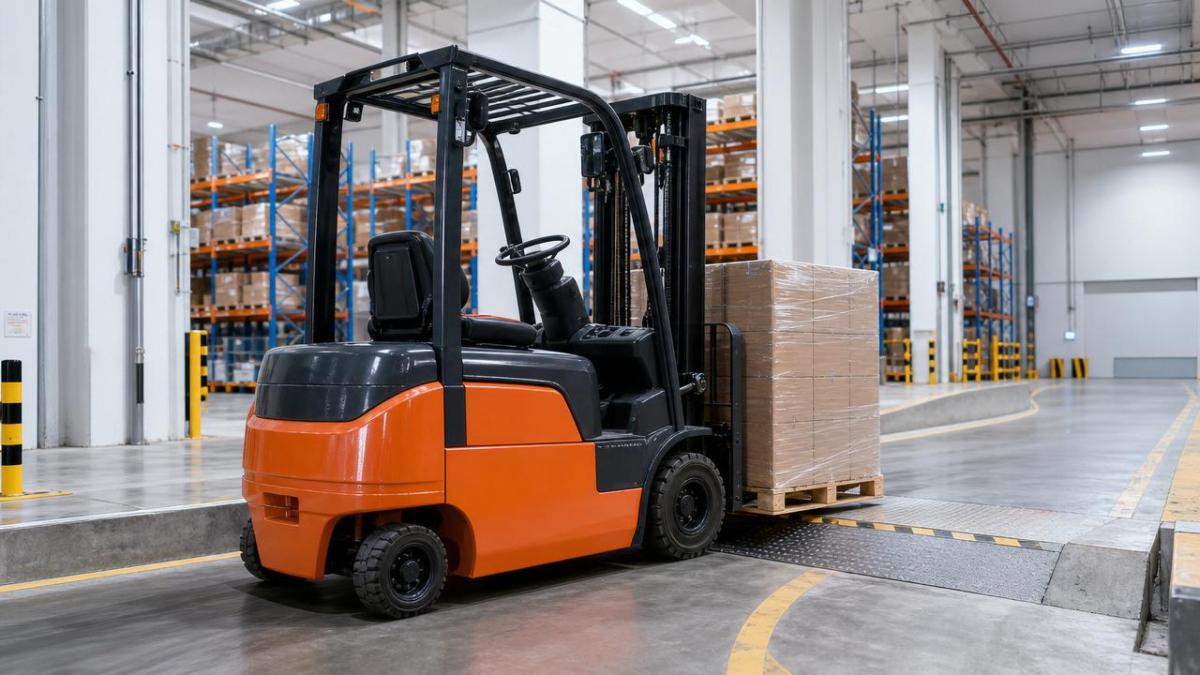
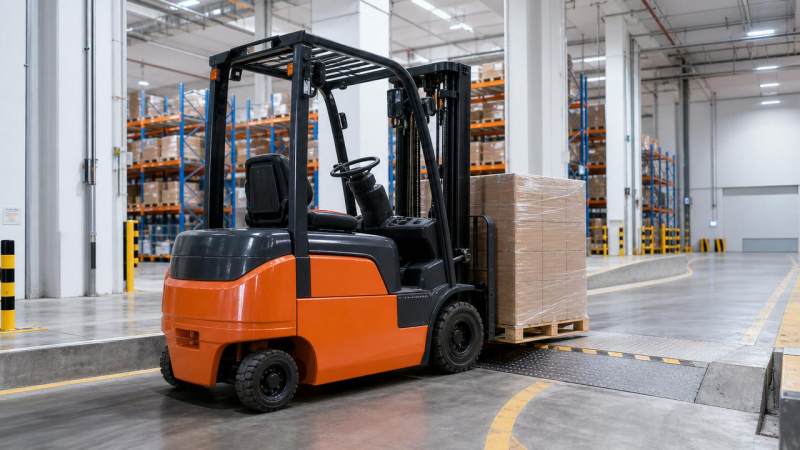
Forklift counterweight design safety is not a detail hidden at the rear of the truck.
It directly affects stability, braking behavior, steering feel, and rollover resistance.
When the counterweight is poorly sized or badly positioned, the forklift may still move normally at low intensity.
The real problem appears during turning, hard braking, ramp travel, or high-load handling.
In practical terms, the counterweight helps balance the load moment created by the mast and forks.
If that balance is wrong, the center of gravity shifts beyond the stability triangle much earlier.
That is why forklift counterweight design safety sits close to compliance, operator protection, and equipment reliability.
Across warehouses, ports, plants, and logistics hubs, small design errors can become expensive incident triggers.
MHLE often connects this issue with broader material handling questions.
The same logic seen in crane anti-sway control also applies here: stable load behavior starts with sound mechanical balance.
Which design mistakes create the highest safety risk?
Some mistakes look minor on paper but become serious in field conditions.
The most common forklift counterweight design safety failures usually involve balance, integration, or verification gaps.
- Using counterweight mass as a simple number, without checking moment arm and mounting position.
- Ignoring attachment changes, such as clamps or rotators, that alter front load geometry.
- Designing only for rated load, not for dynamic effects during cornering or emergency braking.
- Failing to consider battery weight variation in electric counterbalance forklifts.
- Overlooking frame stress and rear axle load after counterweight redesign.
- Treating visibility, cooling airflow, and rear impact protection as separate issues.
A frequent misconception is that adding more rear weight always improves safety.
It can actually create new braking distances, tire loading, and structural fatigue problems.
A safer design balances load capacity, vehicle response, and real working cycles together.
What does a quick risk screen look like?
Before approving a design, it helps to compare typical warning signs in one view.
Is static balance enough, or should dynamic behavior drive the design?
Static balance is only the starting point.
Many forklifts pass basic stability calculations yet still feel unsafe in fast warehouse cycles.
That happens because real operation introduces speed, uneven floors, mast tilt, and sudden directional change.
Forklift counterweight design safety should therefore be checked under dynamic load transfer conditions.
More useful evaluation points include deceleration stability, turning radius behavior, rear axle load response, and tire contact consistency.
This is especially relevant for high-throughput facilities using electric forklifts with lithium-ion systems.
Those trucks often accelerate faster and operate more continuously than older models.
As a result, hidden balance flaws show up sooner.
A sensible review asks one practical question.
Does the truck remain predictable when an operator brakes, turns, and lifts in the same short cycle?
If the answer is uncertain, the design still needs work.
How do attachments, batteries, and chassis changes quietly undermine safety?
Counterweight errors rarely come from one isolated component.
They often appear after a truck platform is adapted for a different market or duty cycle.
For example, a side shifter may seem routine.
Yet it changes load center distance, residual capacity, and front axle demand.
The same applies when battery chemistry changes.
A lithium-ion pack may differ greatly from a lead-acid battery in both weight and distribution.
If the design assumes one battery profile and the production version uses another, forklift counterweight design safety becomes inconsistent.
Chassis modifications also deserve attention.
A longer wheelbase may improve some aspects of stability, but it can shift turning dynamics and structural stress paths.
In actual fleets, mixed specifications are common.
That is why review teams should track configuration-specific stability, not just base-model approval.
- Recalculate moments whenever a front attachment changes.
- Check battery weight tolerance across every approved option.
- Verify rear frame, axle, and tire loading after counterweight updates.
- Review revised capacity plates and warning labels for each configuration.
What should be checked before sign-off or supplier acceptance?
A strong review process does more than confirm rated capacity.
It should connect engineering assumptions with test evidence and operating reality.
In the broader MHLE environment, that same discipline supports cranes, aerial platforms, and automated lifting systems.
For forklifts, the sign-off checklist should stay specific.
This kind of acceptance process reduces surprises after deployment.
It also helps compare suppliers using evidence instead of claims.
What is the smartest next step if a design already looks questionable?
Do not wait for a visible incident.
Most forklift counterweight design safety problems leave signals before failure.
Operators may report rear swing discomfort, unusual tire wear, weak braking confidence, or unstable loaded turning.
Those reports should trigger a structured review, not a casual adjustment.
A practical response is to start with three layers.
- Recheck the original moment calculation and actual component mass.
- Test the truck under the most demanding real operating pattern.
- Review whether labels, attachments, and battery options still match the approved design basis.
If several truck variants share the same platform, compare them side by side.
That often reveals where the balance problem began.
The broader lesson is simple.
Forklift counterweight design safety should be managed like any other critical stability system.
Clear assumptions, controlled configurations, dynamic testing, and traceable compliance records matter more than rough estimates.
When reviewing future forklift programs, it helps to build a standard checklist for balance calculations, test scenarios, and configuration approval.
That creates a more reliable basis for safer trucks, fewer field corrections, and better long-term fleet performance.
Recommended News
 Sep 07, 2026What to verify before choosing a crane overload protection manufacturerCrane overload protection manufacturer checklist: verify sensing accuracy, fail-safe controls, calibration, compatibility, commissioning, and lifecycle support before you buy.
 Sep 07, 2026How can operators make steel mill crane operations safer?Steel mill crane operations safety guide: reduce risk with inspections, load checks, clear communication, sway control, and smarter operator decisions.
 Sep 01, 2026How to select marine rigging equipment based on safe working loadRigging equipment marine selection guide: calculate safe working load, sling angles, connection fit, corrosion risks, and certification for safer lifts.
 Aug 30, 2026How to assess a crane hook control manufacturer’s safety complianceCrane hook control manufacturer compliance guide: verify safety functions, testing, traceability, and commissioning support before purchase.
 Aug 29, 2026How industrial lifting regulations shape safe load-handling proceduresIndustrial lifting regulations guide safer load-handling procedures. Discover practical controls for inspections, lift planning, competent teams, and compliance.
 Aug 21, 2026When does high rise façade maintenance equipment need a BMU instead of mobile accessHigh rise façade maintenance equipment: learn when a BMU outperforms mobile access based on geometry, safety, reach, and lifecycle cost for smarter high-rise decisions.
 Aug 11, 2026EU PPWR Takes Effect on Aug 12: Exporters Must ComplyEU PPWR takes effect on Aug 12, 2026: exporters must comply with packaging, labeling, EPR, and conformity rules or risk customs delays, returns, and EU market access barriers.
 Aug 08, 2026What a Crane Modernization Plan Should Include to Reduce DowntimeCrane modernization plan essentials to cut downtime: learn how controls, drives, safety, diagnostics, and spare parts strategy improve uptime, reliability, and project performance.
 Aug 07, 2026How to Evaluate a Predictive Maintenance Lifting Equipment Provider for Downtime RiskPredictive maintenance lifting equipment provider evaluation made practical: learn how to assess downtime risk, data quality, compatibility, and support before choosing a solution.
 Aug 04, 2026AWP Safety in the USA: OSHA and ANSI Rules That Affect Jobsite UseAWP safety USA explained: learn how OSHA and ANSI rules shape training, inspections, fall protection, and lift selection to reduce jobsite risk and stay compliant.
 Aug 02, 2026How to Evaluate Anti-Rollover Protection Systems for Boom and Lift SafetyAnti-rollover protection systems: learn how to evaluate sensors, control logic, and machine response for safer boom and lift selection, better compliance, and fewer costly risks.
 Aug 01, 2026How to Reduce Heat Loss and Splash Risk in Molten Metal HandlingMolten metal handling: learn how to reduce heat loss and splash risk with practical checks for ladles, fill levels, transfer routes, and pouring control to improve safety and quality.
 Jul 29, 2026Overload Protection Systems Price: What Drives Cost and ROI?Overload protection systems price explained: compare sensors, integration, compliance, and support to uncover true cost drivers and maximize safety ROI before you buy.
 Jul 26, 2026How to Evaluate ATEX Industrial Electric Hoists for Hazardous AreasIndustrial electric hoists ATEX selection starts with zone, gas or dust group, and thermal limits. Learn how to compare safety, compliance, duty, and lifecycle value before you buy.
 Jul 25, 2026Industrial Safety Standards for Lifting Inspection: Key Compliance ChecksIndustrial safety standards for lifting inspection explained: discover key compliance checks for cranes, hoists, and forklifts to reduce risk, avoid downtime, and pass audits with confidence.
 Jul 15, 2026Heavy Lifting Safety Checklist for High-Risk Lifting OperationsHeavy lifting safety starts with preparation. Explore a practical checklist for high-risk lifting operations to reduce incidents, improve compliance, and keep cranes, hoists, and forklifts working safely.
 Jul 13, 2026Crane Hook Control Basics for Safer Load HandlingCrane hook control basics for safer load handling: learn how to reduce sway, improve placement accuracy, and boost lifting safety with practical tips and smart control insights.
 Jul 12, 2026Material Handling Equipment Safety Risks That Often Get Missed on SiteMaterial handling equipment safety starts with the risks most sites overlook. Discover hidden hazards in forklifts, cranes, hoists, and lifts before they cause downtime or injuries.
 Jul 12, 2026How to Evaluate a Crane Hook Control Systems Supplier for Safer Load HandlingCrane hook control systems supplier evaluation starts with safety, precision, and integration. Learn how to compare suppliers for safer load handling, compliance, and long-term uptime.
 Jul 10, 2026Industrial Lifting OSHA Regulations: 7 Compliance Gaps to FixIndustrial lifting OSHA regulations: uncover 7 costly compliance gaps in inspections, training, load control, and documentation to reduce risk, avoid citations, and improve uptime.
 Jul 09, 2026Crane Overload Protection Manufacturer: What to Check Before System ApprovalCrane overload protection manufacturer selection starts with site reality. Learn what to verify before system approval, from stability and alarms to retrofit fit and outdoor durability.
 Jul 09, 2026Heavy Component Transport Systems in Germany: Key Compliance and Site Planning FactorsHeavy component transport systems Germany: learn the key compliance, permitting, load path, and site planning factors that reduce delays, improve safety, and keep complex projects on track.
 Jul 08, 2026Load Moment Indicator Crane Alerts: What They Mean and When to StopLoad moment indicator crane alerts signal real lifting limits. Learn what each warning means, when to stop immediately, and how to prevent overload, instability, and costly crane risks.
 Jul 08, 2026Heavy Component Lifting OSHA Rules: Key Safety Gaps to Fix FirstHeavy component lifting OSHA risks often start with small daily gaps. Discover the first safety weaknesses to fix, improve compliance, and prevent costly lifting incidents.