Search News
Industry Portal
Popular Tags
China Customs Tightens Export Declarations for Cranes
Author
Time
Click Count
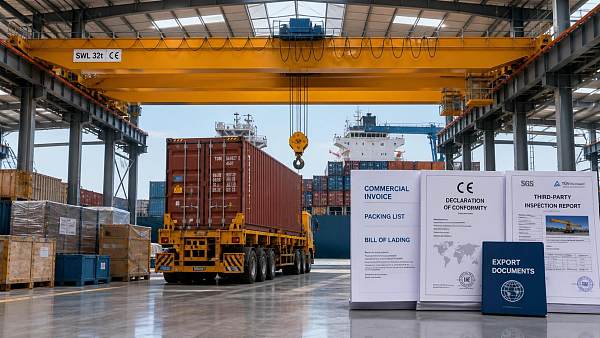
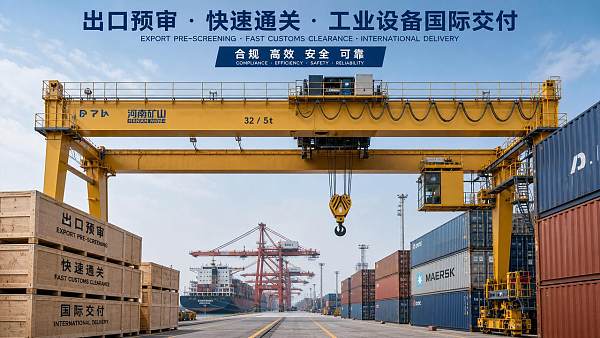
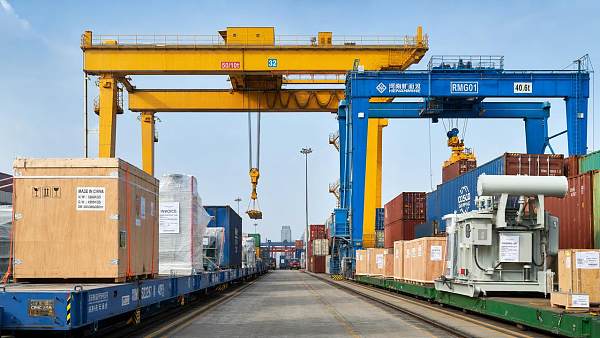
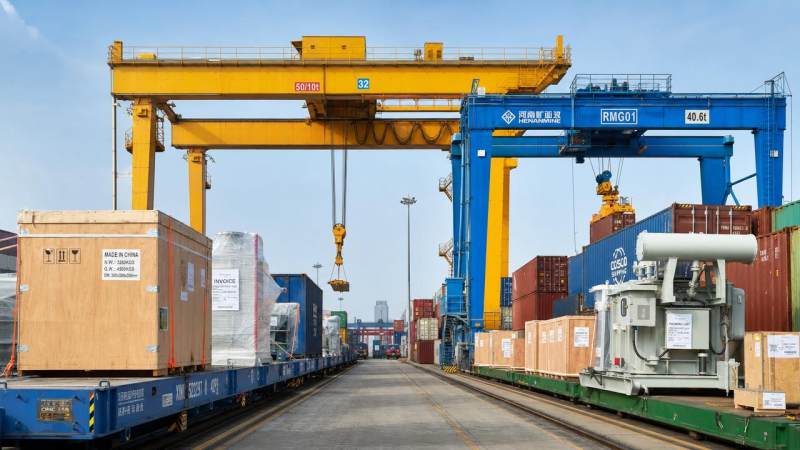
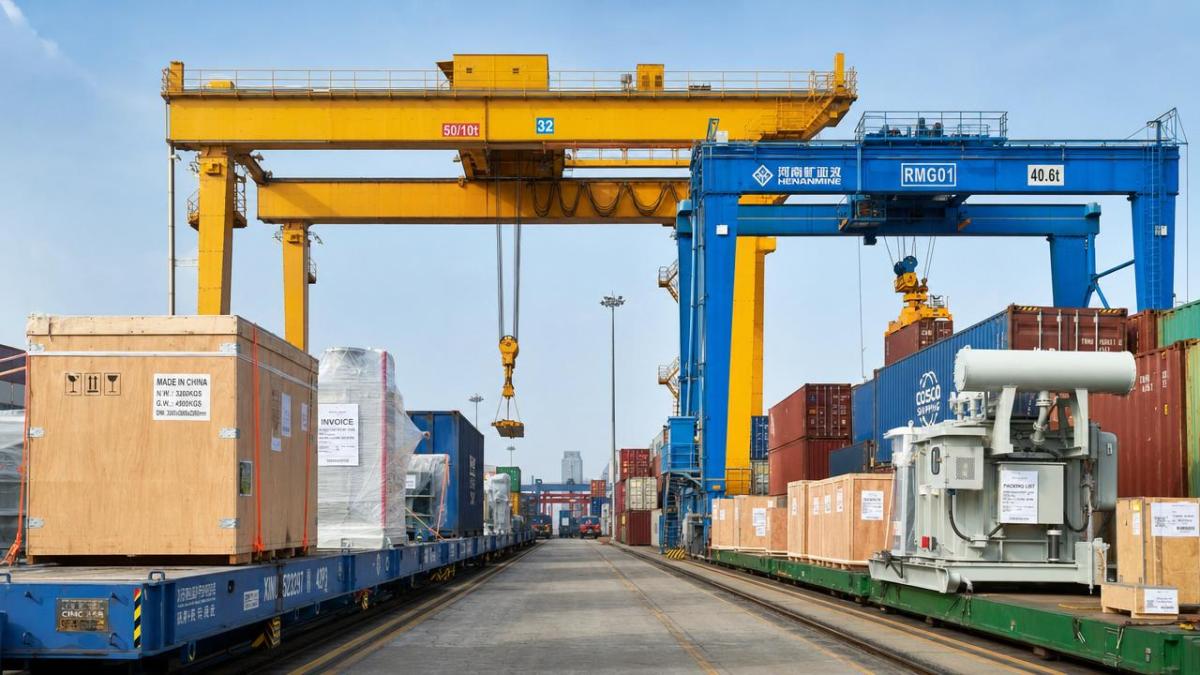
Starting on June 30, 2026, a new customs declaration requirement draws closer attention to how certain machine tools and higher-precision lifting equipment are reported for export. According to the announcement issued by the General Administration of Customs on June 8, exporters of equipment including Double Girder Overhead Cranes and RMG Gantry Cranes that meet the stated technical threshold must truthfully fill in the restricted-control identification code field and declare the full tariff code. For manufacturers, exporters, customs filing teams, and supply chain service providers, this matters because simplified declarations may now be rejected, directly affecting filing accuracy, shipment timing, and document preparation.
What the June 30 requirement clearly changes
The confirmed change is an export precision declaration measure taking effect on June 30, 2026. The June 8 announcement states that lathes, milling machines, grinding machines, and similar material-processing equipment with multi-axis forming control capability fall within the scope of the new requirement.
The same summary also states that this scope includes Double Girder Overhead Cranes and RMG Gantry Cranes with precision at the level of dual-axis linkage or above. For covered goods, companies must truthfully complete the restricted-control identification code field in the customs declaration form and fully declare the tariff code.
The summary further makes clear that simplified declaration will be rejected. Beyond that, no additional implementation detail, document checklist, or processing scenario is provided in the input.
Where the immediate pressure points may emerge
Export filing moves from broad product naming to tighter classification
From an industry perspective, exporters are the first group likely to feel the operational impact because the rule change is tied directly to customs declaration content. The main effect is not only whether a shipment is declared, but how precisely the covered equipment is identified in the filing process. What deserves closer attention is the need to align product description, tariff code declaration, and the restricted-control identification code field so that simplified entries do not trigger rejection.
Manufacturing and technical teams may need to support declaration evidence
For equipment manufacturers, the likely impact sits upstream in product specification management. Where a product may fall within the announced scope, technical parameters such as multi-axis forming control capability or the stated precision threshold for cranes can become relevant to how export teams prepare declarations. Analysis shows that internal coordination between engineering, product management, and trade compliance staff may become more important when determining whether a model should be declared under the new precision reporting requirement.
Customs brokers and supply chain service providers face higher document sensitivity
Supply chain service providers, including customs filing support teams, may be affected because the summary points to rejection risk when declarations are simplified. In practical terms, that can shift more attention to document completeness, product coding accuracy, and consistency between technical materials and declaration fields. Observably, the operational burden may rise most where brokers rely on abbreviated product descriptions or incomplete tariff code reporting.
Buyers and delivery coordinators may need to watch shipment timing
For procurement teams and delivery coordinators handling covered equipment, the issue is less about the policy text itself and more about execution at the export stage. If declarations are returned for correction, shipment schedules and handover timing may be affected. It is more appropriate to understand this as a compliance-linked delivery risk rather than a confirmed market disruption, because the input provides no evidence of actual delay cases.
What companies should review before filing under the new rule
Check whether products fall within the announced technical scope
Companies involved in exporting relevant equipment should first review whether their products match the stated scope in the announcement summary. This is especially relevant for machine tools with multi-axis forming control capability and for Double Girder Overhead Cranes or RMG Gantry Cranes that meet the stated dual-axis linkage precision threshold.
Reconcile declaration fields with technical and tariff documents
Another practical focus is consistency. Export teams should pay attention to whether the tariff code declaration, product description, and the restricted-control identification code field can be completed in a consistent way based on available technical documents. Since the input does not provide a detailed checklist, this should be treated as a point for close review rather than a fixed filing formula.
Prepare for stricter screening of simplified submissions
The clearest operational signal in the provided information is that simplified declaration may be rejected. Companies should therefore pay closer attention to filing workflows that previously depended on abbreviated product information, especially where multiple teams or outside agents are involved in preparing customs entries.
Continue watching for execution language and filing practice
Because the input does not include further implementation guidance, businesses should continue to monitor how the requirement is described in later official wording, operational notices, or filing practice. This includes possible clarification around technical interpretation, document expectations, and treatment of borderline product categories.
Why this looks more like an execution signal than a broad policy narrative
Analysis shows that this update is best read as a filing and compliance execution signal rather than a broad industrial policy statement. The information provided is highly specific to export declaration practice: covered products must be reported more precisely, the restricted-control identification code field must be truthfully filled in, and full tariff code declaration is required.
Observably, the most relevant near-term issue for the market is not abstract policy direction but whether exporters, manufacturers, and filing intermediaries can translate product specifications into compliant customs declarations without triggering rejection. At the same time, it remains too early to treat this as evidence of a wider commercial outcome, because the input provides no confirmed feedback on enforcement intensity, clearance timing, or industry response.
How the market may best interpret the change for now
At this stage, the announcement is more appropriately understood as a rule that has reached the implementation point for export declaration practice on June 30, 2026. Its significance lies in the move toward more precise reporting for covered equipment, especially where technical capability determines whether the goods fall within scope.
A neutral reading is that the immediate consequence is compliance discipline at the filing stage, with possible knock-on effects for documentation, coordination, and delivery planning. Broader effects on trade flows, procurement behavior, or market structure still require further observation rather than assumption.
Basis of this article and what still needs verification
This article is generated from the user-provided news title, event date, and event summary. The concrete official source link was not provided in the input, so it still needs to be verified on an ongoing basis against official announcements, releases from customs or trade authorities, industry association updates, standard-setting documents, and reporting by authoritative media.
Further attention should remain on any later clarification of implementation details, filing interpretation, product-scope explanation, bidding or contract document adjustments, industry feedback, and actual execution by exporting companies and service providers.
Recommended News
 Aug 14, 2026China Tightens Export Checks on Lifting Equipment, Including Double Girder Overhead CranesChina tightens export checks on double girder overhead cranes and other lifting equipment. Learn what exporters must do to avoid customs rejection and delays.
 Aug 10, 2026How to Specify Steel Mill Crane Systems for Heat, Load, and Duty CycleSteel mill crane systems specification guide for heat, load, and duty cycle. Learn how to reduce downtime, improve safety, and choose the right crane for demanding mill operations.
 Aug 10, 2026EN 13001-3:2026 Tightens Wind Stability TestsEN 13001-3:2026 tightens wind stability tests for EU-bound cranes, requiring simulation plus physical verification. Learn how CE certification, exports, and delivery timelines may be affected.
 Jul 27, 2026EU Updates EN 13001-3-1:2026 for Crane Wind StabilityEN 13001-3-1:2026 updates crane wind stability rules for Double Girder Overhead Cranes in the EU. Learn the new testing, CE compliance, and delivery impacts before 2027.
 Jul 07, 2026Precision Lifting Crane: Key Factors for Accurate Load PositioningPrecision lifting crane performance depends on anti-sway control, rigid structure, VFD tuning, and sensors. Learn what drives accurate load positioning before you buy.
 Jun 21, 2026Overhead Cranes for Workshops: Key Specs Before You ChooseOverhead cranes for workshops: compare capacity, span, headroom, duty class, and safety features to choose the right system, reduce downtime, and improve workflow ROI.
 Jun 20, 2026Heavy Component Hoisting Solutions for Tight Plant InstallationsHeavy component hoisting solutions for tight plant installations improve safety, precision, and shutdown control. Discover smart lifting strategies for confined industrial projects.
 Jun 17, 2026BOJ Rate Hike Lifts Appetite for Premium Equipment ImportsBOJ rate hike boosts Japan’s interest in premium equipment imports. See how a stronger yen may lift demand for Double Girder Overhead Cranes, VNA articulated trucks, and Li-ion forklifts.
 Jun 13, 2026China Extends Smart Pre-Clearance to Overhead CranesChina extends smart pre-clearance to overhead cranes, cutting port inspection time to 4 hours for eligible AEO exporters. Learn the new document requirements and shipment planning impact.
 Jun 11, 2026China Customs Tightens Export Declarations for CranesChina Customs tightens export declarations for cranes from June 30, 2026. Learn how Double Girder Overhead Cranes and RMG Gantry Cranes may face stricter filing rules.
 Jun 10, 2026Steel Mill Overhead Cranes: Key Duty Class and Heat Protection ChecksSteel mill overhead cranes demand more than rated capacity. Learn how duty class and heat protection checks improve safety, uptime, and long-term performance in harsh steel plant operations.
 May 28, 2026Overhead cranes can cut delays if layout is plannedOverhead cranes cut delays when layout is planned right. Learn how smarter crane zoning, safer load paths, and workflow alignment boost throughput and reduce costly downtime.