Search News
Industry Portal
Popular Tags
China Extends Smart Pre-Clearance to Overhead Cranes
Author
Time
Click Count
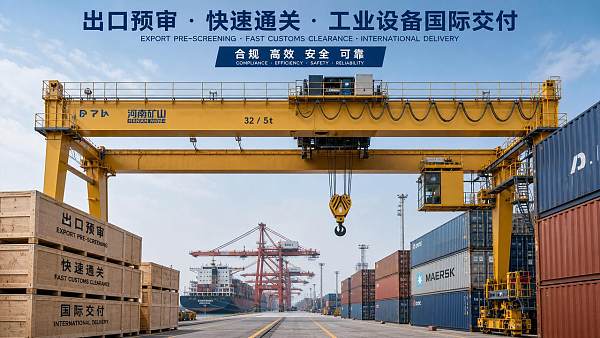
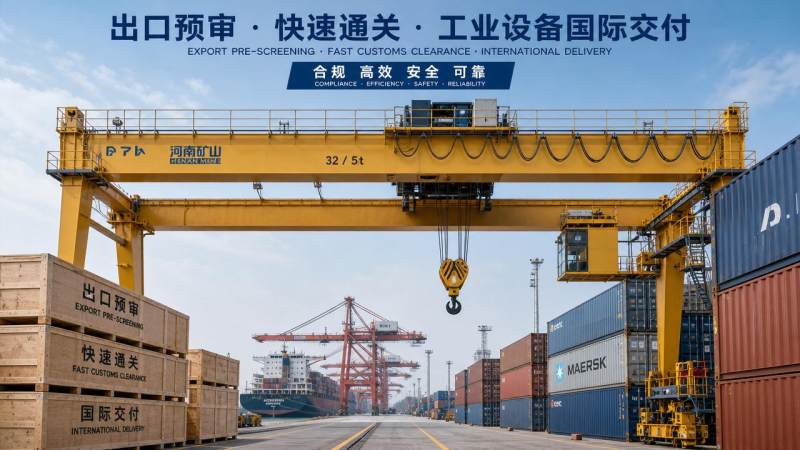
On June 13, 2026, China Customs began applying its smart compliance pre-clearance channel to Double Girder Overhead Cranes exports, extending a mechanism previously used for RMG Gantry Cranes. The change matters because it links faster port inspection times to a more document-intensive pre-check process, directly affecting exporters, certification-related service providers, procurement planning, and delivery coordination for crane shipments. For companies active in this category, the update is not just a customs efficiency story; it is also a practical signal that technical files, multilingual manuals, and eligibility status now play a more visible role in export execution.
What the June 13 change formally covers
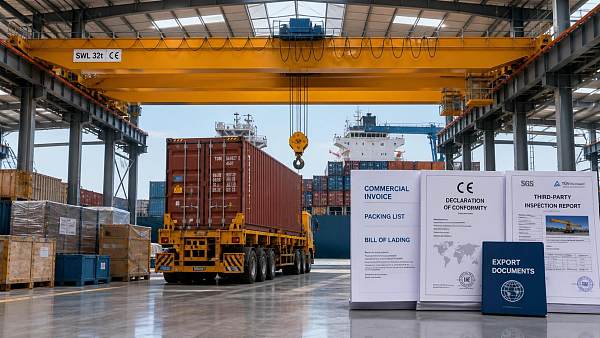
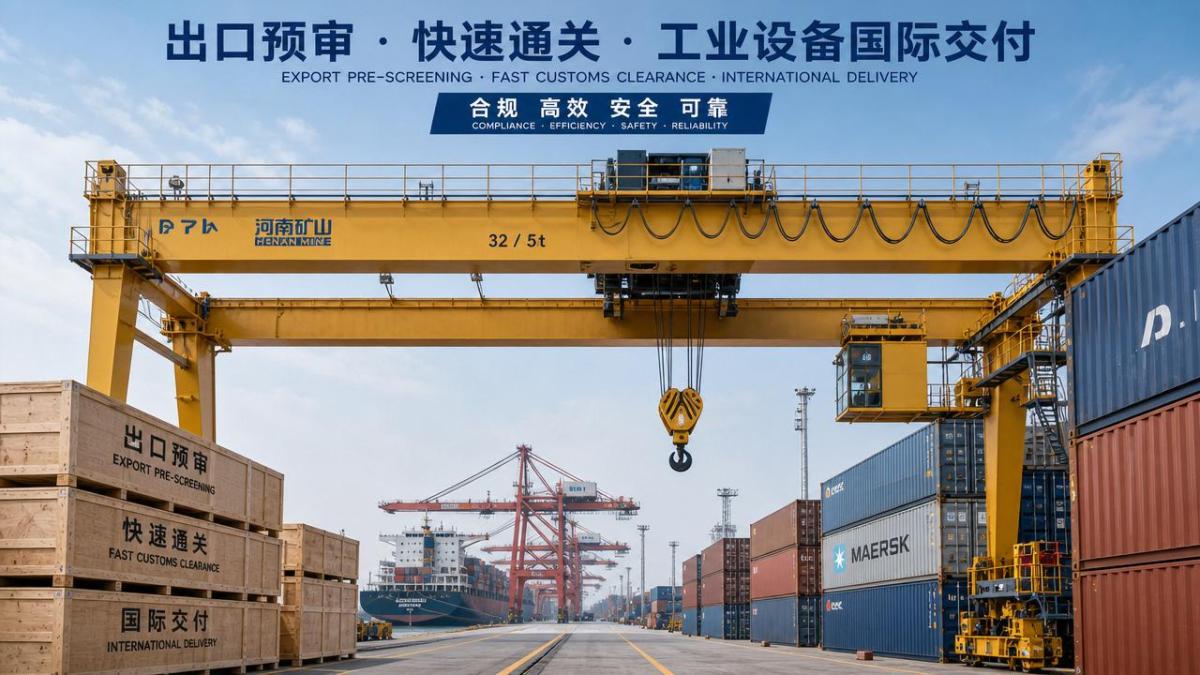
According to the provided event information, the smart compliance pre-clearance channel was formally expanded to Double Girder Overhead Cranes export business from 00:00 on June 13, 2026. Enterprises using the channel must upload documents through the China International Trade Single Window, including a CE/ISO 4301-2025 type test report, an anti-sway control algorithm description, and a localized operating manual in both English and Arabic. After passing pre-clearance, port inspection time is reduced to within four hours, which is stated to be 70% faster than the conventional process. The channel is currently available only to enterprises holding AEO Advanced Certification.
Where the operational impact is likely to appear first
Export execution shifts from port-side waiting to document-side readiness
For exporters of Double Girder Overhead Cranes, the immediate impact is likely to fall on shipment preparation rather than on the physical inspection stage alone. Because access to the faster channel depends on pre-submitted documentation, the practical focus moves toward whether required reports, algorithm descriptions, and bilingual manuals are complete and aligned before customs processing begins.
Certification and testing support becomes more tightly tied to shipment timing
Certification-related companies and testing service providers may feel the change through tighter coordination demands. From an industry perspective, when a CE/ISO 4301-2025 type test report becomes part of the upload package for pre-clearance, document issuance, review quality, and consistency with export files become more relevant to delivery scheduling, even though the provided information does not specify any broader certification rule changes beyond this channel requirement.
Procurement and delivery planning may need earlier document checkpoints
For buyers, sourcing teams, and supply chain service companies involved in export projects, the rule change may influence planning around delivery milestones. Analysis shows that if pre-clearance approval can shorten port inspection to within four hours, then document completeness and enterprise eligibility status may become earlier checkpoints in order confirmation, dispatch timing, and handover coordination.
AEO status becomes a practical access condition
The current scope is limited to AEO Advanced Certification enterprises. That means the speed benefit is not universally available across all market participants. Observably, this creates a distinction between companies that can use the channel now and those that must continue under regular procedures, with possible implications for lead-time commitments, customs planning, and partner selection.
What companies should review now
Check whether the required file set is submission-ready
Companies in this product category should first verify whether the required materials can be uploaded in the expected form through the China International Trade Single Window. What deserves closer attention is not only whether the documents exist, but whether the type test report, anti-sway control algorithm description, and localized operating manual are internally consistent and ready for transaction-level use.
Confirm the language and localization burden in advance
The requirement for a localized operating manual in English and Arabic makes documentation control a practical issue for export teams. Analysis shows that companies may need to review translation readiness, version control, and consistency between technical descriptions and user-facing materials, especially where shipment timing depends on pre-clearance.
Separate eligibility questions from product document questions
Because the channel is currently restricted to AEO Advanced Certification enterprises, businesses should distinguish two separate compliance issues: whether the product file package is complete, and whether the exporting entity can actually access the channel. This matters for exporters, trading companies, and project coordinators that may otherwise assume the faster process applies automatically to every shipment in the category.
Watch for execution details rather than assuming uniform practice
The provided information confirms the rule expansion and core submission requirements, but it does not provide fuller operational detail on review practice, exception handling, or document interpretation. It is therefore prudent to keep tracking official wording, implementation practice, and transaction-level feedback before treating the process as fully standardized across all cases.
Why this looks like both a landed rule and an execution signal
Observably, this update should be understood first as a landed change, because the effective time, applicable product category, required submission materials, and current user scope have all been stated. At the same time, it is also an execution signal: the channel rewards pre-verification, technical documentation discipline, and enterprise qualification status, which suggests that customs efficiency and compliance preparation are being tied more closely together in actual export handling. From an industry perspective, the next area worth monitoring is not whether the rule exists, but how consistently its document requirements and access conditions are applied in practice.
How the market may best interpret this update
For the crane export segment, this development is more appropriately understood as a targeted operational rule change rather than a broad policy shift for the whole market. Its significance lies in how it changes the sequence of compliance work: faster port-side handling becomes conditional on stronger pre-shipment preparation. That does not by itself establish wider market outcomes, but it does give companies a clear reason to review document readiness, qualification status, and delivery planning for affected exports.
Basis of this article and what still needs verification
This article is generated from the user-provided news title, event date, and event summary. For this type of development, commonly relevant source categories may include official notices, releases from regulatory authorities, customs or trade administration information, industry association updates, standards organization documents, and reporting by authoritative trade media. No specific official source link was provided in the input, so the exact official publication path still requires follow-up verification. It remains necessary to monitor later details such as implementation guidance, certification interpretation, tender document changes, industry feedback, and how enterprises apply the channel in practice.
Recommended News
 Aug 14, 2026China Tightens Export Checks on Lifting Equipment, Including Double Girder Overhead CranesChina tightens export checks on double girder overhead cranes and other lifting equipment. Learn what exporters must do to avoid customs rejection and delays.
 Aug 10, 2026How to Specify Steel Mill Crane Systems for Heat, Load, and Duty CycleSteel mill crane systems specification guide for heat, load, and duty cycle. Learn how to reduce downtime, improve safety, and choose the right crane for demanding mill operations.
 Aug 10, 2026EN 13001-3:2026 Tightens Wind Stability TestsEN 13001-3:2026 tightens wind stability tests for EU-bound cranes, requiring simulation plus physical verification. Learn how CE certification, exports, and delivery timelines may be affected.
 Jul 27, 2026EU Updates EN 13001-3-1:2026 for Crane Wind StabilityEN 13001-3-1:2026 updates crane wind stability rules for Double Girder Overhead Cranes in the EU. Learn the new testing, CE compliance, and delivery impacts before 2027.
 Jul 07, 2026Precision Lifting Crane: Key Factors for Accurate Load PositioningPrecision lifting crane performance depends on anti-sway control, rigid structure, VFD tuning, and sensors. Learn what drives accurate load positioning before you buy.
 Jun 21, 2026Overhead Cranes for Workshops: Key Specs Before You ChooseOverhead cranes for workshops: compare capacity, span, headroom, duty class, and safety features to choose the right system, reduce downtime, and improve workflow ROI.
 Jun 20, 2026Heavy Component Hoisting Solutions for Tight Plant InstallationsHeavy component hoisting solutions for tight plant installations improve safety, precision, and shutdown control. Discover smart lifting strategies for confined industrial projects.
 Jun 17, 2026BOJ Rate Hike Lifts Appetite for Premium Equipment ImportsBOJ rate hike boosts Japan’s interest in premium equipment imports. See how a stronger yen may lift demand for Double Girder Overhead Cranes, VNA articulated trucks, and Li-ion forklifts.
 Jun 13, 2026China Extends Smart Pre-Clearance to Overhead CranesChina extends smart pre-clearance to overhead cranes, cutting port inspection time to 4 hours for eligible AEO exporters. Learn the new document requirements and shipment planning impact.
 Jun 11, 2026China Customs Tightens Export Declarations for CranesChina Customs tightens export declarations for cranes from June 30, 2026. Learn how Double Girder Overhead Cranes and RMG Gantry Cranes may face stricter filing rules.
 Jun 10, 2026Steel Mill Overhead Cranes: Key Duty Class and Heat Protection ChecksSteel mill overhead cranes demand more than rated capacity. Learn how duty class and heat protection checks improve safety, uptime, and long-term performance in harsh steel plant operations.
 May 28, 2026Overhead cranes can cut delays if layout is plannedOverhead cranes cut delays when layout is planned right. Learn how smarter crane zoning, safer load paths, and workflow alignment boost throughput and reduce costly downtime.