Search News
Industry Portal
Popular Tags
EN 13001-3:2026 Tightens Wind Stability Tests
Author
Time
Click Count
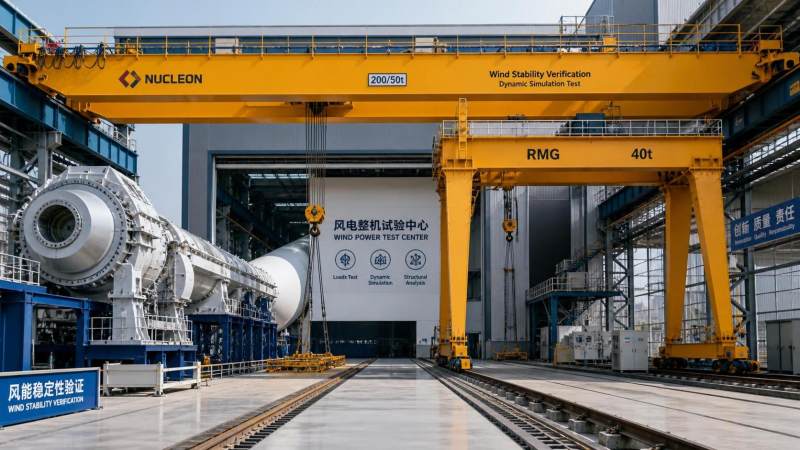
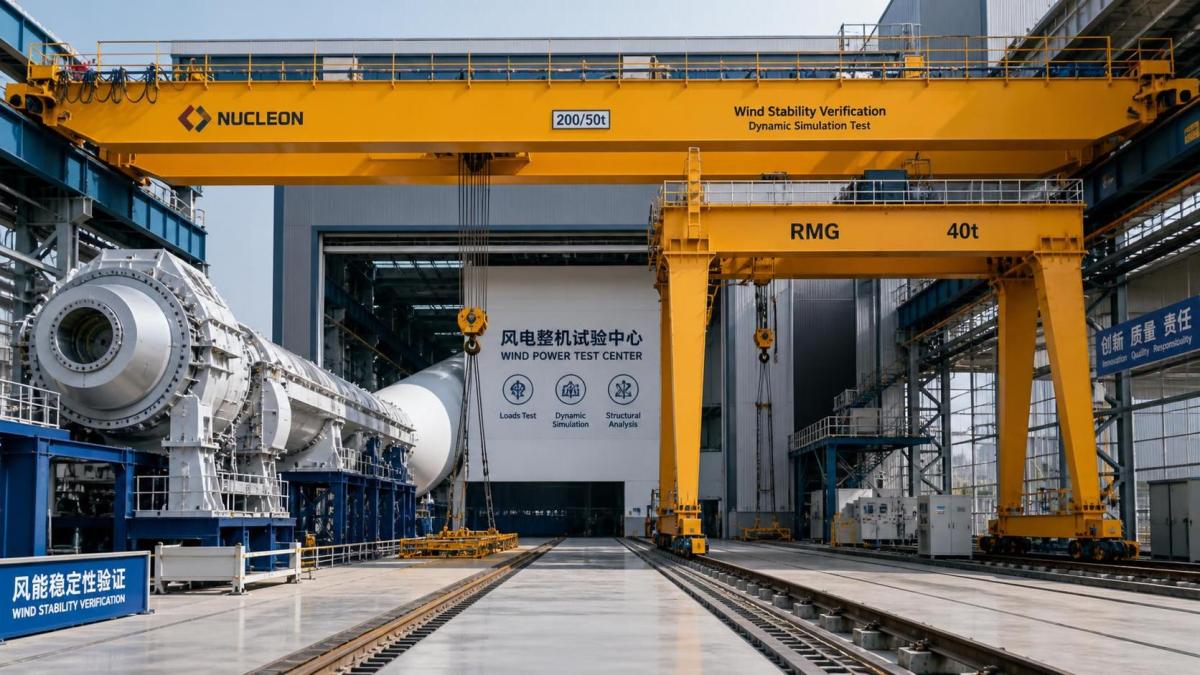
On August 9, 2026, the Official Journal of the European Union published the revised EN 13001-3:2026, with mandatory application set for November 1, 2026. The update applies to double-girder overhead cranes, RMG gantry cranes, and anti-sway automated cranes exported to the EU, and it introduces a stricter requirement for combined dynamic simulation and physical verification of wind stability. For manufacturers, exporters, certification teams, buyers, and delivery planners, the change matters because it directly affects the CE type-certification route and the timing attached to compliance approval.
What the new requirement formally changes
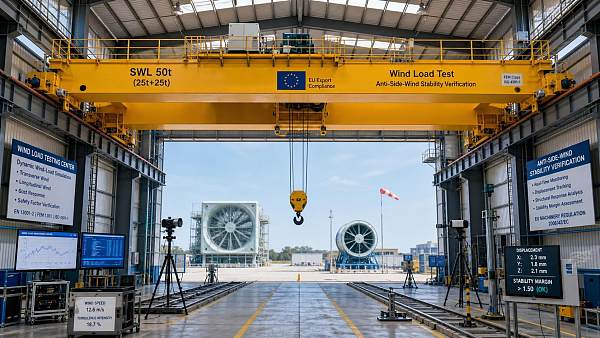
According to the provided event information, the revised EN 13001-3:2026 was published in the OJEU on August 9, 2026 and becomes mandatory on November 1, 2026. The rule requires all double-girder overhead cranes, RMG gantry cranes, and anti-sway automated cranes exported to the EU to complete dual verification under the updated wind-stability approach: dynamic simulation plus physical testing. The revision also raises the precision required for lateral wind-load simulation and increases the structural response thresholds used in assessment. The stated direct consequence is an impact on the path and timing of CE type certification.
Where the pressure is likely to appear first
Export programs facing a narrower certification window
From an industry perspective, exporters and equipment manufacturers are likely to feel the change first because the new standard affects products destined for the EU market before shipment and market entry. The main business impact may appear in model qualification, technical file preparation, and delivery scheduling. What deserves closer attention is whether existing compliance documentation, validation records, and product-level technical submissions are sufficient under the revised testing expectation.
Certification and testing workflows becoming more demanding
Analysis shows that certification-related service providers and internal compliance teams may need to adjust their review flow because the rule now points to a dual-validation method rather than a single line of technical substantiation. The practical effect is likely to center on how simulation evidence and measured results are organized, matched, and presented within the CE type-certification process. For companies already preparing EU-bound projects, the completeness and consistency of testing records and technical documentation become a more immediate concern.
Procurement and project delivery may need earlier alignment
Observably, buyers, project contractors, and supply-chain coordinators may also be affected because compliance timing can influence procurement milestones and delivery commitments. Where tendering, factory acceptance, or shipment planning depends on certification progress, companies may need to review whether technical specifications, supplier qualification terms, and contractual delivery assumptions still align with the new enforcement date.
What companies should review now
Recheck the certification path for affected product categories
Analysis shows that companies handling double-girder overhead cranes, RMG gantry cranes, and anti-sway automated cranes for the EU market should first confirm which ongoing and upcoming projects fall within the revised standard's scope. The immediate issue is not only technical compliance, but also whether the current CE type-certification route still fits the expected approval timeline after the new requirement takes effect.
Compare technical files against the dual-verification expectation
What deserves closer attention is the readiness of technical documents tied to wind-stability assessment. Businesses should review whether their simulation materials, measured test records, and supporting engineering files can be presented in a form that is consistent with the updated requirement. The provided information does not specify detailed execution rules, so this should be treated as a compliance review priority rather than as a confirmed checklist.
Reassess delivery timing and bid alignment
From an industry perspective, companies involved in quotation, tender response, and export delivery should examine whether project schedules assume a certification timeline that may no longer hold. Where delivery dates are tight, the interaction between testing, documentation, and certification review deserves renewed attention. This is especially relevant for contracts or bids that rely on fixed technical commitments for EU-bound equipment.
Keep watching how the rule is applied in practice
Observably, the mandatory date gives the market a clear compliance signal, but the input information does not provide detailed application guidance, review practice, or transitional handling beyond the effective date. Companies should therefore continue monitoring later official wording, certification interpretations, tender-document adjustments, and feedback emerging from implementation.
Why this reads as more than a technical revision
Analysis shows that this development is better understood as an implementation-level compliance signal rather than a purely academic update to a standard text. The reason is that the revised requirement is tied directly to CE type certification and introduces a more demanding verification structure for wind stability. At the same time, it would be premature to treat all downstream effects as settled, because the provided information does not define how every review body, buyer, or project document will apply the new requirement in practice.
How the market should read this stage
It is more appropriate to understand this event as a confirmed rule change with immediate practical relevance for EU-bound lifting equipment, especially where certification timing and delivery commitments are sensitive. The strongest current signal is that compliance preparation can no longer rely on older assumptions for the affected crane categories. Broader market effects, however, still require observation through actual certification handling, procurement responses, and project-level execution feedback.
Basis of this article and what still needs verification
This article is generated from the user-provided news title, event date, and event summary. For events of this kind, relevant source categories usually include official notices, regulatory publications, trade or customs authority information, industry association releases, standard-organization documents, and reporting by authoritative media. The specific official source link was not provided in the input and should therefore be continuously verified. What still merits follow-up includes any further implementation detail, certification interpretation, tender-document changes, industry feedback, and how affected companies execute compliance in practice.
Recommended News
 Aug 14, 2026China Tightens Export Checks on Lifting Equipment, Including Double Girder Overhead CranesChina tightens export checks on double girder overhead cranes and other lifting equipment. Learn what exporters must do to avoid customs rejection and delays.
 Aug 10, 2026How to Specify Steel Mill Crane Systems for Heat, Load, and Duty CycleSteel mill crane systems specification guide for heat, load, and duty cycle. Learn how to reduce downtime, improve safety, and choose the right crane for demanding mill operations.
 Aug 10, 2026EN 13001-3:2026 Tightens Wind Stability TestsEN 13001-3:2026 tightens wind stability tests for EU-bound cranes, requiring simulation plus physical verification. Learn how CE certification, exports, and delivery timelines may be affected.
 Jul 27, 2026EU Updates EN 13001-3-1:2026 for Crane Wind StabilityEN 13001-3-1:2026 updates crane wind stability rules for Double Girder Overhead Cranes in the EU. Learn the new testing, CE compliance, and delivery impacts before 2027.
 Jul 07, 2026Precision Lifting Crane: Key Factors for Accurate Load PositioningPrecision lifting crane performance depends on anti-sway control, rigid structure, VFD tuning, and sensors. Learn what drives accurate load positioning before you buy.
 Jun 21, 2026Overhead Cranes for Workshops: Key Specs Before You ChooseOverhead cranes for workshops: compare capacity, span, headroom, duty class, and safety features to choose the right system, reduce downtime, and improve workflow ROI.
 Jun 20, 2026Heavy Component Hoisting Solutions for Tight Plant InstallationsHeavy component hoisting solutions for tight plant installations improve safety, precision, and shutdown control. Discover smart lifting strategies for confined industrial projects.
 Jun 17, 2026BOJ Rate Hike Lifts Appetite for Premium Equipment ImportsBOJ rate hike boosts Japan’s interest in premium equipment imports. See how a stronger yen may lift demand for Double Girder Overhead Cranes, VNA articulated trucks, and Li-ion forklifts.
 Jun 13, 2026China Extends Smart Pre-Clearance to Overhead CranesChina extends smart pre-clearance to overhead cranes, cutting port inspection time to 4 hours for eligible AEO exporters. Learn the new document requirements and shipment planning impact.
 Jun 11, 2026China Customs Tightens Export Declarations for CranesChina Customs tightens export declarations for cranes from June 30, 2026. Learn how Double Girder Overhead Cranes and RMG Gantry Cranes may face stricter filing rules.
 Jun 10, 2026Steel Mill Overhead Cranes: Key Duty Class and Heat Protection ChecksSteel mill overhead cranes demand more than rated capacity. Learn how duty class and heat protection checks improve safety, uptime, and long-term performance in harsh steel plant operations.
 May 28, 2026Overhead cranes can cut delays if layout is plannedOverhead cranes cut delays when layout is planned right. Learn how smarter crane zoning, safer load paths, and workflow alignment boost throughput and reduce costly downtime.