Search News
Industry Portal
Popular Tags
How much do industrial electric hoist systems cost fully installed?
Author
Time
Click Count
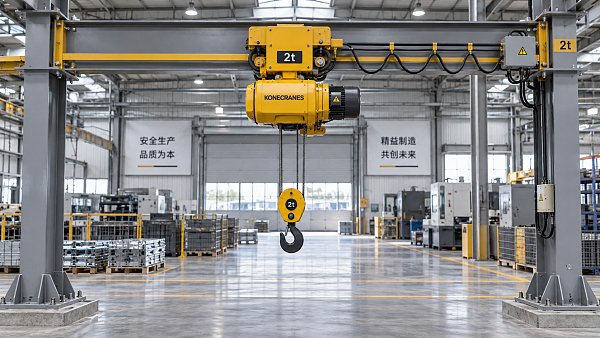
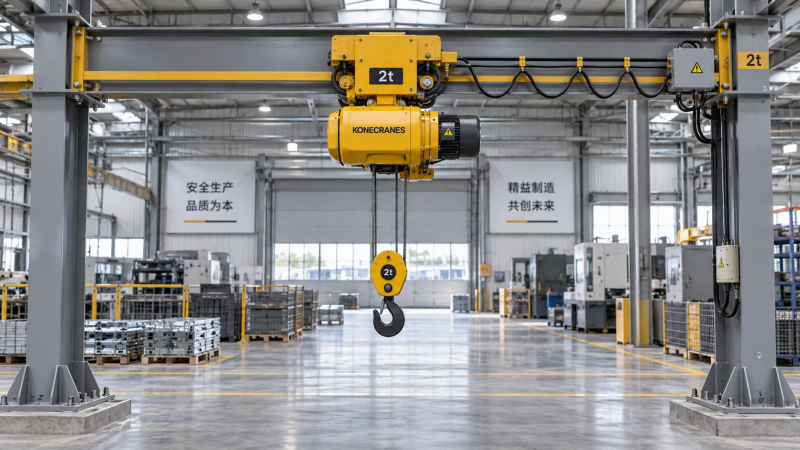
The fully installed cost of an industrial electric hoist system includes the hoist and trolley, verified supporting structure, power supply, installation labor, testing, and commissioning. A replacement fitted to an approved existing beam has a substantially different cost basis from a new lifting system requiring structural steel, foundations, and electrical distribution. A defensible total requires a defined installation scope; a hoist catalog price alone cannot establish the project budget.
No project specification or supplier quotation is available here to support a reliable currency range. The useful starting point is therefore a cost boundary: identify everything required to turn delivered equipment into an accepted lifting installation. This exposes the differences between quotations and shows which site conditions must be resolved before a firm price becomes meaningful.
Establish exactly what the installed price covers
“Fully installed” has no consistent commercial meaning across quotations. One offer includes mechanical erection and connection to a nearby isolator. Another includes a new supply circuit, access equipment, test loads, commissioning, and handover documents. Both can use the same description while leaving different amounts of work outside the contract.
A practical budget follows this relationship:
Installed project cost = equipment + structural work + electrical work + logistics and access + installation + testing and commissioning + applicable taxes and duties + allowance for unresolved scope.
Production interruption should also be tracked when installation requires a shutdown. It belongs in the project’s economic assessment even when it is not part of the installation contractor’s invoice.
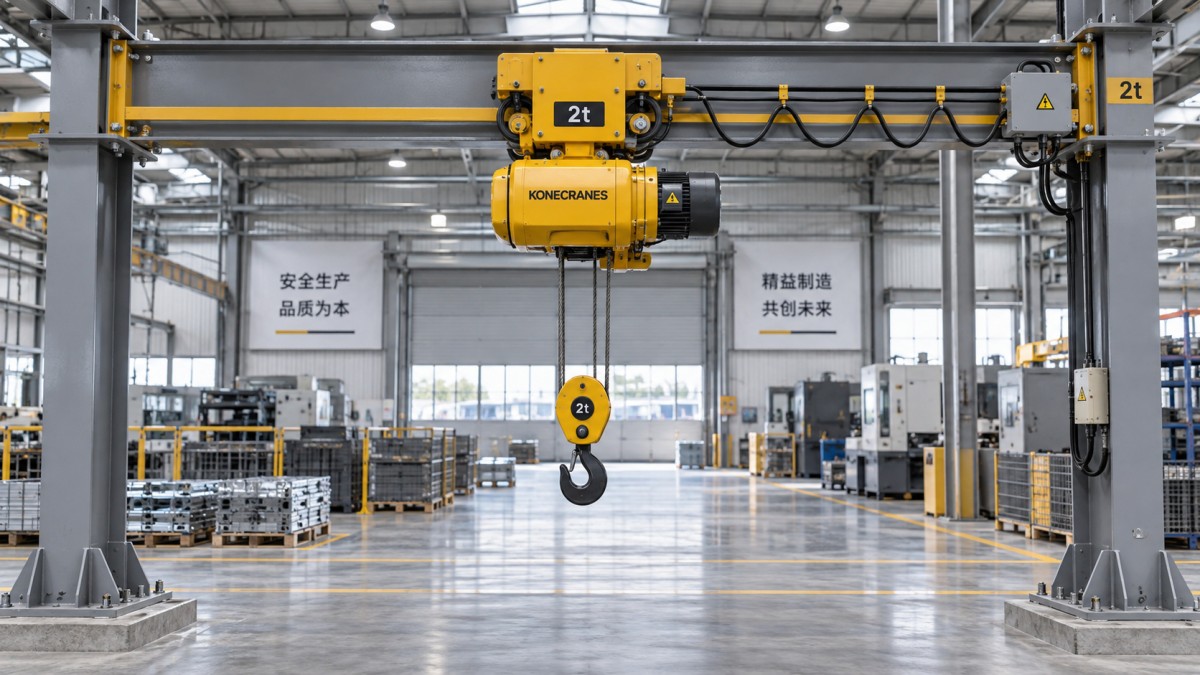
The boundary between a hoist installation and a complete crane installation deserves particular attention. Adding bridge travel, runway rails, supporting columns, or a freestanding gantry expands the project beyond the hoist package. Comparing those projects under a single “electric hoist system” price creates misleading expectations.
The existing support determines the first major budget split
Reusing a suitable beam removes substantial fabrication and erection work, but suitability must be established. Rated lifting capacity alone does not describe the forces transmitted into the building. Assessment must account for equipment self-weight, lifted load, dynamic effects, trolley movement, and the load path through connections and supports.
A beam that supported a previous hoist is not automatically suitable for a replacement with the same nominal capacity. Different trolley wheel spacing, wheel loads, equipment weight, or travel characteristics can change the structural assessment. Beam flange dimensions must also match the trolley’s permitted adjustment range and running requirements.
Where drawings are missing, a site survey and engineering assessment become early project costs. Discovering inadequate support after equipment delivery creates further expense through redesign, storage, additional visits, and postponed commissioning.
A freestanding structure can avoid relying on an existing building, but it introduces its own requirements. Baseplates, anchors, floor capacity, foundation design, clearances, and erection access all need definition. A floor that accommodates production traffic does not, by itself, establish suitability for concentrated column reactions.
Capacity alone does not explain the equipment price
Two hoists carrying the same rated load can differ substantially in construction and price because their working demands differ. Capacity must cover the total suspended load, including below-hook attachments where applicable. Duty selection then depends on the load spectrum, operating frequency, running time, and starts associated with the lifting task.
An occasional maintenance lift and repeated production handling place different demands on motors, brakes, gearing, and other components. Selecting only by maximum load risks comparing equipment intended for different service conditions. Specifying excessive duty without an operational reason also adds cost without establishing useful value.
Lift height, headroom, and travel
Lift height affects the lifting medium, storage arrangement, and equipment configuration. Available headroom is a separate constraint: the distance between the supporting structure and the highest achievable hook position determines whether the load clears nearby machinery. A standard arrangement that fits the beam can still fail to provide the required usable lifting height.
Manual and powered trolleys also create different installed scopes. Powered travel adds drives, controls, and electrical connections. Its value depends on travel distance, load handling frequency, and the effort and control required to position the suspended load.
Chain and wire rope hoists should be compared against the application rather than treated as interchangeable price categories. Available configurations differ in duty capability, geometry, speed, and maintenance requirements. The relevant comparison is between complete packages that meet the same lifting task.
Controls and operating environment
Variable-speed control can support controlled acceleration and positioning, but its value should relate to a defined handling requirement. Specify the required movement and stopping behavior, then compare the proposed drive arrangements. A control feature listed without an application requirement makes quotation differences harder to interpret.
Outdoor exposure, washdown, corrosive conditions, and hazardous-area classifications introduce separate specification questions. Protection must apply to the relevant motors, brakes, enclosures, controls, and wiring. A general description such as “industrial grade” does not define these requirements sufficiently for comparable pricing.
Electrical work extends beyond connecting the motor
Supply voltage, phase, and frequency must match the selected equipment. The installation also needs a suitable circuit, protective devices, isolation, earthing, and wiring arrangements. Existing spare capacity should be confirmed before treating a nearby distribution board as an available connection point.
The cable route often explains more of the site electrical cost than the straight-line distance to the hoist. Routing around production equipment, crossing fire compartments, working at height, and scheduling shutdown access all affect labor and materials. A quotation based on an unobstructed route becomes unreliable when those assumptions are wrong.
Traveling equipment needs a power-feed arrangement suited to its movement. Festoon systems and conductor systems involve supports, clearances, terminations, and maintenance access. Their installation boundaries should identify who supplies and fits each component, including the connection between the fixed supply and the moving equipment.
Control integration deserves its own line item when the hoist interacts with machinery, restricted travel zones, or coordinated lifting functions. Interface design, wiring, configuration, and validation require work beyond installing a standard pendant-controlled unit.
Access, installation timing, and testing create overlooked charges
Delivery to the site gate does not include unloading and moving the equipment into position unless the quotation says so. Packed dimensions, component weights, doorway clearances, floor conditions, and the available lifting position determine the handling method. Access equipment must reach the work area without conflicting with machinery or overhead services.
Installation during a planned shutdown can require extended hours or tightly coordinated work. Installation during normal production introduces segregation, access restrictions, and interruptions. Neither arrangement is automatically cheaper; the cost follows the usable work window and the resources needed to complete the job within it.
Testing needs a defined scope before contract award. Functional checks and load testing address different matters, and a factory test does not verify the finished site installation. Applicable local requirements, the system configuration, and the acceptance specification determine the necessary testing and documentation.
Where test loads are required, the budget must cover their provision, transport, positioning, and removal. The structure and installation need to be ready for the specified test. Late changes to the test method can leave hired equipment and installation personnel waiting on site.
Commissioning also includes setting and verifying the relevant limits and protective functions, confirming travel behavior, recording results, and completing handover. Any requirement for external witnessing should identify the responsible party and scheduling arrangements. An otherwise complete installation can remain unavailable while an acceptance dependency is unresolved.
Compare quotations using a common completed scope
Start with a shared operating specification and site information package. It should define the load, attachments, working cycle, lift height, travel distance, headroom, environment, electrical supply, and structural arrangement. Drawings and site photographs help explain constraints, but hidden conditions still require investigation where they affect the design.
Each quotation should then state its inclusions, exclusions, assumptions, and acceptance deliverables. A lump sum is useful only when its scope is clear. Detailed pricing also helps identify whether a lower total reflects an efficient installation method, a different equipment specification, or omitted work.
- Equipment-only exclusions: add the missing electrical, structural, installation, and commissioning packages before comparing the total with an installed offer.
- A provisional structural allowance remains uncertain until the support design is verified. Record the assumption behind it and the basis for adjusting the price.
- Freight and import terms determine where transport responsibility and charges transfer. Unloading, duties, and local handling need explicit treatment where relevant.
- Payment milestones should distinguish delivery from installation and acceptance, particularly when the equipment arrives well before the site is ready.
Compare the alternatives at the same completion point: an installation accepted against the agreed requirements, with the required records delivered. A cheaper offer that stops at mechanical erection leaves a different amount of work to fund and coordinate.
Contingency should follow identifiable uncertainty. An unverified beam, an unknown cable route, and an unresolved shutdown window are separate budget exposures. Surveying or engineering those items before award can convert allowances into defined prices; applying an arbitrary percentage leaves the underlying questions unanswered.
Set the commercial boundary before placing the order
The final installed price becomes credible when responsibility is assigned across equipment supply, structural approval, power provision, erection, testing, and acceptance. Where several contractors are involved, the handover points matter: who provides the isolator, who connects the moving feed, who supplies test loads, and who confirms readiness for commissioning.
Long-term cost also deserves a focused comparison. Local spare-part availability, access for brake and lifting-medium inspection, and the ability to service the unit without dismantling surrounding equipment affect maintenance effort and downtime. These are useful differentiators when two installed offers otherwise meet the same specification.
Before commitment, record the conditions that permit a price variation and the evidence required to support one. A firm equipment price combined with undefined site work still leaves the final installed cost open. Closing those gaps produces a budget tied to a usable lifting system and a clear acceptance point.
Recommended News
 Oct 27, 2026When do industrial fleet electrification solutions pay for themselves?When do industrial fleet electrification solutions pay off? Explore charging costs, battery risks, and real operating savings to build a stronger, evidence-based investment case.
 Oct 26, 2026How much more does explosion-proof material handling equipment cost?Understand explosion-proof material handling cost, compare equipment premiums and compliance needs, and uncover smarter ways to budget without compromising safety.
 Oct 23, 2026U.S. MHEDA Releases 2027 Material Handling Business Trends ReportExplore MHEDA’s 2027 material handling business trends report: five forces and 18 trends to help distributors and warehouse buyers rethink technology, workforce needs and investment plans.
 Oct 21, 2026How much does working height affect aerial work platform prices?Compare aerial work platforms price quotes and see how working height affects costs. Discover key price drivers, avoid hidden expenses, and choose the right lift for your budget.
 Oct 21, 2026Brightstar Capital Announces Acquisition of Majority Stake in MHGBrightstar Capital acquires a majority stake in MHG to support growth in material handling equipment and aftermarket services. Explore what the deal could mean.
 Oct 16, 2026How much do industrial electric hoist systems cost fully installed?Explore industrial electric hoist systems cost, from equipment and structural work to testing. Compare installation scopes, spot hidden charges, and budget with confidence.
 Oct 01, 2026When warehouse automation solutions for manufacturing pay offWarehouse automation solutions for manufacturing: learn when automation delivers ROI through reliable material flow, lower costs, and scalable production capacity.
 Oct 10, 2026Material Handling Equipment Market: Demand Drivers for Warehouse InvestmentMaterial handling equipment market demand is rising as warehouses invest in safer, smarter, high-uptime solutions for throughput, labor, and energy challenges.
 Oct 10, 2026Evaluating Material Handling Equipment Manufacturers Beyond Product SpecificationsMaterial handling equipment manufacturers: learn how to compare application fit, safety, service support, lifecycle cost, and automation readiness beyond product specifications.
 Oct 09, 2026Buying Material Handling Equipment in the USA: Lead Times, Service, and PartsMaterial handling equipment USA buying guide: compare lead times, local service coverage, parts availability, warranties, and downtime costs to choose reliable equipment.
 Oct 05, 2026Is Automated Warehousing Worth It for a Port Spare Parts Warehouse?Is automated warehousing worth the investment for a port spare parts warehouse? Explore ROI, uptime gains, inventory control, and practical automation strategies.
 Sep 26, 2026When does a smart warehouse ASRS justify its upfront cost?Smart warehouse ASRS investment: discover when automation delivers measurable ROI through space savings, labor control, higher throughput, and resilient operations.
 Sep 20, 2026When do smart material handling systems in India justify the investment?Smart material handling systems India: learn when automation delivers ROI through safer workflows, higher throughput, lower downtime, and lifecycle cost control.
 Sep 11, 2026What drives rental equipment total cost of ownership beyond the daily rate?Rental equipment total cost of ownership goes beyond daily rates. Discover how transport, downtime, energy, labor, compliance, and off-rent control shape smarter rental decisions.
 Sep 02, 2026What determines warehouse stacking systems price for a new warehouse?Warehouse stacking systems price depends on density, loads, aisle design, forklifts, installation, safety, and lifecycle costs. Compare smarter for your new warehouse.
 Aug 26, 2026What drives ASRS integration pricing in warehouse automation projectsASRS integration pricing depends on software scope, site conditions, throughput goals, and risk allocation—not just equipment. Learn what really drives costs and compare bids with confidence.
 Aug 25, 2026When does renting logistics equipment in India cost less than buying?Logistics equipment India: Learn when renting costs less than buying by comparing utilization, maintenance, downtime, cash flow, and project flexibility for smarter decisions.
 Aug 19, 2026When does AGV warehouse systems integration pay off in existing facilities?AGV warehouse systems integration pays off when repetitive pallet moves, labor shortages, and safety costs hurt performance. Learn when retrofitting existing facilities delivers ROI.
 Aug 16, 2026What drives logistics equipment price in warehouse projects?Logistics equipment price in warehouse projects depends on capacity, power, safety, and automation—learn what really drives cost and make smarter buying decisions.
 Aug 03, 2026Scissor Lifts Price Breakdown: What Changes Cost by Height, Power, and Duty CycleScissor lifts price explained by height, power source, platform capacity, and duty cycle. Learn what really changes cost and compare quotes with confidence before you buy.
 Jul 30, 2026How Forklift Fleet Technology Cuts Downtime and Lowers Total CostForklift fleet technology helps reduce downtime, improve utilization, and lower total cost with smarter maintenance, battery control, and fleet visibility. Learn what buyers should evaluate.
 Jul 27, 2026Smart Winch Systems Cost: What Drives Total Price in 2026?Smart winch systems cost in 2026 depends on more than unit price. Explore key drivers like controls, safety, installation, and lifecycle support to budget smarter.
 Jul 21, 2026Industrial Automation Integration: Cost Drivers and ROI BenchmarksIndustrial automation integration costs are shaped by controls, software, retrofits, and downtime. Explore key ROI benchmarks, payback ranges, and practical ways to evaluate project value.
 Jul 18, 2026Material Handling Market Growth: Key Cost and Demand Signals for 2026Material handling market growth in 2026 is driven by labor costs, electrification, automation, and safety compliance. Discover key demand signals shaping smarter equipment investments.