Search News
Industry Portal
Popular Tags
Smart Winch Systems Cost: What Drives Total Price in 2026?
Author
Time
Click Count
Smart Winch Systems Cost: What Drives Total Price in 2026?
For procurement teams planning 2026 investments, understanding smart winch systems cost means looking beyond the base unit price. Total spend is shaped by load capacity, control intelligence, safety functions, installation complexity, compliance requirements, and long-term maintenance strategy. This guide explains the key cost drivers so buyers can compare suppliers more accurately, reduce procurement risk, and achieve stronger lifecycle value.
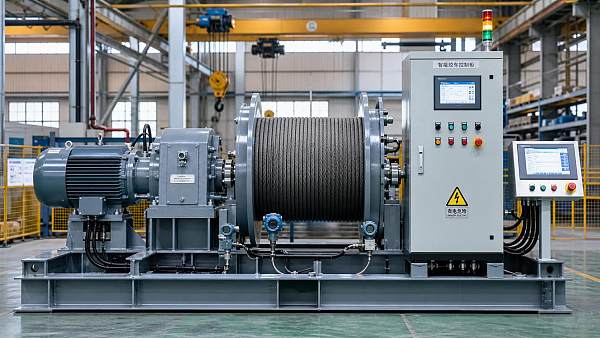
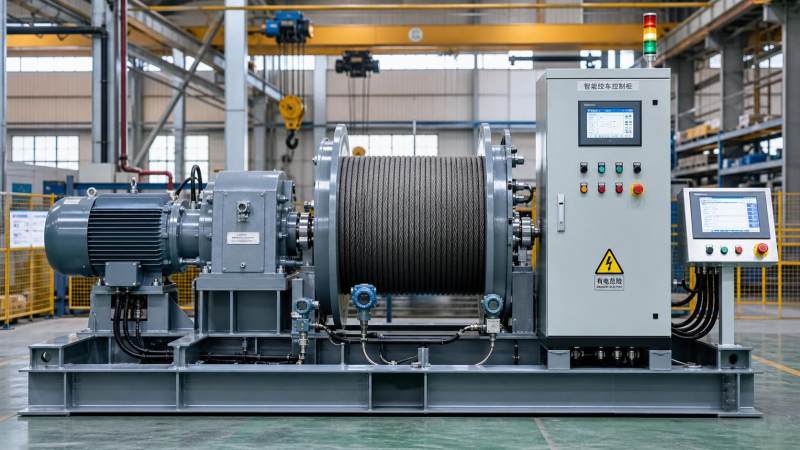
The first mistake buyers make is comparing winches the way they would compare a commodity motor or standard hoist. A smart winch system is usually a package: mechanical body, gearbox, drum, drive, sensors, PLC or controller logic, HMI, communication interface, safety layer, and sometimes remote monitoring. Two quotes can look close on paper and still be miles apart in actual scope.
If your team is trying to build a realistic budget, these are the checkpoints worth reviewing before you ask for final pricing.
Start with duty, not rated pull
Suppliers often lead with line pull capacity because it is simple to quote. Procurement should push further. Ask what duty cycle the quoted price assumes, what line speed is maintained under load, and whether the system is built for intermittent lifting, synchronized pulling, positioning, or continuous industrial operation.
A smart winch used in a shipyard, automated handling line, stage motion setup, or heavy industrial maintenance program will price very differently from a unit intended for occasional pulling. The difference is not marketing language. It usually shows up in motor sizing, brake design, thermal management, control architecture, and gearbox life.
- Check whether the quote is based on maximum load or normal working load.
- Confirm line speed at load, not empty-drum speed.
- Ask for rope capacity assumptions, drum layer effect, and reeving configuration if applicable.
- Verify expected starts per hour and operating hours per day.
If these points are vague, the price is not really comparable yet.
Control intelligence changes the budget faster than many buyers expect
When people search for smart winch systems cost, they usually think the premium sits in the mechanical hardware. In many projects, the bigger cost jump comes from the control layer.
Basic variable speed control is one thing. Closed-loop load control, synchronized multi-winch movement, tension regulation, anti-sway logic, position feedback, overload diagnostics, remote fault reporting, and integration with a plant PLC are another. Once you move into coordinated motion, the engineering hours rise along with component cost.
A useful buying question is this: are you paying for “smart features” that operators will actually use, or for a specification that became inflated during internal discussions? Procurement teams often inherit a wish list from operations, maintenance, and safety, then discover that half the requested functions are nice to have rather than mission critical.
Trim the quote into three layers: must-have, site-specific, and optional. That one exercise can save a surprising amount of budget.
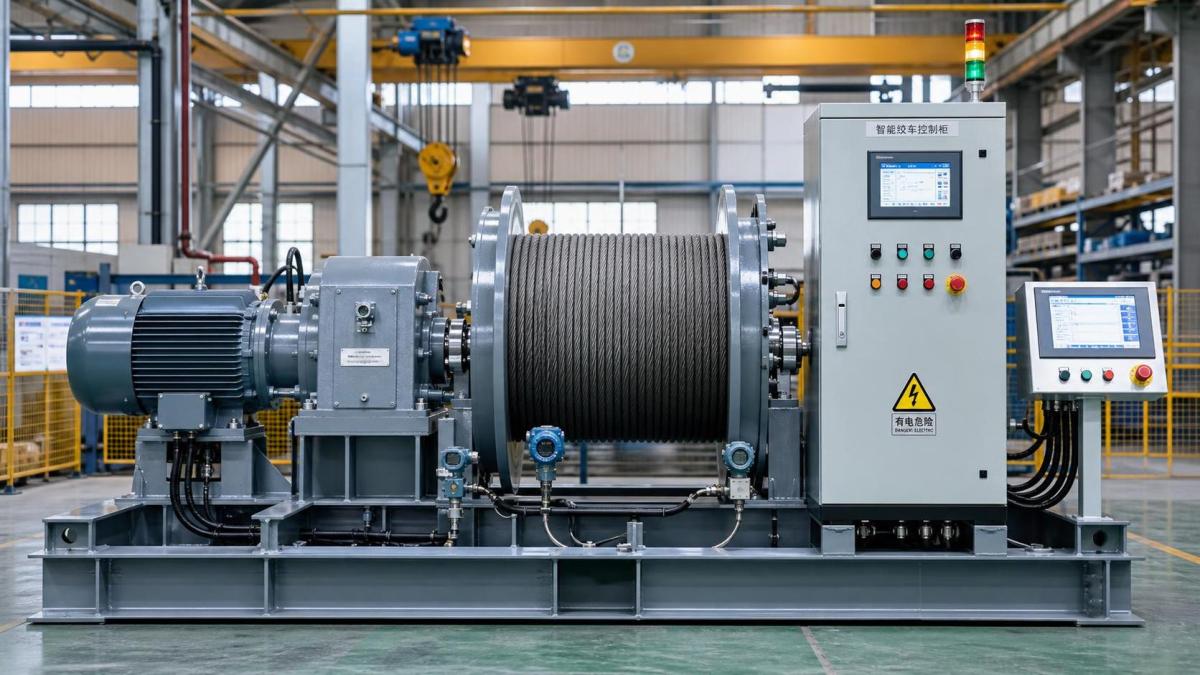
Sensors and feedback devices are small lines on a quote, but they drive system complexity
Load cells, encoders, limit switches, rope monitoring devices, angle sensors, and condition monitoring modules do not always look expensive individually. The issue is what they trigger around them: wiring, calibration, software logic, fault handling, and commissioning time.
This is where low quotes sometimes become expensive later. A supplier may include hardware but leave calibration, redundancy design, or integration testing outside the base price. Another supplier may price the complete loop. On paper, the first one looks cheaper. In the field, it may not be.
Ask specifically whether the sensors are included as installed, tested, and functional within the control logic, or only supplied as loose components.
Safety functions are not an add-on line item in serious applications
For lifting and controlled pulling applications, safety architecture can materially change total cost. Emergency stop circuits, overload protection, upper and lower travel limits, fail-safe brakes, slack rope detection, safe speed monitoring, and interlocks with surrounding equipment all affect engineering scope.
If the equipment will be used in regulated industrial environments, ask which standards the supplier is designing toward and which are the buyer’s responsibility at the complete machine or system level. This matters because component compliance does not automatically mean the installed system is compliant. Requirements can vary by market and application, and details should be checked against project documents and local regulations rather than assumed. If a supplier makes broad certification claims without scope notes, treat that as a review point.
Cheap safety wording in a quote usually means expensive clarification later.
Integration cost is often underestimated
A standalone smart winch is one budget. A smart winch that must communicate with cranes, AGVs, automated storage systems, marine equipment, or plant SCADA is another.
The hidden cost usually sits in interface definition. Which protocol is needed? Modbus, Profinet, EtherNet/IP, CAN-based architecture, or something proprietary? Who supplies the I/O list? Who proves signal mapping? Who owns FAT and SAT troubleshooting if the winch works but the upstream machine does not react correctly?
These details affect supplier engineering hours more than buyers expect. They also affect project risk. If your site team is not ready with interface documents, suppliers will either add contingency into price or leave scope open. Neither is ideal.
Environment can move the number more than load class
A buyer may focus on tonnage while missing the environmental specification. Indoor warehouse use is one thing. Outdoor construction, portside handling, offshore-related work, dusty plants, corrosive conditions, washdown areas, and cold environments all change material choice, enclosure requirements, cable protection, paint system, and sensor reliability.
This is why one smart winch systems cost estimate can look unexpectedly high even when capacity is moderate. The supplier may be pricing for stainless or upgraded coatings, sealed components, special connectors, heaters, or a more robust enclosure. If your RFQ only says “outdoor use,” expect inconsistent offers. Site conditions need to be described properly.
A practical checklist for the RFQ: ambient temperature range, humidity, dust level, splash or washdown exposure, corrosive atmosphere, hazardous area classification if relevant, and available power quality details. If these are unknown, mark them clearly as 【待核实】 rather than leaving suppliers to guess.
Installation and structural work belong in the budget from day one
Some purchasing teams treat installation as a later conversation. That usually distorts the business case. Mounting steel, foundations or support frames, electrical feeders, cable trays, guarding, access platforms, and load testing arrangements can be a serious share of the total project cost, especially when retrofitting into an existing plant.
Retrofit projects deserve extra caution. Existing structures may not be documented well. Space claims may be wrong. Cable runs may be longer than assumed. Maintenance access may force redesign. None of that is unusual. It just needs to be priced honestly.
When comparing suppliers, separate equipment price from installed project price. Both matter, but they are not the same number.
Software, commissioning, and training are where “smart” becomes real
A winch can be mechanically sound and still fail the project because commissioning was under-scoped. Buyers should ask what is included in programming, tuning, testing, operator training, and maintenance handover. Is remote support included during startup? Are software revisions chargeable after FAT? Is there a backup and recovery procedure for the control program?
This matters even more with synchronized or precision-controlled systems. Field tuning takes time. If the quote assumes one short visit and the site conditions are messy, costs rise quickly through change orders and delays.
Don’t ignore spare parts and service access
The right buying question is not only “What does it cost to buy?” but “What does it cost to keep available?” Sensors, drives, brakes, rope handling components, and HMIs may have very different lead times depending on brand and region. Imported controls can be perfectly acceptable, but buyers should know the support model before approval.
Ask for a recommended spare parts list by criticality, not a generic catalog. Request identification of long-lead items. If software access is restricted, confirm how fault recovery will work after warranty. A low purchase price can turn into expensive downtime if only the OEM can unlock diagnostics.
Supplier comparison should be scope-normalized
This is probably the most important procurement discipline in the whole process. Before ranking quotations, normalize them line by line. Confirm what each supplier includes for controls cabinet, sensors, cables, local pendant or HMI, wireless control if required, software, factory testing, site commissioning, documentation, training, and warranty.
Also look at exclusions carefully. Some of the cheapest offers are simply cleaner at omitting things.
- Build a comparison sheet from your required functions, not from supplier brochures.
- Mark unclear lines as open commercial risk.
- Ask for confirmation of any assumption that changes safety, controls, or commissioning scope.
- Price the lifecycle impact of support access and spare parts, not just capital spend.
What a solid RFQ should already answer
If suppliers keep coming back with very different prices, the RFQ is often the reason. A good RFQ for smart winch procurement should define application, working load, duty expectations, control philosophy, required interfaces, environmental conditions, site constraints, compliance expectations, testing scope, and service expectations. Without that, pricing spread is almost guaranteed.
For 2026 budgeting, the practical move is simple: do not treat smart winch systems cost as a single equipment number. Treat it as an engineered system cost with mechanical, electrical, software, safety, and service layers. Buyers who do that early usually get cleaner quotations, fewer surprises during commissioning, and a much better handle on total ownership cost.
If you need one working rule, use this: when a quote looks unusually low, check what has been left undefined. In this category, missing scope is often where the real price is hiding.
Recommended News
 Sep 11, 2026What drives rental equipment total cost of ownership beyond the daily rate?Rental equipment total cost of ownership goes beyond daily rates. Discover how transport, downtime, energy, labor, compliance, and off-rent control shape smarter rental decisions.
 Sep 02, 2026What determines warehouse stacking systems price for a new warehouse?Warehouse stacking systems price depends on density, loads, aisle design, forklifts, installation, safety, and lifecycle costs. Compare smarter for your new warehouse.
 Aug 26, 2026What drives ASRS integration pricing in warehouse automation projectsASRS integration pricing depends on software scope, site conditions, throughput goals, and risk allocation—not just equipment. Learn what really drives costs and compare bids with confidence.
 Aug 25, 2026When does renting logistics equipment in India cost less than buying?Logistics equipment India: Learn when renting costs less than buying by comparing utilization, maintenance, downtime, cash flow, and project flexibility for smarter decisions.
 Aug 19, 2026When does AGV warehouse systems integration pay off in existing facilities?AGV warehouse systems integration pays off when repetitive pallet moves, labor shortages, and safety costs hurt performance. Learn when retrofitting existing facilities delivers ROI.
 Aug 16, 2026What drives logistics equipment price in warehouse projects?Logistics equipment price in warehouse projects depends on capacity, power, safety, and automation—learn what really drives cost and make smarter buying decisions.
 Aug 03, 2026Scissor Lifts Price Breakdown: What Changes Cost by Height, Power, and Duty CycleScissor lifts price explained by height, power source, platform capacity, and duty cycle. Learn what really changes cost and compare quotes with confidence before you buy.
 Jul 30, 2026How Forklift Fleet Technology Cuts Downtime and Lowers Total CostForklift fleet technology helps reduce downtime, improve utilization, and lower total cost with smarter maintenance, battery control, and fleet visibility. Learn what buyers should evaluate.
 Jul 27, 2026Smart Winch Systems Cost: What Drives Total Price in 2026?Smart winch systems cost in 2026 depends on more than unit price. Explore key drivers like controls, safety, installation, and lifecycle support to budget smarter.
 Jul 21, 2026Industrial Automation Integration: Cost Drivers and ROI BenchmarksIndustrial automation integration costs are shaped by controls, software, retrofits, and downtime. Explore key ROI benchmarks, payback ranges, and practical ways to evaluate project value.
 Jul 18, 2026Material Handling Market Growth: Key Cost and Demand Signals for 2026Material handling market growth in 2026 is driven by labor costs, electrification, automation, and safety compliance. Discover key demand signals shaping smarter equipment investments.
 Jul 17, 2026Warehouse Automation Solutions with IoT: Costs, ROI, and Key Integration RisksWarehouse automation solutions with IoT: explore real costs, ROI timelines, and key integration risks to cut downtime, improve visibility, and choose the right system with confidence.
 Jul 15, 2026Heavy Lifting Equipment Price: What Drives Total Cost in 2026Heavy lifting equipment price in 2026 depends on more than the purchase quote. Learn the hidden cost drivers, lifecycle risks, and smart ways to compare offers before you buy.
 Jul 13, 2026Lifting Equipment Maintenance Cost: Budget Risks to WatchLifting equipment maintenance cost can quietly derail budgets. Learn the hidden risks, downtime drivers, and smart ways to control spend before the next budget cycle.
 Jul 13, 2026Heavy Load Positioning Systems Price: What Drives Total Cost?Heavy load positioning systems price depends on more than equipment cost. Learn the key drivers, hidden expenses, and how to compare quotes for safer, smarter investment decisions.
 Jul 11, 2026What to Check Before Choosing an Unmanned Material Handling CompanyUnmanned material handling company selection starts with the right checks. Learn how to evaluate safety, integration, service, and ROI before you choose a supplier.
 Jul 09, 2026Automated Warehousing Supplier Checklist: Integration, Uptime, and Expansion CostsAutomated warehousing supplier checklist covering integration, uptime, and expansion costs. Learn how to compare vendors, reduce risk, and protect long-term ROI.
 Jul 09, 2026How to Evaluate a Heavy Lifting Equipment Supplier for Long-Term Project RiskHeavy lifting equipment supplier evaluation starts with risk, not price. Learn how to assess safety, service, compliance, and long-term project reliability before you buy.
 Jul 08, 2026Lifting Equipment for Construction: What to Compare Before You Rent or BuyLifting equipment for construction: compare load capacity, site conditions, compliance, uptime, and total cost before you rent or buy to reduce risk and improve project ROI.
 Jul 07, 2026Forklift Lifecycle ROI: Cost Drivers That Change Long-Term OwnershipForklift lifecycle ROI starts beyond the purchase price. Discover how battery strategy, maintenance, downtime, safety, and resale value shape smarter long-term ownership decisions.
![]() Jul 06, 2026Port Material Handling Operations: Where Delays and Costs Usually StartPort material handling operations often lose time and money before cargo even moves. Discover where delays begin, what drives hidden costs, and how smarter equipment choices improve throughput.
Jul 06, 2026Port Material Handling Operations: Where Delays and Costs Usually StartPort material handling operations often lose time and money before cargo even moves. Discover where delays begin, what drives hidden costs, and how smarter equipment choices improve throughput. Jul 05, 2026Industrial Forklifts Cost Breakdown: Purchase, Energy, Maintenance, and ResaleIndustrial forklifts cost goes beyond the sticker price. Compare purchase, energy, maintenance, downtime, and resale value to choose the most cost-effective forklift.
 Jul 02, 2026How to Evaluate a Construction Access Equipment Manufacturer in 2026Construction access equipment manufacturer selection in 2026 goes beyond specs. Learn how to compare safety, compliance, service, telematics, and lifecycle cost for smarter buying decisions.
 Jul 01, 2026Automated Storage and Retrieval Systems Cost BreakdownAutomated storage and retrieval systems cost explained clearly: compare cost drivers, hidden expenses, ROI factors, and system price ranges before approving your warehouse automation budget.