Search News
Industry Portal
Popular Tags
When do industrial fleet electrification solutions pay for themselves?
Author
Time
Click Count
When do industrial fleet electrification solutions pay for themselves?
Industrial fleet electrification solutions pay for themselves when cumulative operating savings recover the additional investment before the equipment leaves service—and without requiring operating conditions the site cannot sustain. That sounds straightforward. The difficult part is deciding what belongs in the investment, which savings are genuinely recoverable, and whether charging will support the busiest shift rather than the average one.
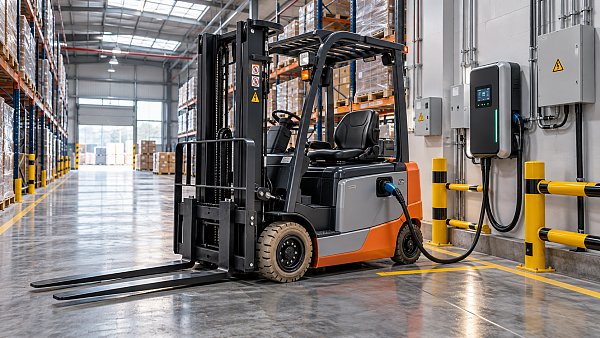
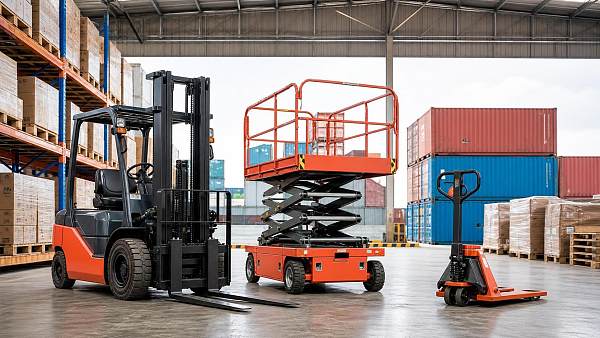
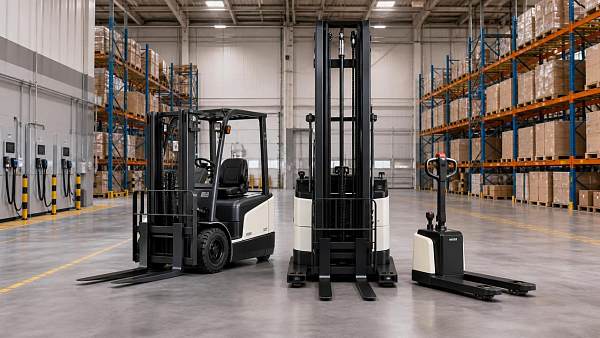
For electric forklifts, warehouse vehicles, and aerial work platforms, purchase price is only one part of the calculation. Utilization, energy tariffs, battery life, maintenance, financing, and charging infrastructure can change the answer considerably. A credible procurement decision starts with the work the fleet must perform, then tests whether electrification meets the organization’s investment hurdles under realistic conditions.
Start with the replacement decision, not the electric truck quotation
There are two different financial questions hiding inside most electrification proposals. One asks whether to choose electric equipment when existing machines are already due for replacement. The other asks whether to retire serviceable equipment early. Mixing them produces misleading payback figures.
At normal replacement, compare the electric option with the combustion-powered equipment you would otherwise buy. The relevant starting point is the incremental investment between credible alternatives, including their associated infrastructure. For early retirement, compare electrification with keeping the current fleet, allowing for its remaining maintenance costs, expected replacement timing, and disposal proceeds. Undepreciated book value may affect accounting results, but it is not itself a new cash outflow.
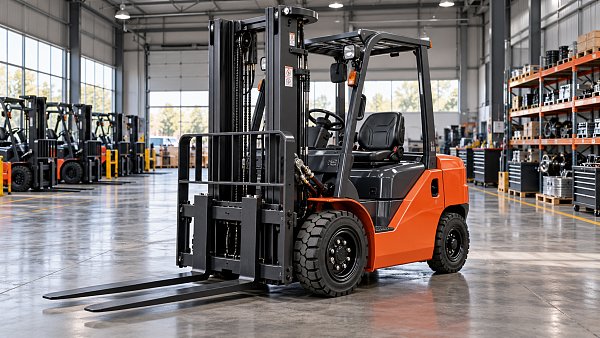
The comparison must also preserve operating capability. Match rated capacity at the required load center, lift height, attachments, travel conditions, and shift coverage. A cheaper electric forklift that needs another truck to cover charging interruptions is not an equivalent replacement.
Use a payback calculation that exposes the assumptions
For an initial screening, simple payback is useful:
Simple payback = net incremental upfront investment ÷ annual net operating cash savings.
The numerator should include the equipment premium, batteries, chargers, electrical installation, commissioning, training, and any additional fleet capacity required. Deduct only support payments or disposal proceeds that are eligible, reasonably certain, and appropriate to the comparison. The denominator should subtract all additional electric-fleet operating costs from the fuel, maintenance, and other cash costs genuinely avoided.
This formula assumes reasonably steady annual savings. Where utilization changes, batteries require replacement, or infrastructure spending arrives in stages, use a year-by-year cash-flow model. Payback occurs when cumulative net cash flow turns positive; discounted payback also recognizes the time value of money.
For approval, examine net present value over a common planning horizon as well. Include replacement expenditure and defensible residual values. Keep financing treatment consistent: do not count purchase expenditure and loan principal twice, or mix project cash flows with equity cash flows. Depreciation affects after-tax cash flow through tax treatment, not through a direct operating cash payment.
Productive utilization usually decides which machines go first
A busy warehouse forklift has more opportunities to accumulate fuel and maintenance savings than a yard truck used intermittently. But meter hours alone are a weak basis for forecasting. Separate productive travel and lifting from idling, queuing, and standby time. An engine running while its operator waits does not translate directly into equivalent electric energy demand.
Collect fuel records, service invoices, operating hours, and workload information over representative periods. Include peak dispatch days, seasonal demand, and unusual attachments. Clamp handling, frequent ramps, long travel distances, and repeated high lifts can materially affect battery consumption. Cold environments may also change available capacity and charging requirements, depending on the battery system.
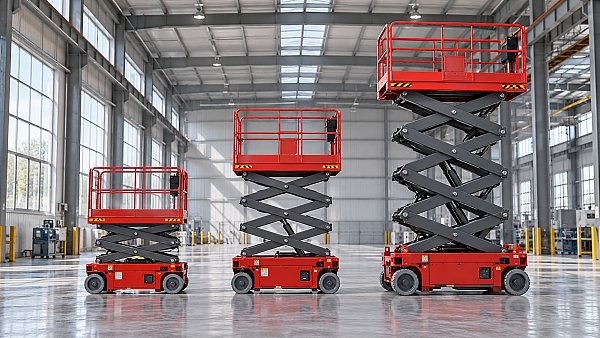
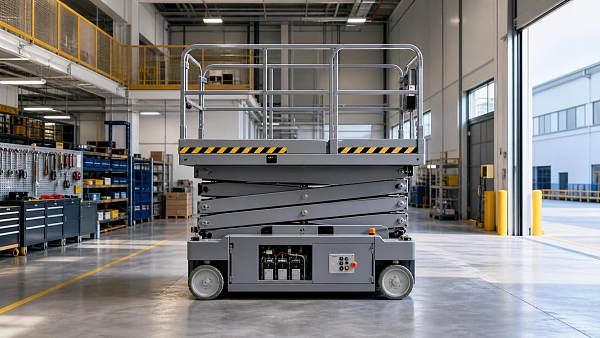
For aerial work platforms, assess the complete working day rather than elevation cycles alone. Driving distance, auxiliary loads, terrain, charging access, and rental turnover matter. A machine can be technically suitable for electric operation yet financially unattractive if it spends much of its ownership period idle.
This is why a phased conversion often deserves a closer look than an all-electric fleet commitment. High-use indoor equipment may justify investment while low-use, remote, or unusually demanding applications remain on another power source.
Price charging as a site project, not an accessory
The charger quotation rarely describes the full installed cost. Electrical design, distribution panels, cabling, trenching, protective barriers, utility connection work, and commissioning can all sit outside the equipment supplier’s scope. Local electrical, building, and fire requirements need confirmation for the proposed installation.
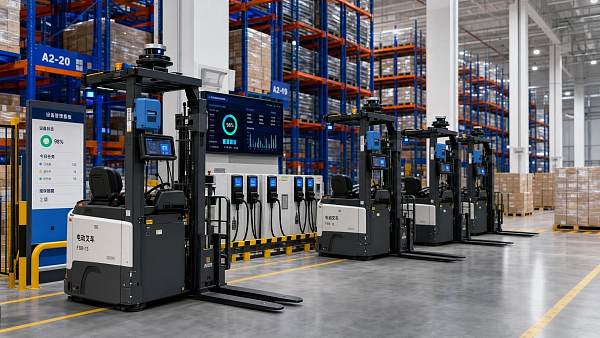
Before accepting an infrastructure allowance, map where vehicles stop and when they can charge. A warehouse may have enough total electrical capacity but insufficient capacity at the right location. Moving trucks across the building to reach chargers can consume operator time and disrupt traffic routes.
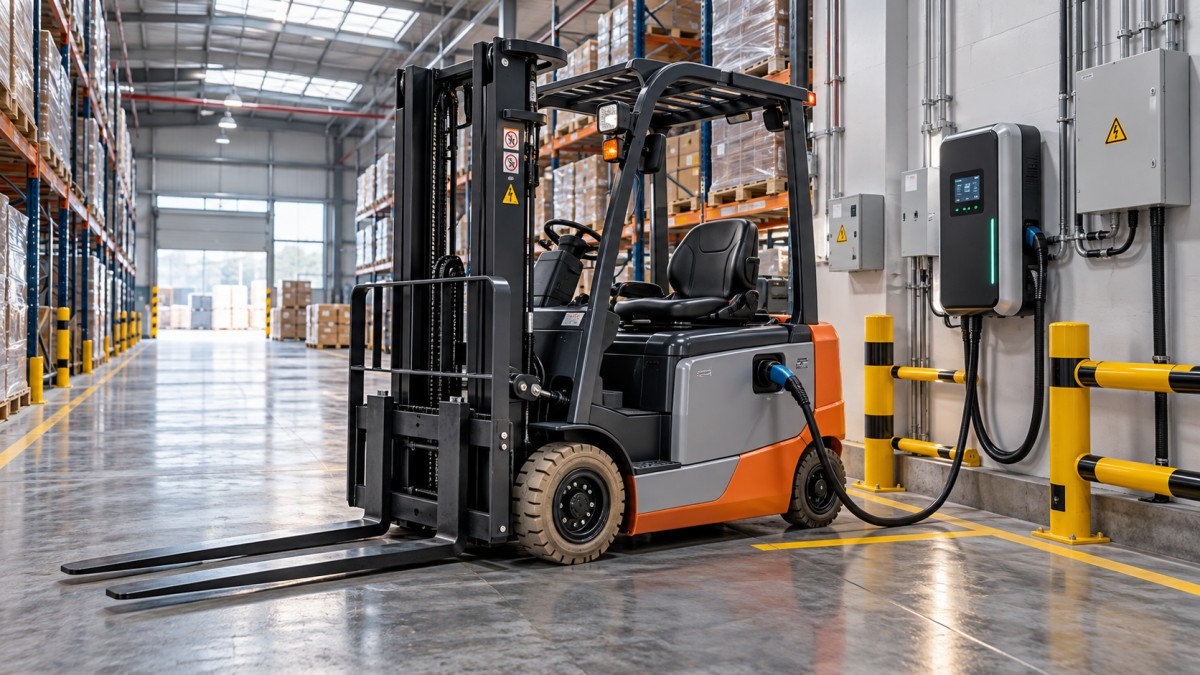
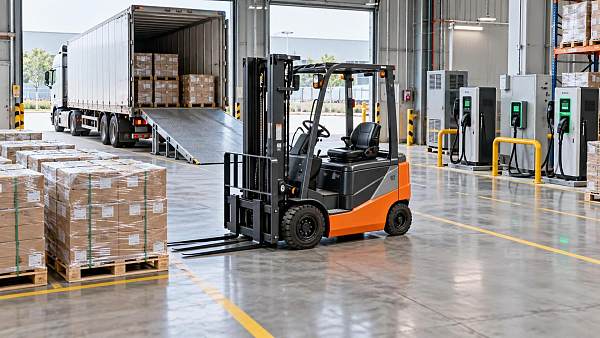
Opportunity charging can support shift coverage, but only when actual breaks provide enough usable charging time. Include plug-in delays, shared-charger queues, battery temperature limits, and the possibility of charger failure. Battery swapping offers a different operating model, with its own spare-battery, handling, space, and safety requirements.
Model electricity at the meter, including charging losses, rather than using battery capacity alone. Check time-of-use rates, demand charges, and any tariff changes triggered by added load. Managed charging may reduce peak demand, but savings are credible only if the charging schedule still supports production. Also identify infrastructure needed for the first deployment separately from capacity reserved for later expansion.
Count maintenance savings without pretending maintenance disappears
Electric drivetrains remove several combustion-engine service requirements. They do not remove tires, brakes, hydraulic leaks, mast wear, chains, forks, attachment servicing, or mandatory inspections. In demanding material-handling applications, these remaining costs can be substantial.
Ask for maintenance quotations with comparable coverage, exclusions, response times, and operating-hour assumptions. If the current fleet is old, comparing its repair bills with a new electric fleet may exaggerate the benefit attributable to electrification. A new combustion-powered alternative would also avoid some age-related failures.
Labor savings require particular discipline. Less time spent refueling or servicing equipment may improve available working time, but it does not automatically reduce payroll. Record a cash saving only where overtime, contractor charges, staffing expenditure, or another identifiable payment actually falls. Treat redeployed time as a separate productivity benefit unless there is evidence it changes cash flow.
Apply the same caution to uptime. If better availability avoids a rental truck, that is a measurable saving. If it merely creates unused capacity, assigning it a revenue value will make the investment look better without making it more profitable.
The battery warranty is a financial document
A warranty described only in years is insufficient for a lifecycle model. Review operating-hour or energy-throughput limits, retained-capacity provisions, permitted charging practices, temperature conditions, and exclusions. Confirm whether coverage includes labor, transport, diagnostics, and temporary replacement equipment.
The practical question is not simply when the battery fails. It is when usable capacity becomes insufficient for the required shift. A battery can remain functional while forcing longer charging interruptions or reduced workload. Model replacement timing against the minimum capacity the operation needs, with supplier-supported assumptions rather than a generic lifespan.
Check compatibility as well. Proprietary battery, charger, and control interfaces can affect future replacement options and service costs. For leased equipment, establish responsibility for battery condition at return. For owned fleets, obtain replacement pricing and clarify end-of-life handling obligations before treating residual value as a dependable benefit.
Test the downside before approving the fleet
A base-case spreadsheet should not be the only version presented for approval. Test lower utilization, a narrower fuel-to-electricity price advantage, higher installation costs, earlier battery replacement, and delayed commissioning. Consider combined downside conditions, not just one changed assumption at a time.
Incentives belong in a separate, clearly identified line. Eligibility, application timing, tax treatment, and payment conditions depend on jurisdiction and program rules. Do not make an unconfirmed award the difference between an acceptable and unacceptable project.
Where uncertainty is operational, a representative pilot can be more valuable than further spreadsheet refinement. Measure metered electricity, completed workload, charging interruptions, operator interventions, and backup-equipment use. Compare equivalent work under comparable conditions—not merely energy cost per operating hour.
Supplier evaluation should connect equipment specifications with service capability and financial exposure. That is the practical intersection covered by Global Material Handling & Lifting Equipment (MHLE): load handling, battery systems, fleet availability, safety, and lifecycle cost belong in the same procurement discussion.
The approval threshold should survive a difficult operating month
Industrial fleet electrification solutions become financially convincing when the proposed machines can complete the required work, charging costs are established, and verified savings recover the incremental investment within the organization’s acceptable period. Positive lifecycle value matters more than a short headline payback that ignores later costs.
Before signing, require three things: a matched-duty equipment comparison, an installed charging scope with clear responsibilities, and a cash-flow model tied to operating evidence. If the business case depends on uninterrupted charger availability, optimistic resale proceeds, or labor savings nobody can realize, revise the scope. Converting fewer, better-suited machines can be the stronger investment.
Recommended News
 Oct 27, 2026When do industrial fleet electrification solutions pay for themselves?When do industrial fleet electrification solutions pay off? Explore charging costs, battery risks, and real operating savings to build a stronger, evidence-based investment case.
 Oct 26, 2026How much more does explosion-proof material handling equipment cost?Understand explosion-proof material handling cost, compare equipment premiums and compliance needs, and uncover smarter ways to budget without compromising safety.
 Oct 23, 2026U.S. MHEDA Releases 2027 Material Handling Business Trends ReportExplore MHEDA’s 2027 material handling business trends report: five forces and 18 trends to help distributors and warehouse buyers rethink technology, workforce needs and investment plans.
 Oct 21, 2026How much does working height affect aerial work platform prices?Compare aerial work platforms price quotes and see how working height affects costs. Discover key price drivers, avoid hidden expenses, and choose the right lift for your budget.
 Oct 21, 2026Brightstar Capital Announces Acquisition of Majority Stake in MHGBrightstar Capital acquires a majority stake in MHG to support growth in material handling equipment and aftermarket services. Explore what the deal could mean.
 Oct 16, 2026How much do industrial electric hoist systems cost fully installed?Explore industrial electric hoist systems cost, from equipment and structural work to testing. Compare installation scopes, spot hidden charges, and budget with confidence.
 Oct 01, 2026When warehouse automation solutions for manufacturing pay offWarehouse automation solutions for manufacturing: learn when automation delivers ROI through reliable material flow, lower costs, and scalable production capacity.
 Oct 10, 2026Material Handling Equipment Market: Demand Drivers for Warehouse InvestmentMaterial handling equipment market demand is rising as warehouses invest in safer, smarter, high-uptime solutions for throughput, labor, and energy challenges.
 Oct 10, 2026Evaluating Material Handling Equipment Manufacturers Beyond Product SpecificationsMaterial handling equipment manufacturers: learn how to compare application fit, safety, service support, lifecycle cost, and automation readiness beyond product specifications.
 Oct 09, 2026Buying Material Handling Equipment in the USA: Lead Times, Service, and PartsMaterial handling equipment USA buying guide: compare lead times, local service coverage, parts availability, warranties, and downtime costs to choose reliable equipment.
 Oct 05, 2026Is Automated Warehousing Worth It for a Port Spare Parts Warehouse?Is automated warehousing worth the investment for a port spare parts warehouse? Explore ROI, uptime gains, inventory control, and practical automation strategies.
 Sep 26, 2026When does a smart warehouse ASRS justify its upfront cost?Smart warehouse ASRS investment: discover when automation delivers measurable ROI through space savings, labor control, higher throughput, and resilient operations.
 Sep 20, 2026When do smart material handling systems in India justify the investment?Smart material handling systems India: learn when automation delivers ROI through safer workflows, higher throughput, lower downtime, and lifecycle cost control.
 Sep 11, 2026What drives rental equipment total cost of ownership beyond the daily rate?Rental equipment total cost of ownership goes beyond daily rates. Discover how transport, downtime, energy, labor, compliance, and off-rent control shape smarter rental decisions.
 Sep 02, 2026What determines warehouse stacking systems price for a new warehouse?Warehouse stacking systems price depends on density, loads, aisle design, forklifts, installation, safety, and lifecycle costs. Compare smarter for your new warehouse.
 Aug 26, 2026What drives ASRS integration pricing in warehouse automation projectsASRS integration pricing depends on software scope, site conditions, throughput goals, and risk allocation—not just equipment. Learn what really drives costs and compare bids with confidence.
 Aug 25, 2026When does renting logistics equipment in India cost less than buying?Logistics equipment India: Learn when renting costs less than buying by comparing utilization, maintenance, downtime, cash flow, and project flexibility for smarter decisions.
 Aug 19, 2026When does AGV warehouse systems integration pay off in existing facilities?AGV warehouse systems integration pays off when repetitive pallet moves, labor shortages, and safety costs hurt performance. Learn when retrofitting existing facilities delivers ROI.
 Aug 16, 2026What drives logistics equipment price in warehouse projects?Logistics equipment price in warehouse projects depends on capacity, power, safety, and automation—learn what really drives cost and make smarter buying decisions.
 Aug 03, 2026Scissor Lifts Price Breakdown: What Changes Cost by Height, Power, and Duty CycleScissor lifts price explained by height, power source, platform capacity, and duty cycle. Learn what really changes cost and compare quotes with confidence before you buy.
 Jul 30, 2026How Forklift Fleet Technology Cuts Downtime and Lowers Total CostForklift fleet technology helps reduce downtime, improve utilization, and lower total cost with smarter maintenance, battery control, and fleet visibility. Learn what buyers should evaluate.
 Jul 27, 2026Smart Winch Systems Cost: What Drives Total Price in 2026?Smart winch systems cost in 2026 depends on more than unit price. Explore key drivers like controls, safety, installation, and lifecycle support to budget smarter.
 Jul 21, 2026Industrial Automation Integration: Cost Drivers and ROI BenchmarksIndustrial automation integration costs are shaped by controls, software, retrofits, and downtime. Explore key ROI benchmarks, payback ranges, and practical ways to evaluate project value.
 Jul 18, 2026Material Handling Market Growth: Key Cost and Demand Signals for 2026Material handling market growth in 2026 is driven by labor costs, electrification, automation, and safety compliance. Discover key demand signals shaping smarter equipment investments.