Search News
Industry Portal
Popular Tags
When does a smart warehouse ASRS justify its upfront cost?
Author
Time
Click Count
The investment case starts with a constrained operation
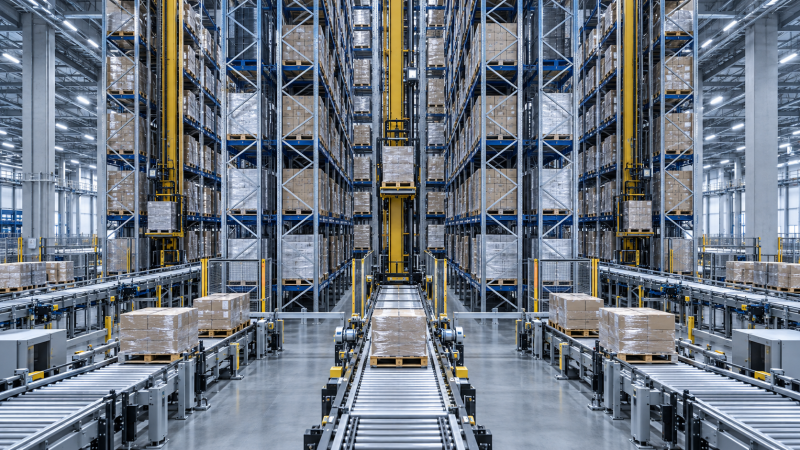
A smart warehouse ASRS justifies its upfront cost when the existing operation has reached a constraint that additional labor, more forklifts, or another temporary storage area cannot solve economically. For a finance approver, the decision should be framed around the cost of preserving the current model versus the lifecycle cost of changing it.
An automated storage and retrieval system is often evaluated as a labor-saving project. Labor matters, but a credible business case is usually broader. The strongest cases combine several pressures: recurring labor scarcity, limited building capacity, high pallet movement density, costly order errors, service-level exposure, and a need to operate more predictably across shifts. A warehouse with only one of these pressures may still benefit from automation, but it may not yet justify a capital-intensive ASRS.
The question is therefore not whether automation is inherently more efficient. It is whether the warehouse has enough repeatable, measurable friction for automation to remove, and whether that removed friction is valuable enough over the system's useful life.
When manual expansion becomes the more expensive option
The first threshold is usually reached when a business is considering the alternatives to ASRS: leasing additional warehouse space, extending a building, adding shifts, recruiting more operators, or accepting lower service reliability. Those options can appear less expensive because their costs are distributed through operating budgets rather than concentrated in a capital request. Over time, however, the recurring cost can become substantial and less controllable.
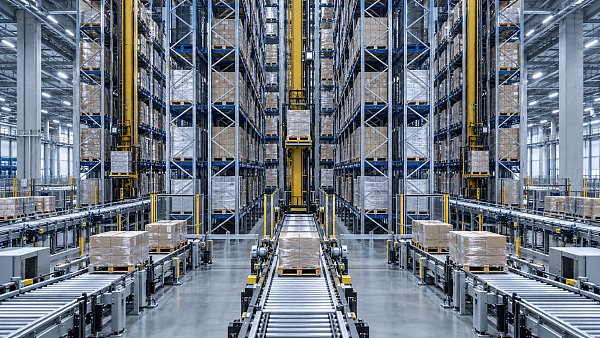
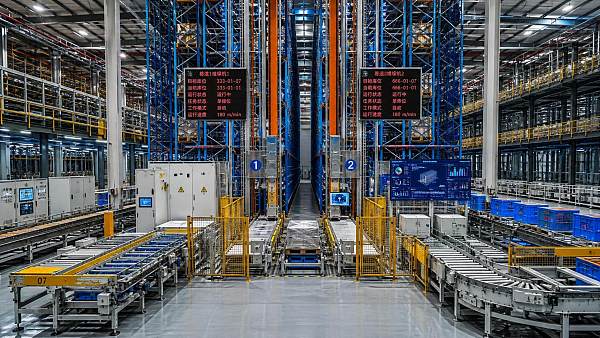
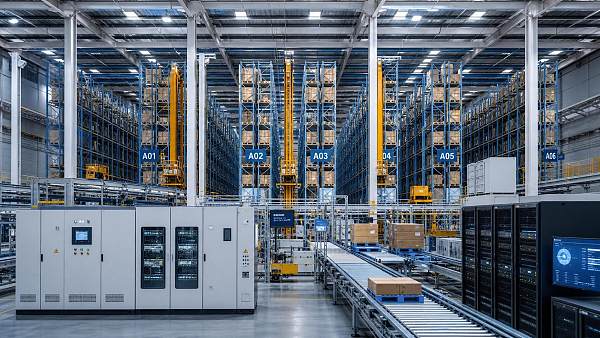
Space pressure is especially important because ASRS often changes storage density as well as labor requirements. In a conventional pallet warehouse, aisle width, truck turning radius, rack configuration, staging areas, and safety separation consume a large share of the building. A high-density automated system may recover capacity within the existing footprint by using height, narrower access arrangements, and controlled storage positions. The financial benefit is most tangible when the avoided alternative has a clear cost: a new lease, off-site overflow storage, a building expansion, or regular inter-site transport.
Finance teams should be cautious about treating every theoretical pallet position as a saving. The usable benefit depends on the warehouse's actual inventory profile. A facility that is full only during a short seasonal peak has a different case from one that remains constrained through most of the year. Similarly, an operation carrying irregular product dimensions, unstable pallets, or large quantities of slow-moving stock may need a hybrid design rather than a fully automated high-bay solution.
Labor pressure follows a similar rule. The relevant baseline is not simply headcount. It is the fully loaded and avoidable cost associated with warehouse movement: wages, overtime, shift premiums, temporary labor, recruitment, training, supervision, absenteeism coverage, and the productivity loss created by turnover. If employees released from repetitive storage and retrieval can be reassigned to receiving, picking, quality control, or value-added work, that redeployment has value only where those roles would otherwise require hiring or overtime. Counting the same labor saving twice is a common way to make an automation case look stronger than it is.
Throughput is another dividing line. A smart warehouse ASRS is well suited to stable, repetitive movement patterns with enough volume to keep the equipment productive. When pallet flow is concentrated around inbound receiving, replenishment, finished-goods storage, or dispatch sequencing, automated handling can remove delays caused by travel distance and traffic. When the operation is highly intermittent, frequently changes product handling rules, or depends on many exceptions, a large fixed system may be underutilized.
In practical terms, the investment becomes easier to justify when the warehouse already has a visible operating penalty for doing nothing. That penalty may be leased overflow space, recurring peak-season overtime, delayed dispatches, damaged product, constrained production output, or a planned site expansion. Without such a baseline, projected savings tend to rest on general efficiency claims rather than a defendable financial comparison.
What should be included in the financial model
An ASRS approval should be based on lifecycle cash flows, not the equipment quotation alone. The project cost extends beyond cranes, shuttles, conveyors, racking, software, and controls. It can include civil works, foundations, fire protection changes, electrical upgrades, network infrastructure, integration with warehouse management or enterprise systems, project management, commissioning support, operator training, and contingency for changes discovered during implementation.
Some of these costs are visible early. Others emerge when the design reaches site-specific details. A finance review should ask whether the estimate is based on a completed operating concept or on a preliminary equipment layout. The difference matters. A system designed around real pallet weights, dimensions, SKU behavior, inbound variability, outbound cut-off times, and exception handling is more likely to produce a reliable capital figure than a concept based primarily on nominal capacity.
On the benefits side, the model should distinguish between direct cash savings, avoided future costs, and operational benefits that matter commercially but are harder to convert into cash. Each category has a place, but they should not be blended casually.
The distinction between a saving and an avoided cost deserves particular scrutiny. Avoiding a future warehouse extension can be a major benefit, but only if the extension is genuinely necessary under the current plan. Avoiding an additional shift is valuable if demand and service commitments would otherwise require that shift. A projected benefit should be tied to a decision the business would otherwise have to make, not merely to capacity that may never be used.
For finance approvers, sensitivity analysis is often more useful than a single payback number. Test the project against lower volume growth, delayed ramp-up, different labor inflation assumptions, higher maintenance cost, and a temporary reduction in availability during commissioning. A project that remains acceptable under reasonable downside assumptions has a more resilient case than one dependent on every forecast being met exactly.
Utilization matters more than headline capacity
Suppliers can describe an ASRS in terms of pallet positions, storage-and-retrieval cycles per hour, crane speed, shuttle count, or system availability. These measures are important for engineering, but they do not automatically establish financial value. An oversized system can deliver excellent technical capacity while producing a weak return on capital.
The approval team should examine the demand profile at a granular level. How many movements occur by hour and by shift? How sharp are inbound and outbound peaks? Which pallets require immediate access? How many are full-pallet, partial-pallet, damaged, non-conforming, or otherwise unsuitable for automated handling? Is system capacity being sized for a routine operating requirement, a rare peak, or a future volume scenario that remains uncertain?
A sound design may deliberately retain conventional handling for exceptions, bulky loads, urgent pallets, or temporary operational changes. That is not a failure of automation. It is often the more disciplined approach because it keeps the ASRS focused on high-frequency, standardized flows where it has the strongest economic advantage.
There is also a difference between storage utilization and operational utilization. Filling an automated store close to its physical capacity can make stock management harder, especially where retrieval sequencing, FIFO requirements, batch control, or product segregation apply. The system should be evaluated against the inventory policy it must support, not only against its maximum storage count.
Integration and downtime can erase a weak business case
Automation concentrates a large share of warehouse movement into a connected system. That concentration creates value through control and repeatability, but it also raises the cost of poor integration. If the ASRS does not receive accurate information from the warehouse management system, if master data is unreliable, or if pallets arrive outside agreed specifications, the operation can fall back on manual intervention more often than planned.
Before capital approval, the operating team should be able to explain how the system will handle common exceptions: unreadable labels, pallet overhang, incorrect height, damaged load packaging, rejected inbound goods, urgent orders, stock quarantines, conveyor blockages, and software outages. These are not peripheral details. They determine whether the promised throughput is available on an ordinary day rather than only in a demonstration scenario.
Availability should be considered in financial terms. A conventional warehouse may tolerate a forklift failure by moving another truck into service. An automated facility needs a defined recovery process, preventive maintenance regime, spare-parts strategy, remote support arrangement, and manual contingency plan. The right question is not whether downtime can occur. It is what happens to customer commitments, production supply, and labor cost when it does.
Vendor proposals should therefore be compared on more than capital price and nominal speed. Finance, operations, IT, maintenance, and safety representatives need a shared view of interface responsibility, acceptance criteria, data ownership, warranty coverage, response arrangements, and handover requirements. A lower initial quotation can become expensive when integration gaps, change orders, or long-term support obligations are left vague.
A practical approval test
A smart warehouse ASRS is generally approaching justification when management can answer four questions with operational evidence.
- What identifiable cost or constraint will persist if the warehouse remains manual or semi-manual?
- Which movements are standardized and frequent enough to keep the automated system productively utilized?
- Which benefits create real cash savings or avoid a committed future expenditure, rather than only improving an internal performance measure?
- Can the organization operate, maintain, and recover the system without relying on assumptions that have not been designed into the project?
When the answers are specific, the investment can be assessed as a capacity, service, and cost-control decision rather than as a technology purchase. The case is usually strongest where the business is already paying for congestion, labor instability, external storage, or handling errors, and where automation can remove those costs through a repeatable flow.
Where volumes remain uncertain, product profiles change frequently, or the warehouse has not yet established disciplined inventory and data processes, a phased approach may be more appropriate. Improving slotting, warehouse management controls, pallet standards, and conventional handling productivity can clarify the eventual ASRS requirement and prevent a large system from being built around avoidable inefficiencies.
The upfront cost is justified when the automated design is sized around a proven operational constraint, supported by conservative lifecycle assumptions, and resilient enough to perform outside ideal conditions. That is the standard finance approvers should apply: not whether the system is advanced, but whether retaining the existing warehouse model has become the more costly decision.
Recommended News
 Sep 26, 2026When does a smart warehouse ASRS justify its upfront cost?Smart warehouse ASRS investment: discover when automation delivers measurable ROI through space savings, labor control, higher throughput, and resilient operations.
 Sep 20, 2026When do smart material handling systems in India justify the investment?Smart material handling systems India: learn when automation delivers ROI through safer workflows, higher throughput, lower downtime, and lifecycle cost control.
 Sep 11, 2026What drives rental equipment total cost of ownership beyond the daily rate?Rental equipment total cost of ownership goes beyond daily rates. Discover how transport, downtime, energy, labor, compliance, and off-rent control shape smarter rental decisions.
 Sep 02, 2026What determines warehouse stacking systems price for a new warehouse?Warehouse stacking systems price depends on density, loads, aisle design, forklifts, installation, safety, and lifecycle costs. Compare smarter for your new warehouse.
 Aug 26, 2026What drives ASRS integration pricing in warehouse automation projectsASRS integration pricing depends on software scope, site conditions, throughput goals, and risk allocation—not just equipment. Learn what really drives costs and compare bids with confidence.
 Aug 25, 2026When does renting logistics equipment in India cost less than buying?Logistics equipment India: Learn when renting costs less than buying by comparing utilization, maintenance, downtime, cash flow, and project flexibility for smarter decisions.
 Aug 19, 2026When does AGV warehouse systems integration pay off in existing facilities?AGV warehouse systems integration pays off when repetitive pallet moves, labor shortages, and safety costs hurt performance. Learn when retrofitting existing facilities delivers ROI.
 Aug 16, 2026What drives logistics equipment price in warehouse projects?Logistics equipment price in warehouse projects depends on capacity, power, safety, and automation—learn what really drives cost and make smarter buying decisions.
 Aug 03, 2026Scissor Lifts Price Breakdown: What Changes Cost by Height, Power, and Duty CycleScissor lifts price explained by height, power source, platform capacity, and duty cycle. Learn what really changes cost and compare quotes with confidence before you buy.
 Jul 30, 2026How Forklift Fleet Technology Cuts Downtime and Lowers Total CostForklift fleet technology helps reduce downtime, improve utilization, and lower total cost with smarter maintenance, battery control, and fleet visibility. Learn what buyers should evaluate.
 Jul 27, 2026Smart Winch Systems Cost: What Drives Total Price in 2026?Smart winch systems cost in 2026 depends on more than unit price. Explore key drivers like controls, safety, installation, and lifecycle support to budget smarter.
 Jul 21, 2026Industrial Automation Integration: Cost Drivers and ROI BenchmarksIndustrial automation integration costs are shaped by controls, software, retrofits, and downtime. Explore key ROI benchmarks, payback ranges, and practical ways to evaluate project value.
 Jul 18, 2026Material Handling Market Growth: Key Cost and Demand Signals for 2026Material handling market growth in 2026 is driven by labor costs, electrification, automation, and safety compliance. Discover key demand signals shaping smarter equipment investments.
 Jul 17, 2026Warehouse Automation Solutions with IoT: Costs, ROI, and Key Integration RisksWarehouse automation solutions with IoT: explore real costs, ROI timelines, and key integration risks to cut downtime, improve visibility, and choose the right system with confidence.
 Jul 15, 2026Heavy Lifting Equipment Price: What Drives Total Cost in 2026Heavy lifting equipment price in 2026 depends on more than the purchase quote. Learn the hidden cost drivers, lifecycle risks, and smart ways to compare offers before you buy.
 Jul 13, 2026Lifting Equipment Maintenance Cost: Budget Risks to WatchLifting equipment maintenance cost can quietly derail budgets. Learn the hidden risks, downtime drivers, and smart ways to control spend before the next budget cycle.
 Jul 13, 2026Heavy Load Positioning Systems Price: What Drives Total Cost?Heavy load positioning systems price depends on more than equipment cost. Learn the key drivers, hidden expenses, and how to compare quotes for safer, smarter investment decisions.
 Jul 11, 2026What to Check Before Choosing an Unmanned Material Handling CompanyUnmanned material handling company selection starts with the right checks. Learn how to evaluate safety, integration, service, and ROI before you choose a supplier.
 Jul 09, 2026Automated Warehousing Supplier Checklist: Integration, Uptime, and Expansion CostsAutomated warehousing supplier checklist covering integration, uptime, and expansion costs. Learn how to compare vendors, reduce risk, and protect long-term ROI.
 Jul 09, 2026How to Evaluate a Heavy Lifting Equipment Supplier for Long-Term Project RiskHeavy lifting equipment supplier evaluation starts with risk, not price. Learn how to assess safety, service, compliance, and long-term project reliability before you buy.
 Jul 08, 2026Lifting Equipment for Construction: What to Compare Before You Rent or BuyLifting equipment for construction: compare load capacity, site conditions, compliance, uptime, and total cost before you rent or buy to reduce risk and improve project ROI.
 Jul 07, 2026Forklift Lifecycle ROI: Cost Drivers That Change Long-Term OwnershipForklift lifecycle ROI starts beyond the purchase price. Discover how battery strategy, maintenance, downtime, safety, and resale value shape smarter long-term ownership decisions.
![]() Jul 06, 2026Port Material Handling Operations: Where Delays and Costs Usually StartPort material handling operations often lose time and money before cargo even moves. Discover where delays begin, what drives hidden costs, and how smarter equipment choices improve throughput.
Jul 06, 2026Port Material Handling Operations: Where Delays and Costs Usually StartPort material handling operations often lose time and money before cargo even moves. Discover where delays begin, what drives hidden costs, and how smarter equipment choices improve throughput. Jul 05, 2026Industrial Forklifts Cost Breakdown: Purchase, Energy, Maintenance, and ResaleIndustrial forklifts cost goes beyond the sticker price. Compare purchase, energy, maintenance, downtime, and resale value to choose the most cost-effective forklift.