Search News
Industry Portal
Popular Tags
Heavy Load Positioning Systems Price: What Drives Total Cost?
Author
Time
Click Count
Heavy load positioning systems price: why quotes rarely tell the full story
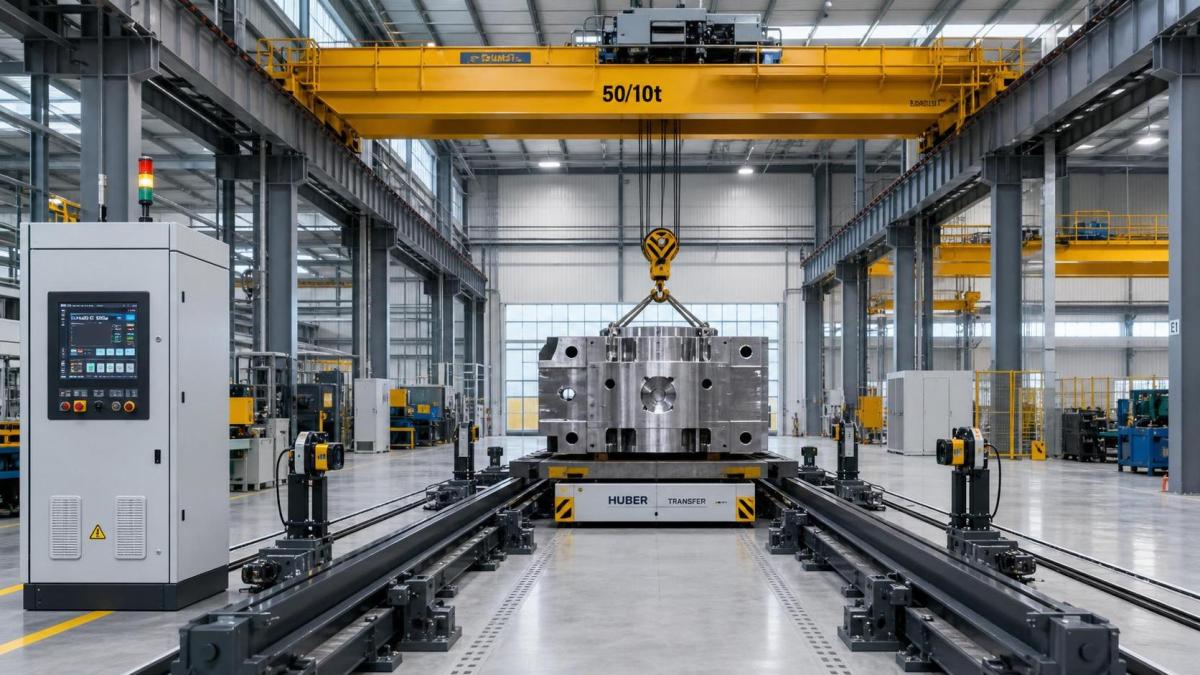
Heavy load positioning systems price is rarely a simple equipment number. In material handling and lifting projects, the quoted base system is only one part of total cost.
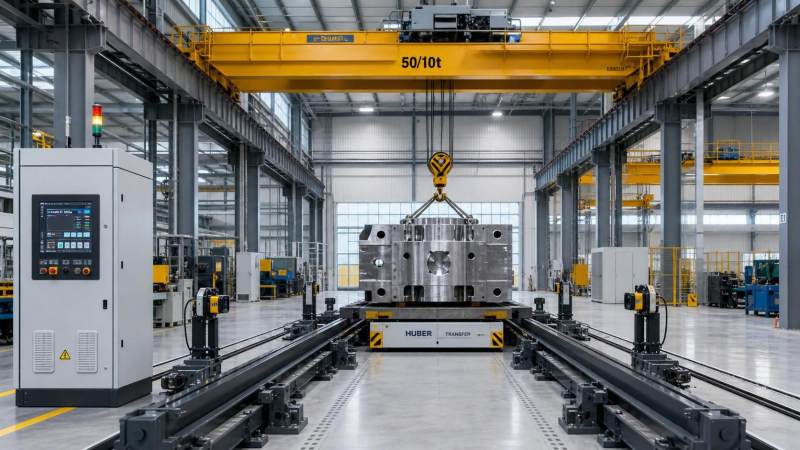
A positioning system may support overhead cranes, gantry cranes, automated lifting cells, heavy forklifts, hoists, or smart winches. Each application changes the commercial logic behind pricing.
In practice, buyers often compare offers that look similar on paper. Later, they discover major differences in control architecture, safety scope, commissioning work, and lifecycle support.
That is why understanding heavy load positioning systems price means looking at capacity, accuracy, motion control, site integration, compliance, uptime risk, and service obligations together.
Across factories, ports, warehouses, shipyards, and infrastructure sites, MHLE coverage shows a consistent pattern: stable positioning is not only a performance feature. It directly shapes operating cost and risk exposure.
What is usually included in heavy load positioning systems price?
The short answer is: it depends on how the supplier defines the system boundary. That boundary is often where cost misunderstandings begin.
A basic quote may include drives, sensors, PLC logic, operator interface, and standard software. A broader quote may also include structural adaptation, anti-sway tuning, installation supervision, and acceptance testing.
For crane and hoist applications, price can also reflect encoder type, load measurement, wireless controls, camera guidance, closed-loop VFD coordination, and network links to plant systems.
Where automated lifting systems are involved, heavy load positioning systems price may include recipe management, positioning repeatability reports, remote diagnostics, and data export for maintenance teams.
A useful first check is to ask whether the quotation covers only components, or an operating result. Those two offers should never be compared as if they were equivalent.
A fast way to read a quotation properly
- Confirm the rated load, speed range, and duty cycle.
- Check the promised positioning tolerance under real load.
- Identify included safety functions and certification documents.
- Separate hardware supply from installation and commissioning.
- Verify whether training, spare parts, and remote support are included.
Which technical factors move the price the most?
Load capacity is the obvious factor, but not always the biggest one. More often, price rises quickly when high capacity must be combined with high repeatability and dynamic motion control.
For example, moving a heavy load into a broad target zone is cheaper than placing it repeatedly within tight tolerances. The second task demands better sensing, software, tuning, and testing.
The motion profile also matters. A stop-start lift in a workshop does not need the same control sophistication as a gantry crane facing wind, long travel distances, and anti-sway requirements.
Heavy load positioning systems price also increases when the system must integrate with AGV workflows, warehouse automation, fleet monitoring, or plant MES and safety interlocks.
Environmental conditions add another layer. Ports, steel plants, dusty workshops, hot process areas, and outdoor yards often require hardened sensors, protected cabinets, and more robust wiring.
The cost drivers that deserve the closest attention
This table is useful because it separates visible hardware from hidden engineering. In many projects, hidden engineering is where the budget shifts most.
When does a lower price become the more expensive option?
Usually when the quote leaves out conditions needed for stable operation. A cheaper package can quickly become costly if it causes downtime, rework, or delayed commissioning.
One common issue is performance defined under ideal conditions only. A system may meet quoted accuracy without real production load, but drift under vibration, variable payload, or uneven travel.
Another issue is incomplete safety scope. If additional guarding, load monitoring, emergency logic, or inspection documents are added later, the original price advantage disappears.
Retrofit projects are especially sensitive. Existing cranes, hoists, forklifts, or transfer units may have cable wear, outdated drives, or inconsistent control panels that complicate integration.
The better question is not “Which quote is lower?” It is “Which option reaches target performance with the least operational uncertainty?”
Typical hidden costs buyers overlook
- Extra wiring, mounting frames, or cable festoon changes.
- Software modifications after SAT or plant acceptance testing.
- Operator retraining after interface or workflow changes.
- Production stoppage during retrofit windows.
- Imported spare parts with long lead times.
How should different applications be compared fairly?
Heavy load positioning systems price should always be compared by use case, not by catalog name alone. Similar labels can hide very different engineering demands.
In warehouse handling, positioning may focus on repeatable pallet transfer, aisle constraints, and cycle speed. In crane systems, stable motion and sway reduction may matter more than raw travel speed.
In ports and shipyards, weather, long spans, and duty intensity often make reliability and sensor protection more important than laboratory-level precision.
Industrial plants often care about integration. A positioning system may need to coordinate with conveyors, process stations, lifting beams, or inspection gates without creating bottlenecks.
MHLE industry analysis frequently highlights this point: the right benchmark is application outcome, including throughput, safety stability, and maintenance burden.
A practical comparison framework
What should be confirmed before asking for final pricing?
A final quote is only useful when technical assumptions are stable. If the project brief is vague, suppliers price risk into the offer, or leave major items outside scope.
Start with a clean definition of load range, required accuracy, lifting path, operating environment, interface points, and acceptable downtime during installation.
It also helps to define what success looks like after commissioning. That might be cycle time, repeatability, sway limit, alarm response, or remote diagnostic capability.
Service terms deserve equal attention. Heavy load positioning systems price is easier to judge when spare parts coverage, response time, and software support terms are transparent.
If several suppliers are bidding, use the same technical checklist for all of them. That single step often improves price clarity more than an additional negotiation round.
Questions worth sending with the RFQ
- What accuracy is guaranteed at full rated load?
- Which functions are standard, and which are optional?
- What existing equipment limitations could affect performance?
- How long will installation and commissioning take on site?
- Which maintenance items are expected in year one and year three?
So, how can heavy load positioning systems price be judged with more confidence?
The most reliable approach is to treat price as a lifecycle figure, not a purchase line item. Equipment cost, controls, integration, compliance, uptime, and service all belong in the same decision frame.
A strong quote usually explains performance conditions, included engineering work, support boundaries, and acceptance criteria. A weak quote looks cheaper because too much remains undefined.
For material handling and lifting operations, the best decisions come from matching heavy load positioning systems price to the actual application burden. That includes motion behavior, safety exposure, and maintenance reality.
The next step is practical: document the working load, target tolerance, site conditions, and integration needs, then compare offers against the same scoring sheet.
That process makes supplier discussions sharper, reveals hidden cost earlier, and leads to a more durable investment decision.
Recommended News
 Sep 11, 2026What drives rental equipment total cost of ownership beyond the daily rate?Rental equipment total cost of ownership goes beyond daily rates. Discover how transport, downtime, energy, labor, compliance, and off-rent control shape smarter rental decisions.
 Sep 02, 2026What determines warehouse stacking systems price for a new warehouse?Warehouse stacking systems price depends on density, loads, aisle design, forklifts, installation, safety, and lifecycle costs. Compare smarter for your new warehouse.
 Aug 26, 2026What drives ASRS integration pricing in warehouse automation projectsASRS integration pricing depends on software scope, site conditions, throughput goals, and risk allocation—not just equipment. Learn what really drives costs and compare bids with confidence.
 Aug 25, 2026When does renting logistics equipment in India cost less than buying?Logistics equipment India: Learn when renting costs less than buying by comparing utilization, maintenance, downtime, cash flow, and project flexibility for smarter decisions.
 Aug 19, 2026When does AGV warehouse systems integration pay off in existing facilities?AGV warehouse systems integration pays off when repetitive pallet moves, labor shortages, and safety costs hurt performance. Learn when retrofitting existing facilities delivers ROI.
 Aug 16, 2026What drives logistics equipment price in warehouse projects?Logistics equipment price in warehouse projects depends on capacity, power, safety, and automation—learn what really drives cost and make smarter buying decisions.
 Aug 03, 2026Scissor Lifts Price Breakdown: What Changes Cost by Height, Power, and Duty CycleScissor lifts price explained by height, power source, platform capacity, and duty cycle. Learn what really changes cost and compare quotes with confidence before you buy.
 Jul 30, 2026How Forklift Fleet Technology Cuts Downtime and Lowers Total CostForklift fleet technology helps reduce downtime, improve utilization, and lower total cost with smarter maintenance, battery control, and fleet visibility. Learn what buyers should evaluate.
 Jul 27, 2026Smart Winch Systems Cost: What Drives Total Price in 2026?Smart winch systems cost in 2026 depends on more than unit price. Explore key drivers like controls, safety, installation, and lifecycle support to budget smarter.
 Jul 21, 2026Industrial Automation Integration: Cost Drivers and ROI BenchmarksIndustrial automation integration costs are shaped by controls, software, retrofits, and downtime. Explore key ROI benchmarks, payback ranges, and practical ways to evaluate project value.
 Jul 18, 2026Material Handling Market Growth: Key Cost and Demand Signals for 2026Material handling market growth in 2026 is driven by labor costs, electrification, automation, and safety compliance. Discover key demand signals shaping smarter equipment investments.
 Jul 17, 2026Warehouse Automation Solutions with IoT: Costs, ROI, and Key Integration RisksWarehouse automation solutions with IoT: explore real costs, ROI timelines, and key integration risks to cut downtime, improve visibility, and choose the right system with confidence.
 Jul 15, 2026Heavy Lifting Equipment Price: What Drives Total Cost in 2026Heavy lifting equipment price in 2026 depends on more than the purchase quote. Learn the hidden cost drivers, lifecycle risks, and smart ways to compare offers before you buy.
 Jul 13, 2026Lifting Equipment Maintenance Cost: Budget Risks to WatchLifting equipment maintenance cost can quietly derail budgets. Learn the hidden risks, downtime drivers, and smart ways to control spend before the next budget cycle.
 Jul 13, 2026Heavy Load Positioning Systems Price: What Drives Total Cost?Heavy load positioning systems price depends on more than equipment cost. Learn the key drivers, hidden expenses, and how to compare quotes for safer, smarter investment decisions.
 Jul 11, 2026What to Check Before Choosing an Unmanned Material Handling CompanyUnmanned material handling company selection starts with the right checks. Learn how to evaluate safety, integration, service, and ROI before you choose a supplier.
 Jul 09, 2026Automated Warehousing Supplier Checklist: Integration, Uptime, and Expansion CostsAutomated warehousing supplier checklist covering integration, uptime, and expansion costs. Learn how to compare vendors, reduce risk, and protect long-term ROI.
 Jul 09, 2026How to Evaluate a Heavy Lifting Equipment Supplier for Long-Term Project RiskHeavy lifting equipment supplier evaluation starts with risk, not price. Learn how to assess safety, service, compliance, and long-term project reliability before you buy.
 Jul 08, 2026Lifting Equipment for Construction: What to Compare Before You Rent or BuyLifting equipment for construction: compare load capacity, site conditions, compliance, uptime, and total cost before you rent or buy to reduce risk and improve project ROI.
 Jul 07, 2026Forklift Lifecycle ROI: Cost Drivers That Change Long-Term OwnershipForklift lifecycle ROI starts beyond the purchase price. Discover how battery strategy, maintenance, downtime, safety, and resale value shape smarter long-term ownership decisions.
![]() Jul 06, 2026Port Material Handling Operations: Where Delays and Costs Usually StartPort material handling operations often lose time and money before cargo even moves. Discover where delays begin, what drives hidden costs, and how smarter equipment choices improve throughput.
Jul 06, 2026Port Material Handling Operations: Where Delays and Costs Usually StartPort material handling operations often lose time and money before cargo even moves. Discover where delays begin, what drives hidden costs, and how smarter equipment choices improve throughput. Jul 05, 2026Industrial Forklifts Cost Breakdown: Purchase, Energy, Maintenance, and ResaleIndustrial forklifts cost goes beyond the sticker price. Compare purchase, energy, maintenance, downtime, and resale value to choose the most cost-effective forklift.
 Jul 02, 2026How to Evaluate a Construction Access Equipment Manufacturer in 2026Construction access equipment manufacturer selection in 2026 goes beyond specs. Learn how to compare safety, compliance, service, telematics, and lifecycle cost for smarter buying decisions.
 Jul 01, 2026Automated Storage and Retrieval Systems Cost BreakdownAutomated storage and retrieval systems cost explained clearly: compare cost drivers, hidden expenses, ROI factors, and system price ranges before approving your warehouse automation budget.