Search News
Industry Portal
Popular Tags
Heavy Lifting Equipment Price: What Drives Total Cost in 2026
Author
Time
Click Count
Why does heavy lifting equipment price feel harder to judge in 2026?
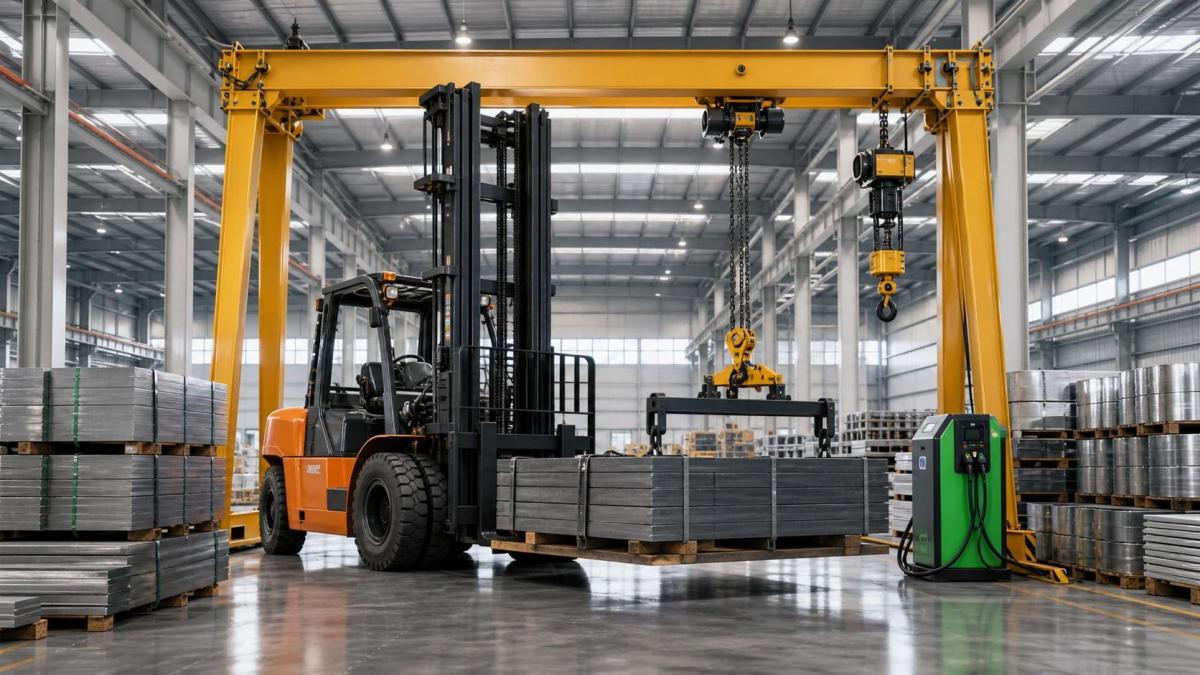
Heavy lifting equipment price now reflects far more than a factory quote or dealer list.
In material handling and lifting projects, the visible number is often the smallest part of the decision.
A forklift, gantry crane, hoist, or boom lift can look competitive at purchase, then become expensive during operation.
That usually happens when capacity, duty cycle, power demand, compliance work, and maintenance were priced too lightly.
In 2026, this gap matters more because equipment is becoming smarter, cleaner, and more regulated.
Lithium-ion systems, anti-sway control, overload protection, telematics, and automation all improve performance.
They also change the cost structure.
A realistic heavy lifting equipment price assessment should include acquisition, installation, energy, labor impact, spare parts, downtime exposure, and inspection readiness.
That is why market intelligence platforms such as MHLE are increasingly useful.
They connect technical factors with lifecycle ROI, which makes price comparison less superficial and more defensible.
What is usually included in heavy lifting equipment price, and what is often missing?
Most quotations include the base machine, standard configuration, and limited commissioning support.
What gets missed are the surrounding costs that turn a machine into an operating asset.
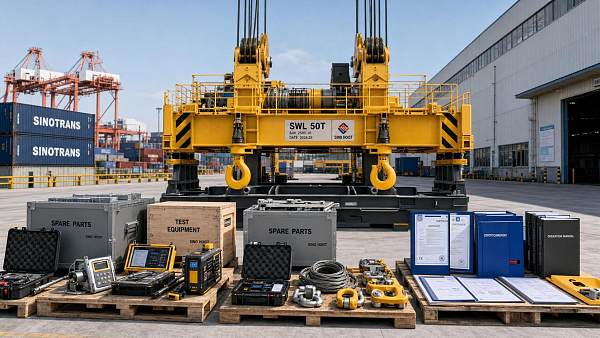
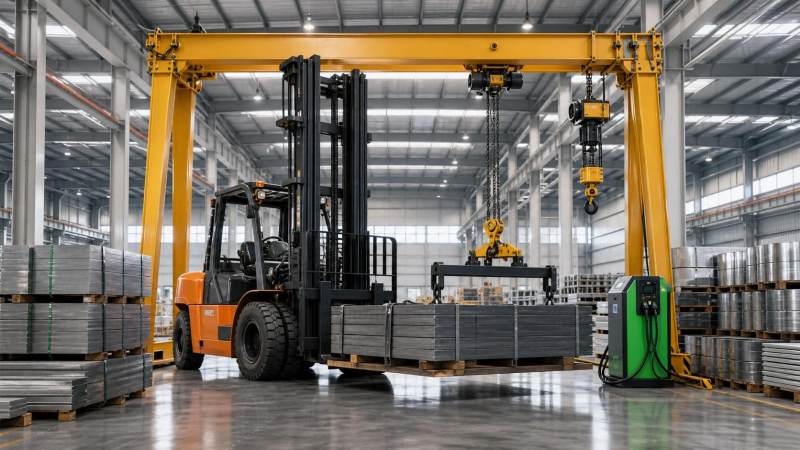
For overhead cranes, missing items often include runway preparation, electrical upgrades, VFD tuning, and load testing.
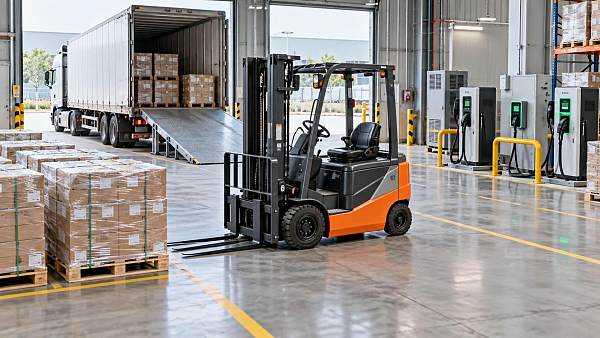
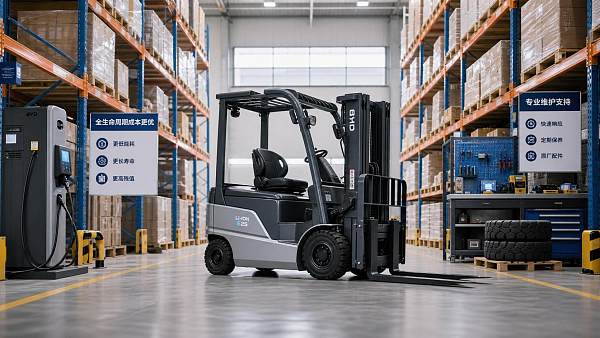
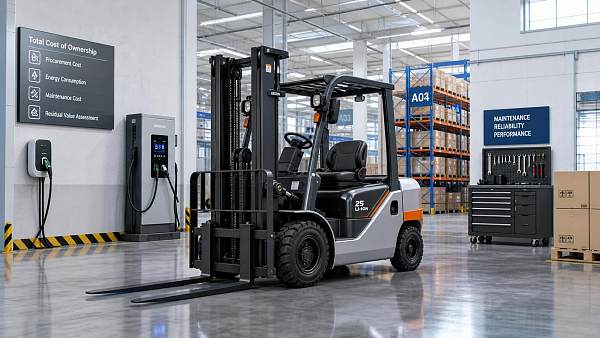
For forklifts, the gap may involve batteries, charging rooms, spare tires, operator training, and fleet monitoring subscriptions.
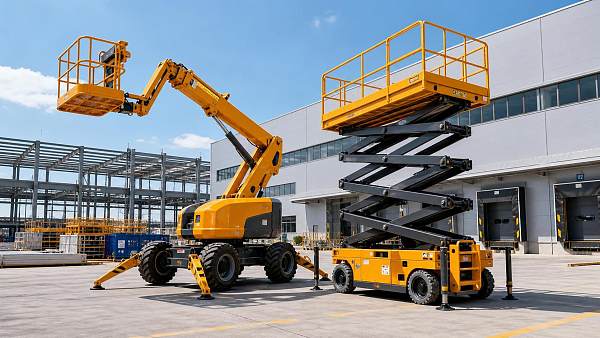
For aerial work platforms, transport, site certification, and recovery planning can shift the real budget quickly.
A useful way to read any heavy lifting equipment price is to separate it into four layers.
- Machine cost: the core equipment and standard options.
- Project cost: foundations, rails, chargers, controls, installation, and commissioning.
- Operating cost: energy, wear parts, service labor, software, and inspections.
- Risk cost: downtime, safety incidents, delayed compliance, and capacity shortfalls.
If one supplier looks much cheaper, the missing value is often hiding in one of those layers.
That does not mean the low quote is wrong.
It means the quote may not describe the full operating reality.
Which technical factors move heavy lifting equipment price the most?
Capacity is the obvious driver, but it is rarely the only one with budget impact.
A 10-ton machine built for light use is very different from one built for continuous industrial duty.
The second machine will cost more because its structure, controls, and thermal margins are stronger.
In practice, the biggest cost drivers usually appear in combinations.
This is where heavy lifting equipment price often diverges between similar-looking models.
One version may be engineered for intermittent use in a warehouse.
Another may be prepared for port, steel, shipyard, or high-cycle logistics work.
The nameplate may look close, but lifecycle cost will not.
When does a lower heavy lifting equipment price become the more expensive option?
Usually when the equipment saves money at purchase but creates losses during use.
A lower heavy lifting equipment price can still be the right decision.
The problem begins when the lower number is achieved by removing reliability or support.
Common warning signs are familiar across lifting categories.
- Critical components come from unclear sources, with weak parts traceability.
- Service response times are undefined, especially for imported equipment.
- The machine is sized near its limit for daily production demand.
- Inspection documents are incomplete for OSHA, CE, or local requirements.
- Battery warranty, rope life, wheel wear, or brake cycles are not clearly stated.
- Telematics or software licenses begin after handover and were not budgeted.
In actual projects, downtime cost often destroys the savings from a low entry price.
A stalled gantry crane in a yard, or an unavailable forklift during peak throughput, has measurable revenue impact.
That is why more buyers now compare heavy lifting equipment price against uptime history, maintenance planning, and supplier parts support.
How should different equipment categories be compared without oversimplifying price?
The cleanest method is to compare by application, not just by equipment label.
For example, an electric forklift and an AGV forklift should be measured against throughput, labor dependency, charging strategy, and aisle stability.
A double-girder crane and a smart hoist should be compared through span, positioning accuracy, load frequency, and control needs.
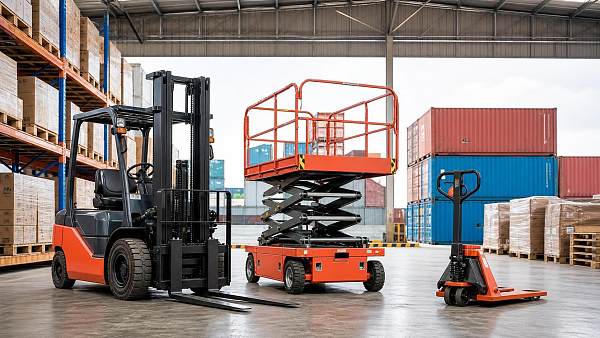
A scissor lift and a boom lift may serve the same project phase, but not the same access geometry.
That difference changes the real heavy lifting equipment price because misuse creates delays and safety exposure.
A practical review sheet should answer these questions before any approval step.
- What load, height, and cycle count are required during the busiest shift?
- Will the equipment operate indoors, outdoors, in corrosive areas, or in mixed traffic zones?
- How expensive is one hour of unplanned downtime?
- Will the asset need automation, anti-sway, or fleet visibility within two years?
- What local compliance and inspection evidence must be available before use?
MHLE’s coverage is relevant here because price decisions increasingly depend on cross-category understanding.
Forklifts, cranes, hoists, AWPs, and automated lifting systems are no longer isolated budget lines.
They are connected by energy strategy, safety logic, uptime, and operator efficiency.
What should be checked before approving a heavy lifting equipment price?
A strong approval process does not require perfect forecasting.
It requires the right questions, asked early enough.
Start by requesting a full cost map over the expected service life.
That map should include installation, training, preventive maintenance, consumables, software, and end-of-life assumptions.
Then test the quote against the operating environment.
If the machine will face dust, salt air, long shifts, ramps, or unstable loads, the base specification may not be enough.
It also helps to request evidence rather than claims.
- Ask for maintenance intervals tied to real usage conditions.
- Ask for reference installations with similar duty cycles.
- Ask for spare part lead times by region.
- Ask for compliance documents before commissioning begins.
- Ask how software, sensors, and batteries are supported after warranty.
If those answers are weak, the heavy lifting equipment price is probably incomplete, even if the quotation looks attractive.
The best approvals usually come from comparing total operating logic, not just comparing unit cost.
So what is the smartest next step if the numbers still seem close?
When two offers appear similar, narrow the decision with scenario-based costing.
Model one normal year, one peak year, and one disruption year.
That approach shows which heavy lifting equipment price remains stable when conditions become less ideal.
It also exposes whether the supplier has priced for performance or only for entry.
The most reliable decisions usually come from combining three views.
- Technical fit: load, environment, control precision, and safety margin.
- Economic fit: energy use, maintenance, downtime exposure, and residual value.
- Execution fit: support network, parts availability, training, and compliance readiness.
Heavy lifting equipment price in 2026 is really a decision about long-term operating confidence.
A lower quote may still win, but only after the hidden layers are surfaced and tested.
The next practical move is to build a comparison sheet around lifecycle cost, risk points, and service assumptions.
That makes the final approval cleaner, faster, and much easier to defend later.
Recommended News
 Sep 11, 2026What drives rental equipment total cost of ownership beyond the daily rate?Rental equipment total cost of ownership goes beyond daily rates. Discover how transport, downtime, energy, labor, compliance, and off-rent control shape smarter rental decisions.
 Sep 02, 2026What determines warehouse stacking systems price for a new warehouse?Warehouse stacking systems price depends on density, loads, aisle design, forklifts, installation, safety, and lifecycle costs. Compare smarter for your new warehouse.
 Aug 26, 2026What drives ASRS integration pricing in warehouse automation projectsASRS integration pricing depends on software scope, site conditions, throughput goals, and risk allocation—not just equipment. Learn what really drives costs and compare bids with confidence.
 Aug 25, 2026When does renting logistics equipment in India cost less than buying?Logistics equipment India: Learn when renting costs less than buying by comparing utilization, maintenance, downtime, cash flow, and project flexibility for smarter decisions.
 Aug 19, 2026When does AGV warehouse systems integration pay off in existing facilities?AGV warehouse systems integration pays off when repetitive pallet moves, labor shortages, and safety costs hurt performance. Learn when retrofitting existing facilities delivers ROI.
 Aug 16, 2026What drives logistics equipment price in warehouse projects?Logistics equipment price in warehouse projects depends on capacity, power, safety, and automation—learn what really drives cost and make smarter buying decisions.
 Aug 03, 2026Scissor Lifts Price Breakdown: What Changes Cost by Height, Power, and Duty CycleScissor lifts price explained by height, power source, platform capacity, and duty cycle. Learn what really changes cost and compare quotes with confidence before you buy.
 Jul 30, 2026How Forklift Fleet Technology Cuts Downtime and Lowers Total CostForklift fleet technology helps reduce downtime, improve utilization, and lower total cost with smarter maintenance, battery control, and fleet visibility. Learn what buyers should evaluate.
 Jul 27, 2026Smart Winch Systems Cost: What Drives Total Price in 2026?Smart winch systems cost in 2026 depends on more than unit price. Explore key drivers like controls, safety, installation, and lifecycle support to budget smarter.
 Jul 21, 2026Industrial Automation Integration: Cost Drivers and ROI BenchmarksIndustrial automation integration costs are shaped by controls, software, retrofits, and downtime. Explore key ROI benchmarks, payback ranges, and practical ways to evaluate project value.
 Jul 18, 2026Material Handling Market Growth: Key Cost and Demand Signals for 2026Material handling market growth in 2026 is driven by labor costs, electrification, automation, and safety compliance. Discover key demand signals shaping smarter equipment investments.
 Jul 17, 2026Warehouse Automation Solutions with IoT: Costs, ROI, and Key Integration RisksWarehouse automation solutions with IoT: explore real costs, ROI timelines, and key integration risks to cut downtime, improve visibility, and choose the right system with confidence.
 Jul 15, 2026Heavy Lifting Equipment Price: What Drives Total Cost in 2026Heavy lifting equipment price in 2026 depends on more than the purchase quote. Learn the hidden cost drivers, lifecycle risks, and smart ways to compare offers before you buy.
 Jul 13, 2026Lifting Equipment Maintenance Cost: Budget Risks to WatchLifting equipment maintenance cost can quietly derail budgets. Learn the hidden risks, downtime drivers, and smart ways to control spend before the next budget cycle.
 Jul 13, 2026Heavy Load Positioning Systems Price: What Drives Total Cost?Heavy load positioning systems price depends on more than equipment cost. Learn the key drivers, hidden expenses, and how to compare quotes for safer, smarter investment decisions.
 Jul 11, 2026What to Check Before Choosing an Unmanned Material Handling CompanyUnmanned material handling company selection starts with the right checks. Learn how to evaluate safety, integration, service, and ROI before you choose a supplier.
 Jul 09, 2026Automated Warehousing Supplier Checklist: Integration, Uptime, and Expansion CostsAutomated warehousing supplier checklist covering integration, uptime, and expansion costs. Learn how to compare vendors, reduce risk, and protect long-term ROI.
 Jul 09, 2026How to Evaluate a Heavy Lifting Equipment Supplier for Long-Term Project RiskHeavy lifting equipment supplier evaluation starts with risk, not price. Learn how to assess safety, service, compliance, and long-term project reliability before you buy.
 Jul 08, 2026Lifting Equipment for Construction: What to Compare Before You Rent or BuyLifting equipment for construction: compare load capacity, site conditions, compliance, uptime, and total cost before you rent or buy to reduce risk and improve project ROI.
 Jul 07, 2026Forklift Lifecycle ROI: Cost Drivers That Change Long-Term OwnershipForklift lifecycle ROI starts beyond the purchase price. Discover how battery strategy, maintenance, downtime, safety, and resale value shape smarter long-term ownership decisions.
![]() Jul 06, 2026Port Material Handling Operations: Where Delays and Costs Usually StartPort material handling operations often lose time and money before cargo even moves. Discover where delays begin, what drives hidden costs, and how smarter equipment choices improve throughput.
Jul 06, 2026Port Material Handling Operations: Where Delays and Costs Usually StartPort material handling operations often lose time and money before cargo even moves. Discover where delays begin, what drives hidden costs, and how smarter equipment choices improve throughput. Jul 05, 2026Industrial Forklifts Cost Breakdown: Purchase, Energy, Maintenance, and ResaleIndustrial forklifts cost goes beyond the sticker price. Compare purchase, energy, maintenance, downtime, and resale value to choose the most cost-effective forklift.
 Jul 02, 2026How to Evaluate a Construction Access Equipment Manufacturer in 2026Construction access equipment manufacturer selection in 2026 goes beyond specs. Learn how to compare safety, compliance, service, telematics, and lifecycle cost for smarter buying decisions.
 Jul 01, 2026Automated Storage and Retrieval Systems Cost BreakdownAutomated storage and retrieval systems cost explained clearly: compare cost drivers, hidden expenses, ROI factors, and system price ranges before approving your warehouse automation budget.