Search News
Industry Portal
Popular Tags
Industrial Forklifts Cost Breakdown: Purchase, Energy, Maintenance, and Resale
Author
Time
Click Count
How should industrial forklifts cost really be evaluated?
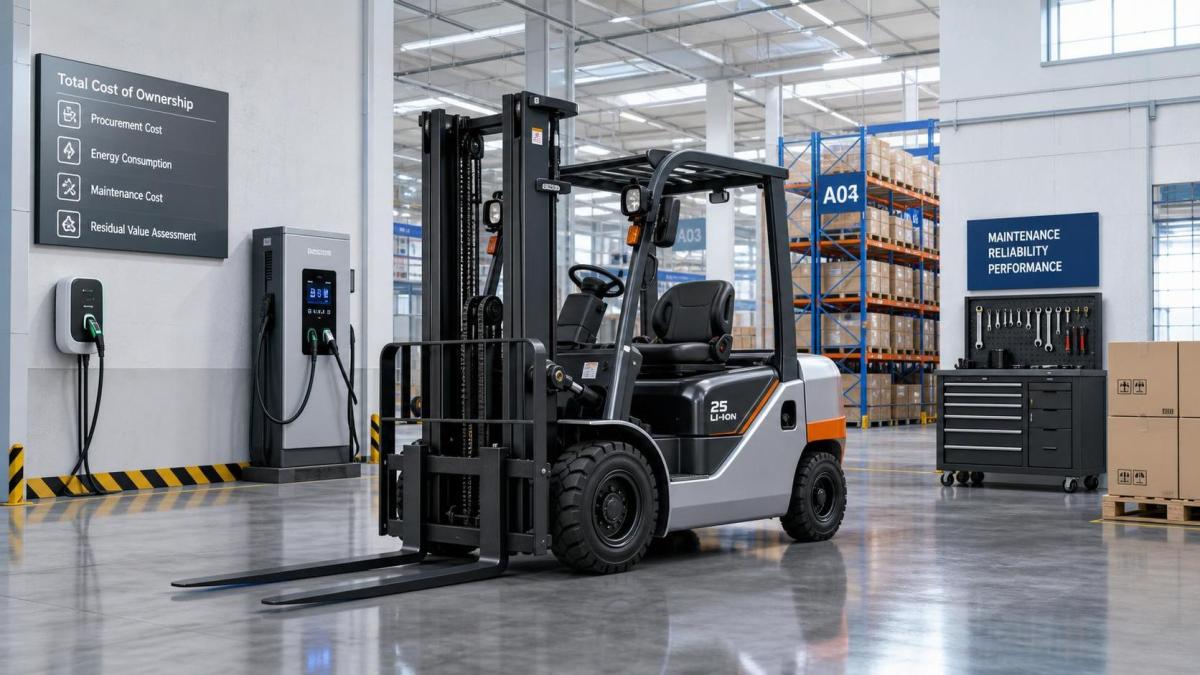
Industrial forklifts cost is rarely defined by the invoice alone. The purchase price is only the visible entry point.
In practice, the larger financial question is how the truck performs over its full working life. Energy use, repairs, battery replacement, operator uptime, and resale all change the final number.
That is why cost reviews in material handling now look more like lifecycle analysis than simple equipment buying. A truck that looks cheaper upfront can become expensive through downtime and service events.
This matters across warehouses, plants, logistics hubs, ports, and contractor fleets. MHLE often frames forklift decisions this way because equipment economics are tied to safety, productivity, and asset longevity.
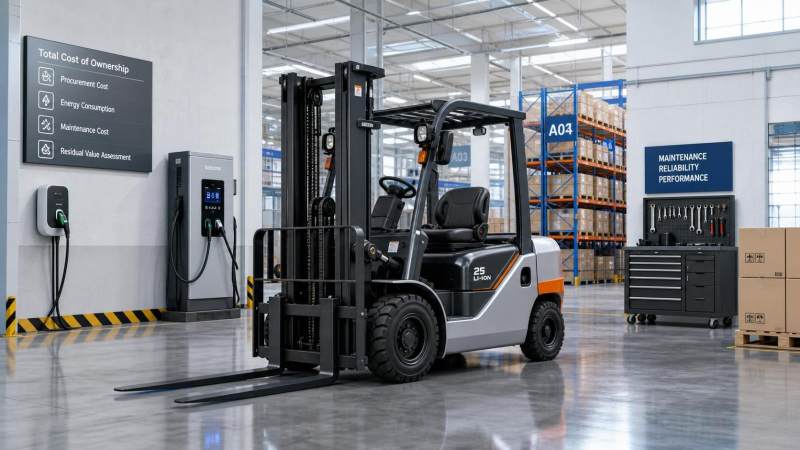
A useful starting point is to separate industrial forklifts cost into four layers: acquisition, energy, maintenance, and exit value. Once those layers are visible, comparisons become more accurate.
What is usually included in the purchase cost, and what gets missed?
The sticker price usually covers the truck, standard mast, forks, and a basic warranty. That sounds complete, but it often is not.
Common omissions include side shifters, fork positioners, cold-storage packages, non-marking tires, telematics, chargers, spare batteries, and site commissioning. Those items can materially change industrial forklifts cost.
Lead time can also create hidden expense. If a low-price model delays a warehouse launch, the financial impact may exceed the equipment discount.
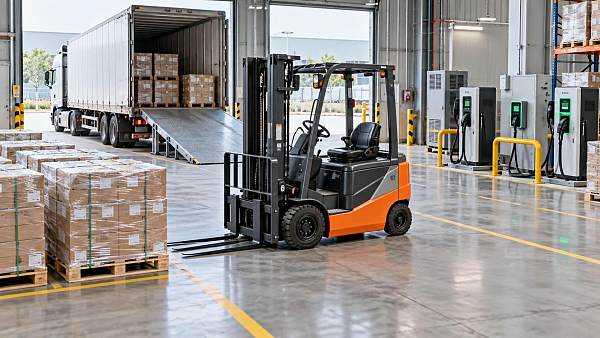
Another missed item is infrastructure. Electric fleets may need charging points, ventilation review, electrical upgrades, or battery rooms, depending on chemistry and shift design.
For internal combustion forklifts, fuel storage, emissions controls, and indoor ventilation can shift the cost picture. A simple purchase comparison becomes misleading when these site conditions are ignored.
A practical review table helps expose the gap between quoted price and committed spend.
A better question is not, “What does the forklift cost?” It is, “What is the fully deployed cost for the intended duty cycle?”
Does energy choice change lifecycle cost more than expected?
Yes, and often by a wide margin. Energy is one of the most underestimated parts of industrial forklifts cost.
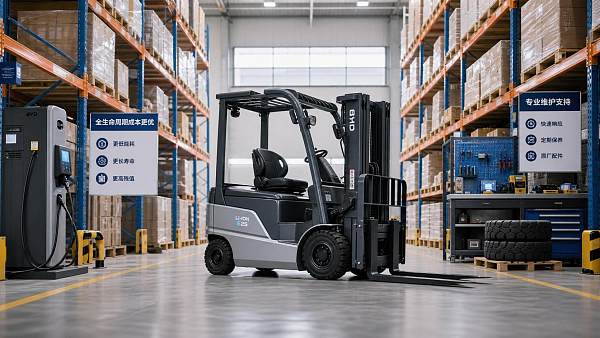
Electric forklifts usually deliver lower day-to-day energy expense than diesel or LPG units, especially in indoor, multi-shift warehouse work. That advantage grows where electricity pricing is stable.
Lithium-ion systems often reduce battery changing labor, charging room space, and watering tasks. They may cost more upfront, but they can improve available hours and simplify fleet planning.
Lead-acid batteries can still work well where budgets are tighter and charging discipline is strong. The issue is not that one chemistry is always better. The issue is fit.
Internal combustion models still make sense in some heavy outdoor applications, rough yards, and high-capacity duty. Even then, fuel volatility and emissions-related constraints should be priced into the comparison.
A realistic energy review should check these points:
- hours operated per day and number of shifts
- charging or refueling time lost to operations
- local electricity and fuel price trends
- battery replacement interval
- temperature conditions and site layout
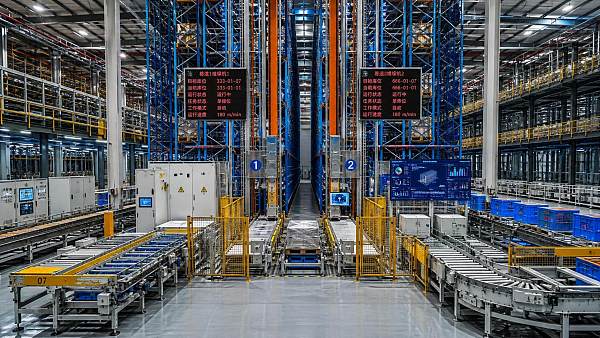
In facilities already evaluating automated handling, AGV forklifts, or IoT fleet monitoring, energy data becomes even more important. It supports better uptime modeling and cost visibility across the fleet.
Where do maintenance and downtime quietly erode forklift ROI?
Maintenance is not only about scheduled service. The larger cost often comes from disrupted work, missed dispatch windows, and temporary rentals.
Industrial forklifts cost rises quickly when a truck is underspecified for load weight, floor condition, or operating hours. Premature tire wear, hydraulic leakage, mast issues, and brake service are common symptoms.
The cheapest service contract is not always the most economical choice. A slower response time may create higher losses than the contract savings.
There is also a compliance angle. Inspection gaps can trigger unplanned stoppages, especially in sites that follow strict OSHA, CE, or local safety procedures.
Predictive maintenance tools are gaining attention because they reduce uncertainty. Telematics can reveal idle time, battery abuse, harsh impacts, and recurring fault codes before they become larger failures.
When reviewing service assumptions, these questions usually matter more than brochure promises:
- How fast can critical parts be supplied locally?
- What is the average response time for field service?
- Are wear components shared across the fleet?
- Is the truck easy to diagnose with available technicians?
- What failure patterns appear in similar duty cycles?
That is where industry intelligence becomes useful. MHLE-style evaluation is valuable because uptime, safety compliance, and serviceability are rarely separate from cost.
Should resale value influence the first purchase decision?
It should, especially when replacement cycles are planned. Resale is the last major lever in industrial forklifts cost, and it can improve or weaken overall ROI.
Brands with stronger parts support, wider service networks, and documented maintenance histories usually retain value better. Battery condition also affects used-market pricing more than many buyers expect.
Usage profile matters as well. A truck used within rated capacity on smooth floors generally exits the fleet in better condition than one exposed to rough terrain or overload habits.
The mistake is to treat resale as a bonus rather than a planned result. A well-documented asset disposal strategy can offset a meaningful portion of the original capital outlay.
Before approving a purchase, it helps to compare two timelines: expected operating life and intended replacement window. If those do not align, the cost model will be distorted.
What is a practical way to compare forklift options before approval?
A workable method is to compare options by annualized cost, not by purchase price alone. That keeps operational risk visible.
Start with a simple decision sheet covering acquisition, energy, maintenance, downtime exposure, and resale assumption. Then score each model against the real application.
The most reliable comparisons usually include these five checks:
- Match truck class and capacity to actual pallet weight and lift height.
- Model energy cost using local tariffs, fuel prices, and shift pattern.
- Estimate service spend using local support capability, not catalog averages.
- Assign a downtime value based on lost throughput or rental substitution.
- Set a realistic resale assumption backed by market evidence.
More detailed fleets may add battery degradation, charger utilization, site congestion, and telematics data. Those details are especially relevant in high-throughput warehouse environments.
Industrial forklifts cost becomes easier to defend when every assumption is visible. That reduces the chance of approving a low-price option with a high operating burden.
A final answer to the cost question
The real cost of a forklift is the sum of what it takes to buy, power, maintain, and eventually replace the asset. Any review that ignores one of those layers is incomplete.
A sound next step is to build a side-by-side lifecycle comparison for the shortlisted models. Include site conditions, shift intensity, service support, battery or fuel strategy, and expected resale timing.
That approach turns industrial forklifts cost from a pricing question into a clearer capital decision, with fewer surprises over the life of the fleet.
Recommended News
 Sep 11, 2026What drives rental equipment total cost of ownership beyond the daily rate?Rental equipment total cost of ownership goes beyond daily rates. Discover how transport, downtime, energy, labor, compliance, and off-rent control shape smarter rental decisions.
 Sep 02, 2026What determines warehouse stacking systems price for a new warehouse?Warehouse stacking systems price depends on density, loads, aisle design, forklifts, installation, safety, and lifecycle costs. Compare smarter for your new warehouse.
 Aug 26, 2026What drives ASRS integration pricing in warehouse automation projectsASRS integration pricing depends on software scope, site conditions, throughput goals, and risk allocation—not just equipment. Learn what really drives costs and compare bids with confidence.
 Aug 25, 2026When does renting logistics equipment in India cost less than buying?Logistics equipment India: Learn when renting costs less than buying by comparing utilization, maintenance, downtime, cash flow, and project flexibility for smarter decisions.
 Aug 19, 2026When does AGV warehouse systems integration pay off in existing facilities?AGV warehouse systems integration pays off when repetitive pallet moves, labor shortages, and safety costs hurt performance. Learn when retrofitting existing facilities delivers ROI.
 Aug 16, 2026What drives logistics equipment price in warehouse projects?Logistics equipment price in warehouse projects depends on capacity, power, safety, and automation—learn what really drives cost and make smarter buying decisions.
 Aug 03, 2026Scissor Lifts Price Breakdown: What Changes Cost by Height, Power, and Duty CycleScissor lifts price explained by height, power source, platform capacity, and duty cycle. Learn what really changes cost and compare quotes with confidence before you buy.
 Jul 30, 2026How Forklift Fleet Technology Cuts Downtime and Lowers Total CostForklift fleet technology helps reduce downtime, improve utilization, and lower total cost with smarter maintenance, battery control, and fleet visibility. Learn what buyers should evaluate.
 Jul 27, 2026Smart Winch Systems Cost: What Drives Total Price in 2026?Smart winch systems cost in 2026 depends on more than unit price. Explore key drivers like controls, safety, installation, and lifecycle support to budget smarter.
 Jul 21, 2026Industrial Automation Integration: Cost Drivers and ROI BenchmarksIndustrial automation integration costs are shaped by controls, software, retrofits, and downtime. Explore key ROI benchmarks, payback ranges, and practical ways to evaluate project value.
 Jul 18, 2026Material Handling Market Growth: Key Cost and Demand Signals for 2026Material handling market growth in 2026 is driven by labor costs, electrification, automation, and safety compliance. Discover key demand signals shaping smarter equipment investments.
 Jul 17, 2026Warehouse Automation Solutions with IoT: Costs, ROI, and Key Integration RisksWarehouse automation solutions with IoT: explore real costs, ROI timelines, and key integration risks to cut downtime, improve visibility, and choose the right system with confidence.
 Jul 15, 2026Heavy Lifting Equipment Price: What Drives Total Cost in 2026Heavy lifting equipment price in 2026 depends on more than the purchase quote. Learn the hidden cost drivers, lifecycle risks, and smart ways to compare offers before you buy.
 Jul 13, 2026Lifting Equipment Maintenance Cost: Budget Risks to WatchLifting equipment maintenance cost can quietly derail budgets. Learn the hidden risks, downtime drivers, and smart ways to control spend before the next budget cycle.
 Jul 13, 2026Heavy Load Positioning Systems Price: What Drives Total Cost?Heavy load positioning systems price depends on more than equipment cost. Learn the key drivers, hidden expenses, and how to compare quotes for safer, smarter investment decisions.
 Jul 11, 2026What to Check Before Choosing an Unmanned Material Handling CompanyUnmanned material handling company selection starts with the right checks. Learn how to evaluate safety, integration, service, and ROI before you choose a supplier.
 Jul 09, 2026Automated Warehousing Supplier Checklist: Integration, Uptime, and Expansion CostsAutomated warehousing supplier checklist covering integration, uptime, and expansion costs. Learn how to compare vendors, reduce risk, and protect long-term ROI.
 Jul 09, 2026How to Evaluate a Heavy Lifting Equipment Supplier for Long-Term Project RiskHeavy lifting equipment supplier evaluation starts with risk, not price. Learn how to assess safety, service, compliance, and long-term project reliability before you buy.
 Jul 08, 2026Lifting Equipment for Construction: What to Compare Before You Rent or BuyLifting equipment for construction: compare load capacity, site conditions, compliance, uptime, and total cost before you rent or buy to reduce risk and improve project ROI.
 Jul 07, 2026Forklift Lifecycle ROI: Cost Drivers That Change Long-Term OwnershipForklift lifecycle ROI starts beyond the purchase price. Discover how battery strategy, maintenance, downtime, safety, and resale value shape smarter long-term ownership decisions.
![]() Jul 06, 2026Port Material Handling Operations: Where Delays and Costs Usually StartPort material handling operations often lose time and money before cargo even moves. Discover where delays begin, what drives hidden costs, and how smarter equipment choices improve throughput.
Jul 06, 2026Port Material Handling Operations: Where Delays and Costs Usually StartPort material handling operations often lose time and money before cargo even moves. Discover where delays begin, what drives hidden costs, and how smarter equipment choices improve throughput. Jul 05, 2026Industrial Forklifts Cost Breakdown: Purchase, Energy, Maintenance, and ResaleIndustrial forklifts cost goes beyond the sticker price. Compare purchase, energy, maintenance, downtime, and resale value to choose the most cost-effective forklift.
 Jul 02, 2026How to Evaluate a Construction Access Equipment Manufacturer in 2026Construction access equipment manufacturer selection in 2026 goes beyond specs. Learn how to compare safety, compliance, service, telematics, and lifecycle cost for smarter buying decisions.
 Jul 01, 2026Automated Storage and Retrieval Systems Cost BreakdownAutomated storage and retrieval systems cost explained clearly: compare cost drivers, hidden expenses, ROI factors, and system price ranges before approving your warehouse automation budget.