Search News
Industry Portal
Popular Tags
Hoist Maintenance Cost: What Drives Annual Spend?
Author
Time
Click Count
Why does hoist maintenance cost vary so much from one site to another?
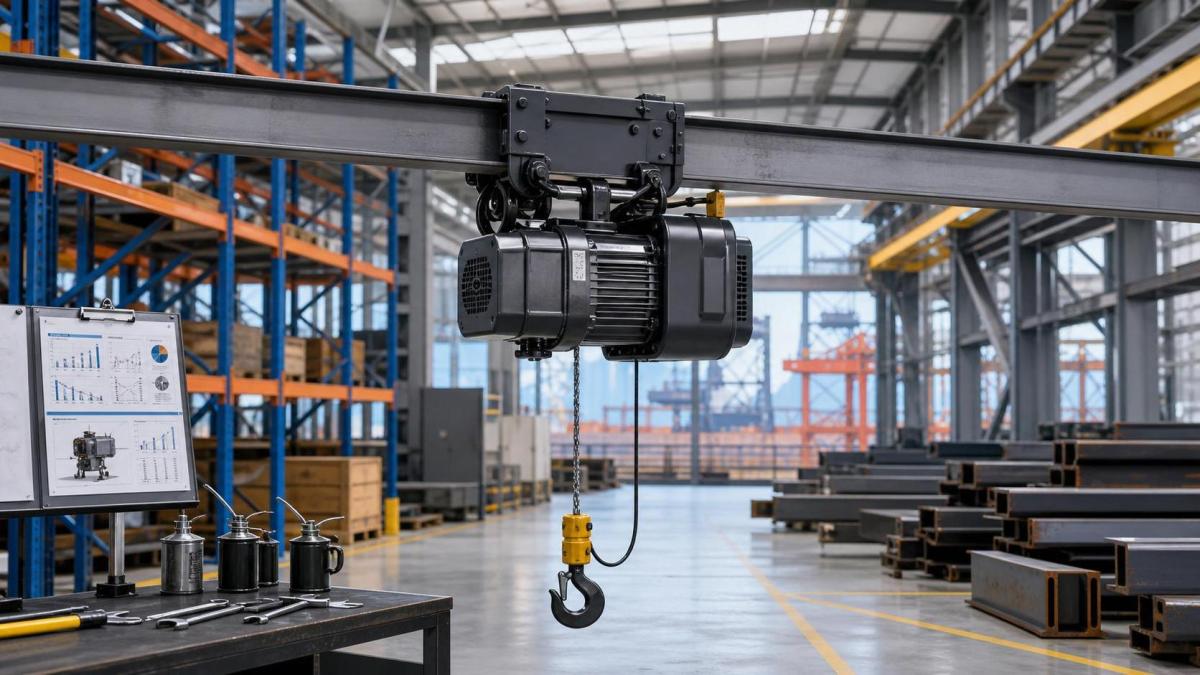
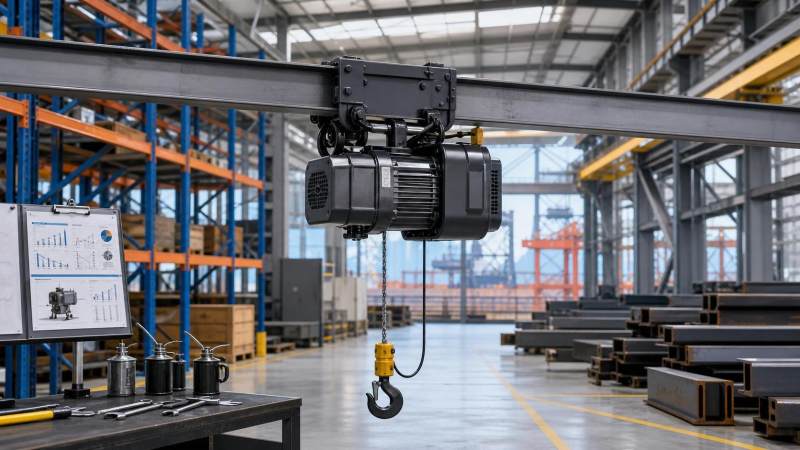
Hoist maintenance cost rarely follows a single industry average. Two identical units can produce very different annual spend in different operating environments.
That gap usually comes from usage intensity, lifting frequency, load weight, travel distance, and the local service model supporting the equipment.
In warehouses, a hoist used for occasional maintenance lifting behaves differently from one supporting repetitive production flow or high-cycle parts movement.
The same is true in ports, workshops, shipyards, and industrial plants, where dust, salt, heat, or vibration increase wear.
For that reason, hoist maintenance cost should be reviewed as a lifecycle variable, not just a yearly service invoice.
A practical budget starts with three questions. How hard does the hoist work, how critical is uptime, and how costly is an unplanned stop?
MHLE often frames equipment decisions this way across forklifts, cranes, automated lifting systems, and electric hoists: cost only makes sense when linked to availability, safety, and asset life.
What usually makes up annual hoist maintenance cost?
Most annual budgets combine planned inspections, preventive service, wear-part replacement, emergency callouts, and compliance-related checks.
The mistake is treating all of that as one line item. In reality, each cost driver behaves differently and should be reviewed separately.
Routine inspections are usually predictable. They include hook checks, brake assessment, lubrication, chain or wire rope review, electrical testing, and control verification.
Preventive service is also manageable when the duty cycle is known. It often covers adjustments, minor replacements, and early fault correction.
Unexpected repair cost is where budgets drift. A failed brake, damaged contactor, worn chain, or overheated motor can push annual spend far above plan.
There is also a hidden layer. Downtime, delayed production, rented replacement equipment, and urgent labor often exceed the direct repair invoice.
The table below helps separate the common elements behind hoist maintenance cost.
When these categories are tracked separately, hoist maintenance cost becomes easier to explain, benchmark, and improve.
Is duty cycle the biggest factor, or do service practices matter more?
Duty cycle usually starts the story, but service discipline often decides whether annual spend stays controlled or turns reactive.
A hoist lifting near rated capacity several times per hour will consume brakes, chains, ropes, and electrical components faster than a lightly used unit.
Still, high usage alone does not guarantee high hoist maintenance cost. Well-planned service can keep heavy-duty equipment financially predictable.
More costly cases often involve irregular inspections, delayed parts replacement, or dependence on emergency response after a visible failure.
In practical terms, service practice affects three things at once: failure timing, repair size, and downtime duration.
This is especially relevant where lifting systems connect to production flow, automated cells, overhead crane operations, or time-sensitive logistics handling.
A useful review checklist includes the following points.
- Actual daily lift count, not estimated use
- Average load versus rated capacity
- Exposure to moisture, dust, chemicals, or heat
- Time between inspection and parts replacement
- Availability of trained technicians and stocked parts
If these details are unclear, the hoist maintenance cost estimate is usually too optimistic.
When does a low service price lead to a higher total cost?
This happens more often than expected. A low quoted service rate can look attractive, yet total annual hoist maintenance cost may rise afterward.
The first reason is scope. Some contracts only cover inspection labor, while travel, urgent visits, parts, and compliance documentation are billed separately.
The second reason is parts strategy. Low-cost consumables may reduce the immediate invoice, but shorten replacement cycles or create repeat failures.
The third issue is response speed. If service support is slow, downtime cost can dwarf any savings in maintenance labor.
In actual lifting operations, one day of lost availability can affect production output, loading schedules, installation work, or maintenance shutdown planning.
That is why many equipment reviews now compare maintenance proposals by total support value, not headline rate alone.
A stronger comparison looks at service depth, inspection records, failure history, spare parts quality, and whether predictive maintenance tools are available.
MHLE covers this wider lifecycle view across material handling assets because the same pattern appears with forklifts, cranes, AWPs, and automated lifting systems.
How should hoist maintenance cost be evaluated before approval?
A sound review goes beyond asking for last year’s invoice. It should test whether current spend reflects the equipment’s real operating risk.
Start by separating fixed and variable cost. Fixed items include scheduled inspections and standard preventive service. Variable items include repairs, emergency visits, and downtime exposure.
Then compare the maintenance profile against the hoist’s business role. A backup unit and a production-critical unit should not be judged by the same tolerance for failure.
It also helps to ask whether the current plan matches the installed technology. Electric hoists, wire rope hoists, chain hoists, and smart lifting systems age differently.
Where IoT monitoring or fault history exists, use it. Data on overload events, brake wear trends, starts per hour, and service response time improves budgeting accuracy.
The table below can be used as a quick approval filter.
If a proposal answers these questions clearly, hoist maintenance cost becomes easier to approve with confidence.
What are the most common budgeting mistakes around hoist maintenance cost?
One common mistake is budgeting from historical spend without checking whether operating conditions have changed.
A hoist may now be running more cycles, handling heavier loads, or supporting a different process than it did a year ago.
Another mistake is ignoring environmental stress. Corrosive air, outdoor exposure, and abrasive dust can accelerate component fatigue well before scheduled replacement.
There is also a documentation problem. If inspection records are incomplete, compliance risk rises and future repairs become harder to diagnose.
Some budgets exclude downtime because it does not sit inside the maintenance line. That creates an incomplete view of hoist maintenance cost.
A final mistake is delaying modernization decisions. Older hoists can consume increasing repair spend while still appearing cheaper than replacement in the short term.
A better approach is to watch for signals such as repeated emergency visits, rising wear-part frequency, slower service recovery, and recurring compliance findings.
What is the smartest next step when annual spend looks too high?
Do not start with price pressure alone. First, identify whether the problem comes from usage intensity, poor planning, aging equipment, or weak service coverage.
Then build a simple cost map covering planned service, breakdown history, response time, parts consumption, and downtime consequences.
In many cases, hoist maintenance cost falls when inspection intervals match real duty, critical spares are stocked, and small faults are corrected earlier.
If breakdowns remain frequent, the more useful decision may be refurbishment, controls upgrade, or replacement rather than repeated repair approval.
For multi-equipment environments, it also helps to compare hoists with related lifting assets across the site. That broader MHLE-style view often reveals shared maintenance patterns.
In short, hoist maintenance cost should be judged by business continuity, compliance readiness, and asset life, not by service price in isolation.
The next practical move is to review current service scope, verify duty-cycle data, and compare repair history against replacement thresholds before the next budget round.
Recommended News
 Sep 20, 2026When do smart material handling systems in India justify the investment?Smart material handling systems India: learn when automation delivers ROI through safer workflows, higher throughput, lower downtime, and lifecycle cost control.
 Sep 11, 2026What drives rental equipment total cost of ownership beyond the daily rate?Rental equipment total cost of ownership goes beyond daily rates. Discover how transport, downtime, energy, labor, compliance, and off-rent control shape smarter rental decisions.
 Sep 02, 2026What determines warehouse stacking systems price for a new warehouse?Warehouse stacking systems price depends on density, loads, aisle design, forklifts, installation, safety, and lifecycle costs. Compare smarter for your new warehouse.
 Aug 26, 2026What drives ASRS integration pricing in warehouse automation projectsASRS integration pricing depends on software scope, site conditions, throughput goals, and risk allocation—not just equipment. Learn what really drives costs and compare bids with confidence.
 Aug 25, 2026When does renting logistics equipment in India cost less than buying?Logistics equipment India: Learn when renting costs less than buying by comparing utilization, maintenance, downtime, cash flow, and project flexibility for smarter decisions.
 Aug 19, 2026When does AGV warehouse systems integration pay off in existing facilities?AGV warehouse systems integration pays off when repetitive pallet moves, labor shortages, and safety costs hurt performance. Learn when retrofitting existing facilities delivers ROI.
 Aug 16, 2026What drives logistics equipment price in warehouse projects?Logistics equipment price in warehouse projects depends on capacity, power, safety, and automation—learn what really drives cost and make smarter buying decisions.
 Aug 03, 2026Scissor Lifts Price Breakdown: What Changes Cost by Height, Power, and Duty CycleScissor lifts price explained by height, power source, platform capacity, and duty cycle. Learn what really changes cost and compare quotes with confidence before you buy.
 Jul 30, 2026How Forklift Fleet Technology Cuts Downtime and Lowers Total CostForklift fleet technology helps reduce downtime, improve utilization, and lower total cost with smarter maintenance, battery control, and fleet visibility. Learn what buyers should evaluate.
 Jul 27, 2026Smart Winch Systems Cost: What Drives Total Price in 2026?Smart winch systems cost in 2026 depends on more than unit price. Explore key drivers like controls, safety, installation, and lifecycle support to budget smarter.
 Jul 21, 2026Industrial Automation Integration: Cost Drivers and ROI BenchmarksIndustrial automation integration costs are shaped by controls, software, retrofits, and downtime. Explore key ROI benchmarks, payback ranges, and practical ways to evaluate project value.
 Jul 18, 2026Material Handling Market Growth: Key Cost and Demand Signals for 2026Material handling market growth in 2026 is driven by labor costs, electrification, automation, and safety compliance. Discover key demand signals shaping smarter equipment investments.
 Jul 17, 2026Warehouse Automation Solutions with IoT: Costs, ROI, and Key Integration RisksWarehouse automation solutions with IoT: explore real costs, ROI timelines, and key integration risks to cut downtime, improve visibility, and choose the right system with confidence.
 Jul 15, 2026Heavy Lifting Equipment Price: What Drives Total Cost in 2026Heavy lifting equipment price in 2026 depends on more than the purchase quote. Learn the hidden cost drivers, lifecycle risks, and smart ways to compare offers before you buy.
 Jul 13, 2026Lifting Equipment Maintenance Cost: Budget Risks to WatchLifting equipment maintenance cost can quietly derail budgets. Learn the hidden risks, downtime drivers, and smart ways to control spend before the next budget cycle.
 Jul 13, 2026Heavy Load Positioning Systems Price: What Drives Total Cost?Heavy load positioning systems price depends on more than equipment cost. Learn the key drivers, hidden expenses, and how to compare quotes for safer, smarter investment decisions.
 Jul 11, 2026What to Check Before Choosing an Unmanned Material Handling CompanyUnmanned material handling company selection starts with the right checks. Learn how to evaluate safety, integration, service, and ROI before you choose a supplier.
 Jul 09, 2026Automated Warehousing Supplier Checklist: Integration, Uptime, and Expansion CostsAutomated warehousing supplier checklist covering integration, uptime, and expansion costs. Learn how to compare vendors, reduce risk, and protect long-term ROI.
 Jul 09, 2026How to Evaluate a Heavy Lifting Equipment Supplier for Long-Term Project RiskHeavy lifting equipment supplier evaluation starts with risk, not price. Learn how to assess safety, service, compliance, and long-term project reliability before you buy.
 Jul 08, 2026Lifting Equipment for Construction: What to Compare Before You Rent or BuyLifting equipment for construction: compare load capacity, site conditions, compliance, uptime, and total cost before you rent or buy to reduce risk and improve project ROI.
 Jul 07, 2026Forklift Lifecycle ROI: Cost Drivers That Change Long-Term OwnershipForklift lifecycle ROI starts beyond the purchase price. Discover how battery strategy, maintenance, downtime, safety, and resale value shape smarter long-term ownership decisions.
![]() Jul 06, 2026Port Material Handling Operations: Where Delays and Costs Usually StartPort material handling operations often lose time and money before cargo even moves. Discover where delays begin, what drives hidden costs, and how smarter equipment choices improve throughput.
Jul 06, 2026Port Material Handling Operations: Where Delays and Costs Usually StartPort material handling operations often lose time and money before cargo even moves. Discover where delays begin, what drives hidden costs, and how smarter equipment choices improve throughput. Jul 05, 2026Industrial Forklifts Cost Breakdown: Purchase, Energy, Maintenance, and ResaleIndustrial forklifts cost goes beyond the sticker price. Compare purchase, energy, maintenance, downtime, and resale value to choose the most cost-effective forklift.
 Jul 02, 2026How to Evaluate a Construction Access Equipment Manufacturer in 2026Construction access equipment manufacturer selection in 2026 goes beyond specs. Learn how to compare safety, compliance, service, telematics, and lifecycle cost for smarter buying decisions.