Search News
Industry Portal
Popular Tags
How Crane Maintenance Software Helps Reduce Downtime and Service Gaps
Author
Time
Click Count
Why crane maintenance software matters when uptime is tied to every lift
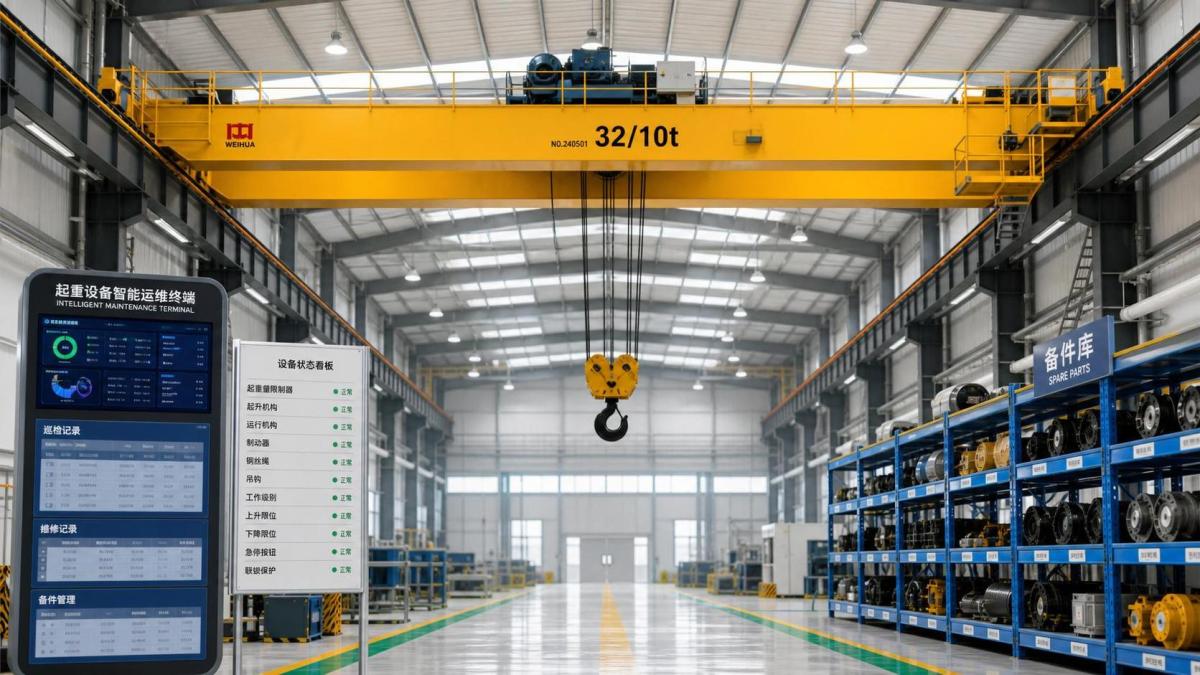
In lifting operations, downtime rarely begins with a major breakdown. It often starts with a missed inspection, an unread service note, or a spare part that was never reordered.
That pattern appears across workshops, warehouses, ports, fabrication lines, and infrastructure sites. The cranes differ, yet the service gap is familiar: information arrives too late or sits in the wrong place.
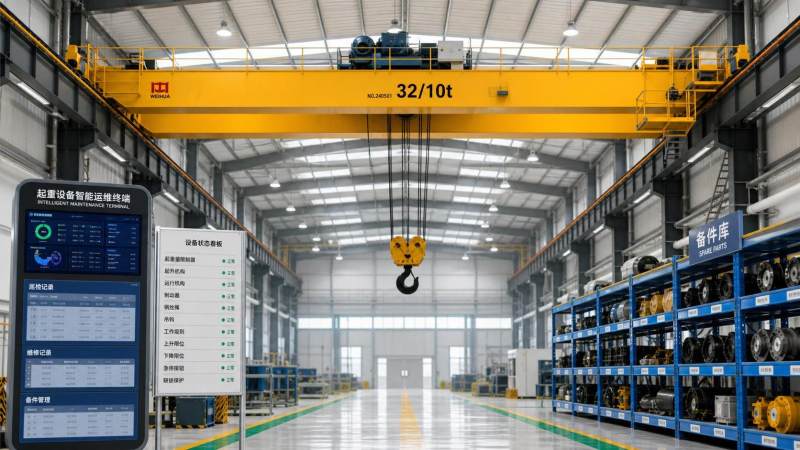
This is where crane maintenance software becomes practical rather than abstract. It brings inspection schedules, repair histories, fault logs, technician notes, and parts status into one operating view.
For a business environment shaped by material handling, lifting safety, automation, and lifecycle ROI, that visibility has direct value. Better service coordination supports uptime, compliance, and more stable asset planning.
The key point, however, is that not every crane operation needs the same software depth. Actual value depends on duty cycle, site complexity, response time pressure, and recordkeeping requirements.
Actual use cases start with different maintenance pressures
A single overhead crane in a light workshop creates one kind of maintenance challenge. A multi-bay factory with synchronized lifting, anti-sway control, and shift-based usage creates another.
In some environments, the main issue is inspection discipline. In others, the bigger problem is handoff failure between service teams, production planners, and spare parts control.
Crane maintenance software works best when matched to these operating conditions. The software should not just store records. It should reduce the specific delay that causes service gaps on that site.
In practice, a useful evaluation starts with three questions: where downtime is most expensive, which maintenance step is often missed, and how fast fault information needs to move.
Production plants usually need stronger preventive control
In factories, overhead cranes often sit inside tightly connected processes. A lifting interruption can delay machining, assembly, line feeding, or mold changeovers far beyond the crane itself.
Here, crane maintenance software should emphasize preventive schedules, recurring inspection checklists, alarm history, and maintenance planning linked to planned shutdown windows.
The real judging point is not whether the system has many features. It is whether it helps maintenance teams act before a hoist brake issue, limit switch failure, or wire rope wear stops production.
Ports and shipyards care more about response speed and traceability
Heavy-duty gantry cranes and marine lifting systems work in harsher conditions. Salt exposure, long travel distances, variable loads, and intensive duty cycles make fault tracking more complex.
In these settings, crane maintenance software needs quick ticket creation, mobile reporting, parts traceability, and clear maintenance history by asset, subsystem, and failure type.
A delayed service response in this environment is not just a maintenance problem. It can disrupt vessel handling, yard flow, and safety procedures around high-consequence lifting tasks.
Rental and distributed fleets need consistency across locations
When cranes or hoists move between customer sites, the main risk is fragmented information. Service quality becomes inconsistent because inspection records and repair decisions stay local.
In that case, crane maintenance software should standardize checklists, warranty records, usage-based service intervals, and asset condition reporting across branches or field teams.
This is also where software supports commercial discipline. It helps separate normal wear from misuse, improves turnaround planning, and reduces avoidable idle time between deployments.
Different sites do not judge crane maintenance software the same way
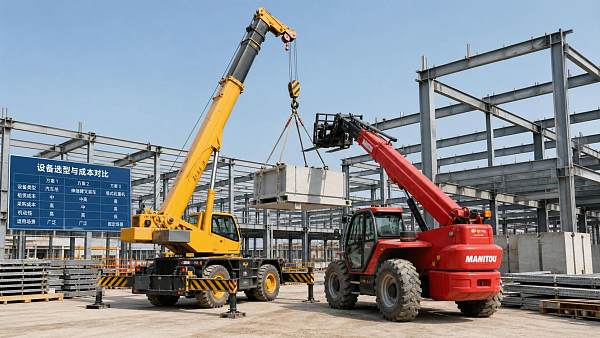
A side-by-side comparison makes the differences clearer. The same platform can be suitable in multiple sectors, but the decision criteria shift with site conditions and service pressure.
This is why broad feature lists can be misleading. A system built for detailed engineering analysis may be excessive for light-duty fleets, while a basic checklist tool may fail under complex crane uptime demands.
Where service gaps usually appear first
In actual crane service operations, the first warning sign is often administrative rather than mechanical. Maintenance happened, but the record is incomplete. A fault was noticed, but nobody assigned it clearly.
Crane maintenance software reduces these gaps when it closes four common weak points:
- Inspection timing slips because reminders are manual or disconnected from actual usage.
- Repair history becomes unreliable when notes stay in paper files or personal devices.
- Spare part shortages extend downtime because reorder points are not visible early enough.
- Fault escalation slows down because operators, supervisors, and technicians see different information.
In sites using IoT fleet monitoring or automated lifting systems, the software becomes even more useful when it links condition signals to maintenance action rather than creating another isolated data stream.
Before rollout, check the site conditions that change software fit
One frequent mistake is choosing crane maintenance software by dashboard appearance alone. Good fit depends more on field workflow, asset diversity, and inspection obligations than on interface style.
A practical shortlist should confirm the following points:
- Whether maintenance intervals should follow calendar dates, operating hours, load cycles, or a mix.
- Whether technicians need offline mobile access in yards, docks, or remote construction zones.
- Whether the system can store compliance evidence for OSHA, CE, or internal audit routines.
- Whether spare parts mapping matches actual crane models, hoists, drives, brakes, and controls.
- Whether the software can separate urgent faults from planned maintenance without losing either.
In material handling environments covered by MHLE, this matters because crane systems rarely stand alone. They interact with warehouse flow, production timing, safety compliance, and broader uptime strategy.
Misjudgments that weaken crane maintenance software results
A common misjudgment is assuming similar cranes share identical maintenance logic. Two overhead cranes with the same rated capacity may face very different wear patterns because of duty class, environment, and operator behavior.
Another mistake is treating software as a record archive only. If fault reporting, scheduling, and parts replenishment remain outside the system, service gaps simply move from paper to screen.
Cost is also often judged too narrowly. Low subscription pricing may look attractive, yet weak configuration, poor mobile usability, or limited integration can create longer downtime and more manual rework later.
The better approach is to test crane maintenance software against one real maintenance chain: inspection found, issue logged, task assigned, spare part confirmed, repair closed, and history retained for the next decision.
A grounded way to move from evaluation to better uptime
When selected carefully, crane maintenance software helps reduce downtime because it improves everyday control, not just emergency response. That is especially valuable in facilities where lifting equipment supports production, logistics, or safety-critical handling.
The most reliable next step is to map crane assets by operating environment, service frequency, and compliance burden. Then compare which maintenance delays are procedural and which are information-related.
From there, build a short evaluation standard around inspection scheduling, mobile execution, repair traceability, and parts coordination. That process usually reveals which crane maintenance software can genuinely close service gaps on site.
For operations already balancing uptime, safety, and lifecycle cost, that kind of fit matters more than a long feature list. It creates a clearer path to preventive maintenance, faster repairs, and more dependable lifting performance.
Recommended News
 Sep 20, 2026When do smart material handling systems in India justify the investment?Smart material handling systems India: learn when automation delivers ROI through safer workflows, higher throughput, lower downtime, and lifecycle cost control.
 Sep 11, 2026What drives rental equipment total cost of ownership beyond the daily rate?Rental equipment total cost of ownership goes beyond daily rates. Discover how transport, downtime, energy, labor, compliance, and off-rent control shape smarter rental decisions.
 Sep 02, 2026What determines warehouse stacking systems price for a new warehouse?Warehouse stacking systems price depends on density, loads, aisle design, forklifts, installation, safety, and lifecycle costs. Compare smarter for your new warehouse.
 Aug 26, 2026What drives ASRS integration pricing in warehouse automation projectsASRS integration pricing depends on software scope, site conditions, throughput goals, and risk allocation—not just equipment. Learn what really drives costs and compare bids with confidence.
 Aug 25, 2026When does renting logistics equipment in India cost less than buying?Logistics equipment India: Learn when renting costs less than buying by comparing utilization, maintenance, downtime, cash flow, and project flexibility for smarter decisions.
 Aug 19, 2026When does AGV warehouse systems integration pay off in existing facilities?AGV warehouse systems integration pays off when repetitive pallet moves, labor shortages, and safety costs hurt performance. Learn when retrofitting existing facilities delivers ROI.
 Aug 16, 2026What drives logistics equipment price in warehouse projects?Logistics equipment price in warehouse projects depends on capacity, power, safety, and automation—learn what really drives cost and make smarter buying decisions.
 Aug 03, 2026Scissor Lifts Price Breakdown: What Changes Cost by Height, Power, and Duty CycleScissor lifts price explained by height, power source, platform capacity, and duty cycle. Learn what really changes cost and compare quotes with confidence before you buy.
 Jul 30, 2026How Forklift Fleet Technology Cuts Downtime and Lowers Total CostForklift fleet technology helps reduce downtime, improve utilization, and lower total cost with smarter maintenance, battery control, and fleet visibility. Learn what buyers should evaluate.
 Jul 27, 2026Smart Winch Systems Cost: What Drives Total Price in 2026?Smart winch systems cost in 2026 depends on more than unit price. Explore key drivers like controls, safety, installation, and lifecycle support to budget smarter.
 Jul 21, 2026Industrial Automation Integration: Cost Drivers and ROI BenchmarksIndustrial automation integration costs are shaped by controls, software, retrofits, and downtime. Explore key ROI benchmarks, payback ranges, and practical ways to evaluate project value.
 Jul 18, 2026Material Handling Market Growth: Key Cost and Demand Signals for 2026Material handling market growth in 2026 is driven by labor costs, electrification, automation, and safety compliance. Discover key demand signals shaping smarter equipment investments.
 Jul 17, 2026Warehouse Automation Solutions with IoT: Costs, ROI, and Key Integration RisksWarehouse automation solutions with IoT: explore real costs, ROI timelines, and key integration risks to cut downtime, improve visibility, and choose the right system with confidence.
 Jul 15, 2026Heavy Lifting Equipment Price: What Drives Total Cost in 2026Heavy lifting equipment price in 2026 depends on more than the purchase quote. Learn the hidden cost drivers, lifecycle risks, and smart ways to compare offers before you buy.
 Jul 13, 2026Lifting Equipment Maintenance Cost: Budget Risks to WatchLifting equipment maintenance cost can quietly derail budgets. Learn the hidden risks, downtime drivers, and smart ways to control spend before the next budget cycle.
 Jul 13, 2026Heavy Load Positioning Systems Price: What Drives Total Cost?Heavy load positioning systems price depends on more than equipment cost. Learn the key drivers, hidden expenses, and how to compare quotes for safer, smarter investment decisions.
 Jul 11, 2026What to Check Before Choosing an Unmanned Material Handling CompanyUnmanned material handling company selection starts with the right checks. Learn how to evaluate safety, integration, service, and ROI before you choose a supplier.
 Jul 09, 2026Automated Warehousing Supplier Checklist: Integration, Uptime, and Expansion CostsAutomated warehousing supplier checklist covering integration, uptime, and expansion costs. Learn how to compare vendors, reduce risk, and protect long-term ROI.
 Jul 09, 2026How to Evaluate a Heavy Lifting Equipment Supplier for Long-Term Project RiskHeavy lifting equipment supplier evaluation starts with risk, not price. Learn how to assess safety, service, compliance, and long-term project reliability before you buy.
 Jul 08, 2026Lifting Equipment for Construction: What to Compare Before You Rent or BuyLifting equipment for construction: compare load capacity, site conditions, compliance, uptime, and total cost before you rent or buy to reduce risk and improve project ROI.
 Jul 07, 2026Forklift Lifecycle ROI: Cost Drivers That Change Long-Term OwnershipForklift lifecycle ROI starts beyond the purchase price. Discover how battery strategy, maintenance, downtime, safety, and resale value shape smarter long-term ownership decisions.
![]() Jul 06, 2026Port Material Handling Operations: Where Delays and Costs Usually StartPort material handling operations often lose time and money before cargo even moves. Discover where delays begin, what drives hidden costs, and how smarter equipment choices improve throughput.
Jul 06, 2026Port Material Handling Operations: Where Delays and Costs Usually StartPort material handling operations often lose time and money before cargo even moves. Discover where delays begin, what drives hidden costs, and how smarter equipment choices improve throughput. Jul 05, 2026Industrial Forklifts Cost Breakdown: Purchase, Energy, Maintenance, and ResaleIndustrial forklifts cost goes beyond the sticker price. Compare purchase, energy, maintenance, downtime, and resale value to choose the most cost-effective forklift.
 Jul 02, 2026How to Evaluate a Construction Access Equipment Manufacturer in 2026Construction access equipment manufacturer selection in 2026 goes beyond specs. Learn how to compare safety, compliance, service, telematics, and lifecycle cost for smarter buying decisions.