Search News
Industry Portal
Popular Tags
Heavy Component Lifting Price: What Drives Cost in Industrial Projects
Author
Time
Click Count
Why does heavy component lifting price vary so much between similar projects?
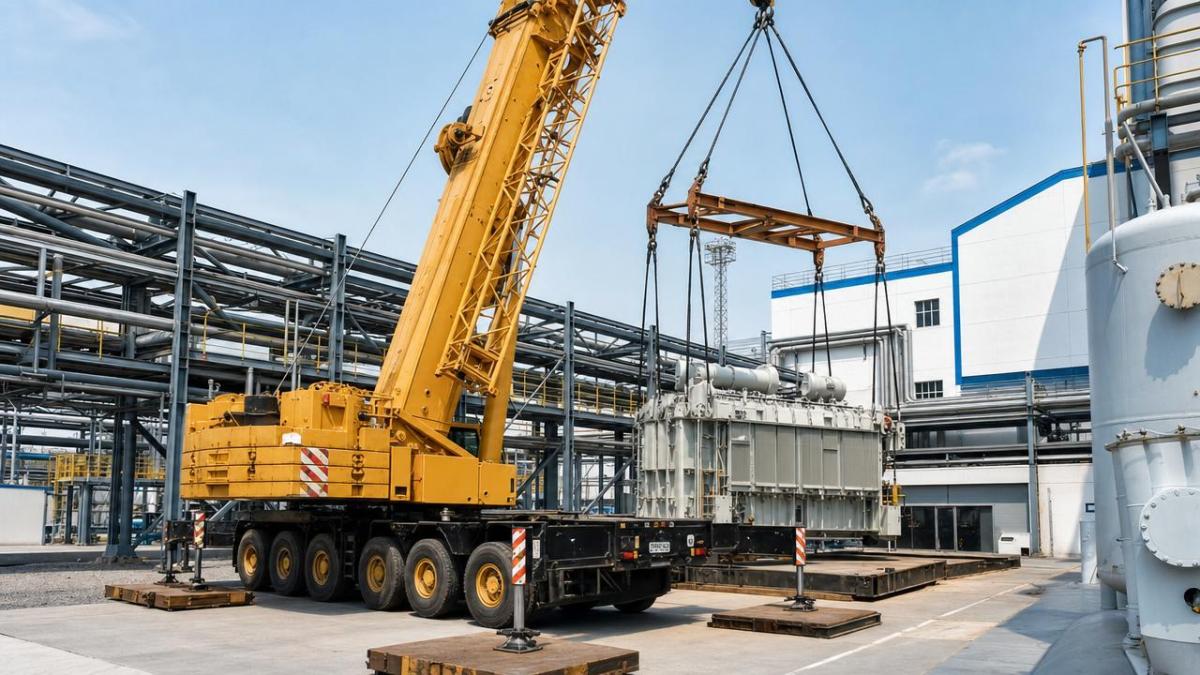
Heavy component lifting price often looks inconsistent at first glance.
Two lifts may involve similar tonnage, yet the quoted cost can differ sharply.
The reason is simple.
In industrial projects, lifting cost is shaped by risk, planning depth, site conditions, equipment matching, and shutdown pressure.
Weight matters, but it is rarely the whole pricing story.
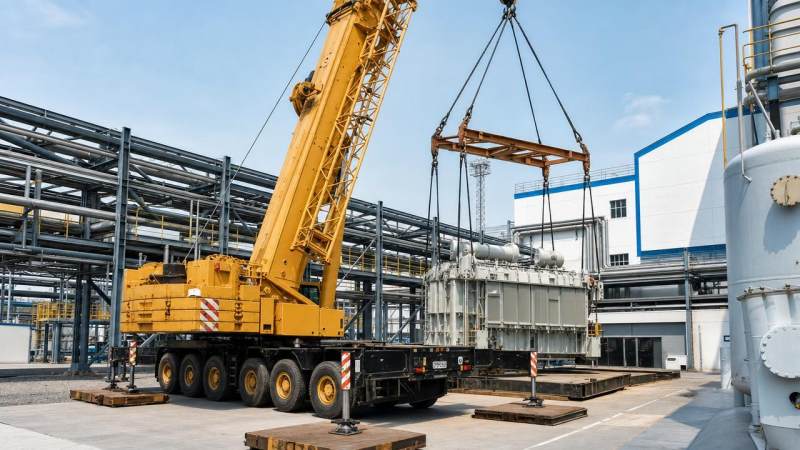
A transformer replacement inside a live plant is priced differently from lifting the same mass in an open yard.
The first may require engineered lift plans, traffic isolation, rigging studies, permits, and limited working hours.
That is why heavy component lifting price should be reviewed as a project package, not a simple crane rental line.
This is also where MHLE-style industry analysis becomes useful.
Across cranes, forklifts, hoists, smart winches, and automated lifting systems, the real value lies in understanding lifecycle cost and operating risk together.
Is the crane itself the main reason behind heavy component lifting price?
Usually, no.
Crane selection is important, but it is only one part of the total heavy component lifting price.
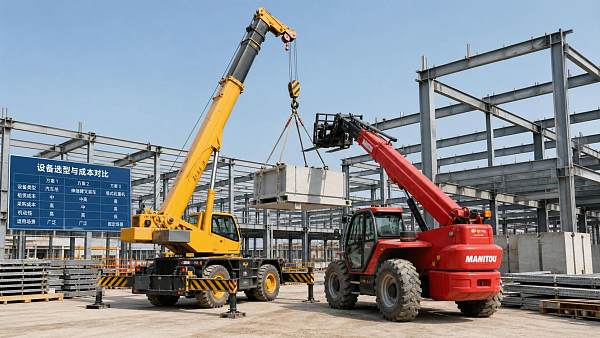
A larger mobile crane, gantry system, or overhead lifting setup raises cost, yet selection depends on more than load capacity.
Reach radius, lift height, tail swing limits, ground bearing pressure, and setup space can change the equipment class entirely.
In practical terms, a project may need a bigger crane because the machine cannot get close enough to the load.
That decision then affects transport, assembly time, counterweights, and crew size.
The quote grows, but not because the supplier is inflating numbers.
The operating envelope is more demanding.
In factories and ports, the same pattern appears with electric hoists, double-girder cranes, and heavy-duty forklifts.
When precision, anti-sway control, or low-clearance lifting is needed, equipment cost rises because control requirements rise.
A good quote should therefore explain not only what machine is proposed, but why that machine is necessary.
A quick way to read a quote
Before comparing totals, check whether these cost drivers are included.
When one quote looks cheaper, it often excludes one of these lines.
What hidden factors usually push heavy component lifting price higher?
The biggest surprises usually come from conditions around the lift, not the lift itself.
Restricted access is a common example.
If equipment must pass through warehouse aisles, pipe racks, shipyard lanes, or rooftop edges, setup becomes slower and more controlled.
Ground conditions also matter.
Soft ground, suspended slabs, trench covers, or uneven pavement may require engineering review and load distribution support.
Another driver is outage timing.
If the lift must happen during a shutdown window, every delay becomes expensive.
Suppliers price that risk into the heavy component lifting price because downtime penalties can be severe.
Safety compliance is another factor that deserves closer attention.
Projects in industrial plants, logistics hubs, and infrastructure sites may require method statements, OSHA-aligned procedures, permit coordination, or third-party inspection.
Those steps protect the project, but they also affect budget and schedule.
- Night work or weekend work often increases labor and transport cost.
- Weather-sensitive lifts may include standby charges.
- Imported components may require special handling to protect warranties.
- Tandem lifts or precision placement usually require more supervision.
These are not minor add-ons.
They are often the difference between a realistic quote and a misleading one.
How can you tell whether a heavy component lifting price is reasonable?
A reasonable price is not always the lowest number.
It is the quote that best matches the actual lift conditions and execution risk.
A useful approach is to compare scope depth before comparing price.
If one supplier includes engineered drawings, route checks, rigging design, and contingency planning, the higher total may still represent lower project exposure.
This is especially true when handling generators, turbines, press modules, steel assemblies, or plant maintenance components.
The table below helps separate strong quotes from risky ones.
When reviewing heavy component lifting price, clarity often matters more than headline cost.
Where do companies make mistakes when comparing lifting quotes?
The most common mistake is treating every quote as if it covers the same scope.
In reality, one proposal may include engineering and supervision, while another only covers crane hours.
Another mistake is ignoring placement precision.
Heavy component lifting price rises when the load must be aligned into bases, skids, pits, production lines, or tight structural openings.
That final positioning stage can be slower than the actual hoist.
Some teams also underestimate internal logistics.
A load may require forklifts, skates, air casters, chain hoists, or smart winches before the crane work even starts.
In warehouse and plant settings, these transfer steps are often critical.
More advanced providers may also factor in anti-sway systems, monitoring, or controlled-speed lifting where safety or product sensitivity demands it.
That is not overengineering.
It can reduce damage risk, improve uptime, and limit rework.
Checks that prevent false savings
- Match each quote to the same lift plan, schedule, and site conditions.
- Ask whether transport, assembly, and demobilization are included.
- Confirm whether standby, weather delay, and permit costs are capped.
- Review insurance, inspection, and compliance obligations in writing.
- Check if a revised heavy component lifting price applies after site changes.
What is the smartest next step before approving a lifting budget?
Start by defining the lift as an engineered activity, not a transport line item.
That mindset changes how heavy component lifting price is reviewed.
It encourages better questions about scope, exclusions, risk ownership, and schedule impact.
In many industrial settings, the strongest budget decisions come from combining commercial review with technical validation.
If a quote involves overhead cranes, gantry cranes, electric hoists, forklifts, or automated handling equipment, look at the full movement path.
The load may be lifted only once, but it is often handled several times.
A practical review checklist should include load data, equipment logic, site readiness, safety requirements, timeline assumptions, and cost exclusions.
This is the kind of cross-functional view that MHLE regularly brings to material handling and lifting decisions.
The platform’s value is not in selling a single machine.
It helps connect lifting mechanics, compliance, uptime, and lifecycle cost into one clearer decision process.
If the current heavy component lifting price still feels difficult to judge, the next move is straightforward.
Standardize the bid scope, ask for explicit assumptions, and compare risk controls line by line.
That usually leads to fewer surprises, better budget confidence, and stronger project execution.
Recommended News
 Sep 11, 2026What drives rental equipment total cost of ownership beyond the daily rate?Rental equipment total cost of ownership goes beyond daily rates. Discover how transport, downtime, energy, labor, compliance, and off-rent control shape smarter rental decisions.
 Sep 02, 2026What determines warehouse stacking systems price for a new warehouse?Warehouse stacking systems price depends on density, loads, aisle design, forklifts, installation, safety, and lifecycle costs. Compare smarter for your new warehouse.
 Aug 26, 2026What drives ASRS integration pricing in warehouse automation projectsASRS integration pricing depends on software scope, site conditions, throughput goals, and risk allocation—not just equipment. Learn what really drives costs and compare bids with confidence.
 Aug 25, 2026When does renting logistics equipment in India cost less than buying?Logistics equipment India: Learn when renting costs less than buying by comparing utilization, maintenance, downtime, cash flow, and project flexibility for smarter decisions.
 Aug 19, 2026When does AGV warehouse systems integration pay off in existing facilities?AGV warehouse systems integration pays off when repetitive pallet moves, labor shortages, and safety costs hurt performance. Learn when retrofitting existing facilities delivers ROI.
 Aug 16, 2026What drives logistics equipment price in warehouse projects?Logistics equipment price in warehouse projects depends on capacity, power, safety, and automation—learn what really drives cost and make smarter buying decisions.
 Aug 03, 2026Scissor Lifts Price Breakdown: What Changes Cost by Height, Power, and Duty CycleScissor lifts price explained by height, power source, platform capacity, and duty cycle. Learn what really changes cost and compare quotes with confidence before you buy.
 Jul 30, 2026How Forklift Fleet Technology Cuts Downtime and Lowers Total CostForklift fleet technology helps reduce downtime, improve utilization, and lower total cost with smarter maintenance, battery control, and fleet visibility. Learn what buyers should evaluate.
 Jul 27, 2026Smart Winch Systems Cost: What Drives Total Price in 2026?Smart winch systems cost in 2026 depends on more than unit price. Explore key drivers like controls, safety, installation, and lifecycle support to budget smarter.
 Jul 21, 2026Industrial Automation Integration: Cost Drivers and ROI BenchmarksIndustrial automation integration costs are shaped by controls, software, retrofits, and downtime. Explore key ROI benchmarks, payback ranges, and practical ways to evaluate project value.
 Jul 18, 2026Material Handling Market Growth: Key Cost and Demand Signals for 2026Material handling market growth in 2026 is driven by labor costs, electrification, automation, and safety compliance. Discover key demand signals shaping smarter equipment investments.
 Jul 17, 2026Warehouse Automation Solutions with IoT: Costs, ROI, and Key Integration RisksWarehouse automation solutions with IoT: explore real costs, ROI timelines, and key integration risks to cut downtime, improve visibility, and choose the right system with confidence.
 Jul 15, 2026Heavy Lifting Equipment Price: What Drives Total Cost in 2026Heavy lifting equipment price in 2026 depends on more than the purchase quote. Learn the hidden cost drivers, lifecycle risks, and smart ways to compare offers before you buy.
 Jul 13, 2026Lifting Equipment Maintenance Cost: Budget Risks to WatchLifting equipment maintenance cost can quietly derail budgets. Learn the hidden risks, downtime drivers, and smart ways to control spend before the next budget cycle.
 Jul 13, 2026Heavy Load Positioning Systems Price: What Drives Total Cost?Heavy load positioning systems price depends on more than equipment cost. Learn the key drivers, hidden expenses, and how to compare quotes for safer, smarter investment decisions.
 Jul 11, 2026What to Check Before Choosing an Unmanned Material Handling CompanyUnmanned material handling company selection starts with the right checks. Learn how to evaluate safety, integration, service, and ROI before you choose a supplier.
 Jul 09, 2026Automated Warehousing Supplier Checklist: Integration, Uptime, and Expansion CostsAutomated warehousing supplier checklist covering integration, uptime, and expansion costs. Learn how to compare vendors, reduce risk, and protect long-term ROI.
 Jul 09, 2026How to Evaluate a Heavy Lifting Equipment Supplier for Long-Term Project RiskHeavy lifting equipment supplier evaluation starts with risk, not price. Learn how to assess safety, service, compliance, and long-term project reliability before you buy.
 Jul 08, 2026Lifting Equipment for Construction: What to Compare Before You Rent or BuyLifting equipment for construction: compare load capacity, site conditions, compliance, uptime, and total cost before you rent or buy to reduce risk and improve project ROI.
 Jul 07, 2026Forklift Lifecycle ROI: Cost Drivers That Change Long-Term OwnershipForklift lifecycle ROI starts beyond the purchase price. Discover how battery strategy, maintenance, downtime, safety, and resale value shape smarter long-term ownership decisions.
![]() Jul 06, 2026Port Material Handling Operations: Where Delays and Costs Usually StartPort material handling operations often lose time and money before cargo even moves. Discover where delays begin, what drives hidden costs, and how smarter equipment choices improve throughput.
Jul 06, 2026Port Material Handling Operations: Where Delays and Costs Usually StartPort material handling operations often lose time and money before cargo even moves. Discover where delays begin, what drives hidden costs, and how smarter equipment choices improve throughput. Jul 05, 2026Industrial Forklifts Cost Breakdown: Purchase, Energy, Maintenance, and ResaleIndustrial forklifts cost goes beyond the sticker price. Compare purchase, energy, maintenance, downtime, and resale value to choose the most cost-effective forklift.
 Jul 02, 2026How to Evaluate a Construction Access Equipment Manufacturer in 2026Construction access equipment manufacturer selection in 2026 goes beyond specs. Learn how to compare safety, compliance, service, telematics, and lifecycle cost for smarter buying decisions.
 Jul 01, 2026Automated Storage and Retrieval Systems Cost BreakdownAutomated storage and retrieval systems cost explained clearly: compare cost drivers, hidden expenses, ROI factors, and system price ranges before approving your warehouse automation budget.